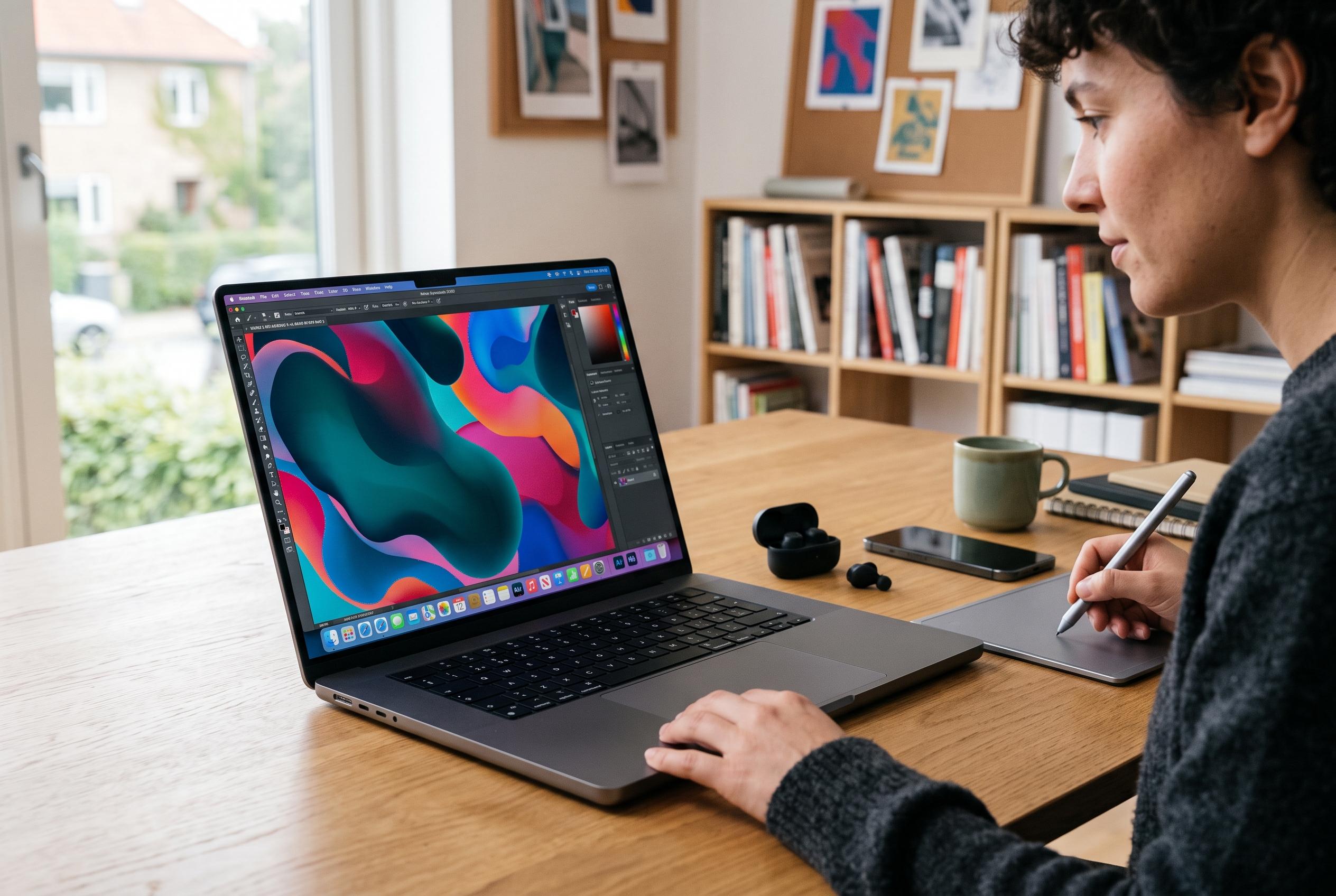

HP’s premium 16-inch laptop delivers strong local AI and creative performance in a polished OLED package, but modest battery life and a steep price limit its appeal to specialist users.
The HP OmniBook Ultra 16 is a specialist machine rather than a general-purpose laptop. Tom’s Guide says HP has pitched it at users who want local AI processing, creative work and a premium Windows experience, all built around Nvidia’s RTX Spark N1X platform. At a starting price of $3,199, it sits firmly in the high-end market, where its appeal depends on whether buyers genuinely need on-device AI rather than cloud-based tools.
Its industrial design is one of the clearest selling points. According to Tom’s Guide, the laptop uses a black aluminium chassis with a textured finish, a 16-inch 3K OLED touchscreen and a large, comfortable keyboard. The review also highlights a generous port selection for such a thin system, including USB-C, USB-A, HDMI, a headphone jack and a microSD slot. That combination makes it look and feel more like a premium creator notebook than a conventional thin-and-light device.
Performance is where the OmniBook Ultra 16 justifies much of its asking price. Tom’s Guide’s testing showed strong results in general productivity, content creation and local AI workloads, including benchmark runs that placed it well ahead of some rivals in a few tasks, even if Apple’s latest MacBook Pro remained faster in several synthetic and Adobe tests. Windows Central’s separate analysis of Nvidia’s RTX Spark silicon also backs up the broader case for the platform, describing it as well suited to local AI and creative work, with solid GPU capability and enough CPU strength for demanding Windows 11 workflows.
Gaming is more complicated. Tom’s Guide found that demanding titles could run, but often only with reduced settings or the help of DLSS, and the OmniBook Ultra 16 could not match a dedicated gaming laptop. Even so, performance was broadly in the same territory as some high-end competing machines in select tests, which suggests the RTX Spark platform has meaningful graphics potential so long as buyers understand its limits. TechRadar’s reporting on MSI’s forthcoming RTX Spark laptop line also indicates that other manufacturers are moving into the same segment, pointing to a new class of machines aimed at niche professional use rather than mainstream gaming.
The main drawbacks are price and endurance. Tom’s Guide recorded battery life of 10 hours and 52 minutes in its web-surfing test, which is respectable but short of the stronger results now common from Apple, Qualcomm and some Intel systems. HP’s own promotional material for the wider OmniBook Ultra family stresses connectivity and professional features, but the review makes clear that this particular 16-inch model is best judged as a portable AI workstation, not a long-range travel laptop. For the right user, that may be enough; for everyone else, the cost is hard to justify.
Disclaimer: This content is intended for informational purposes only. Readers are advised to exercise their own judgement, conduct due diligence, or consult a qualified expert before acting on any information provided.