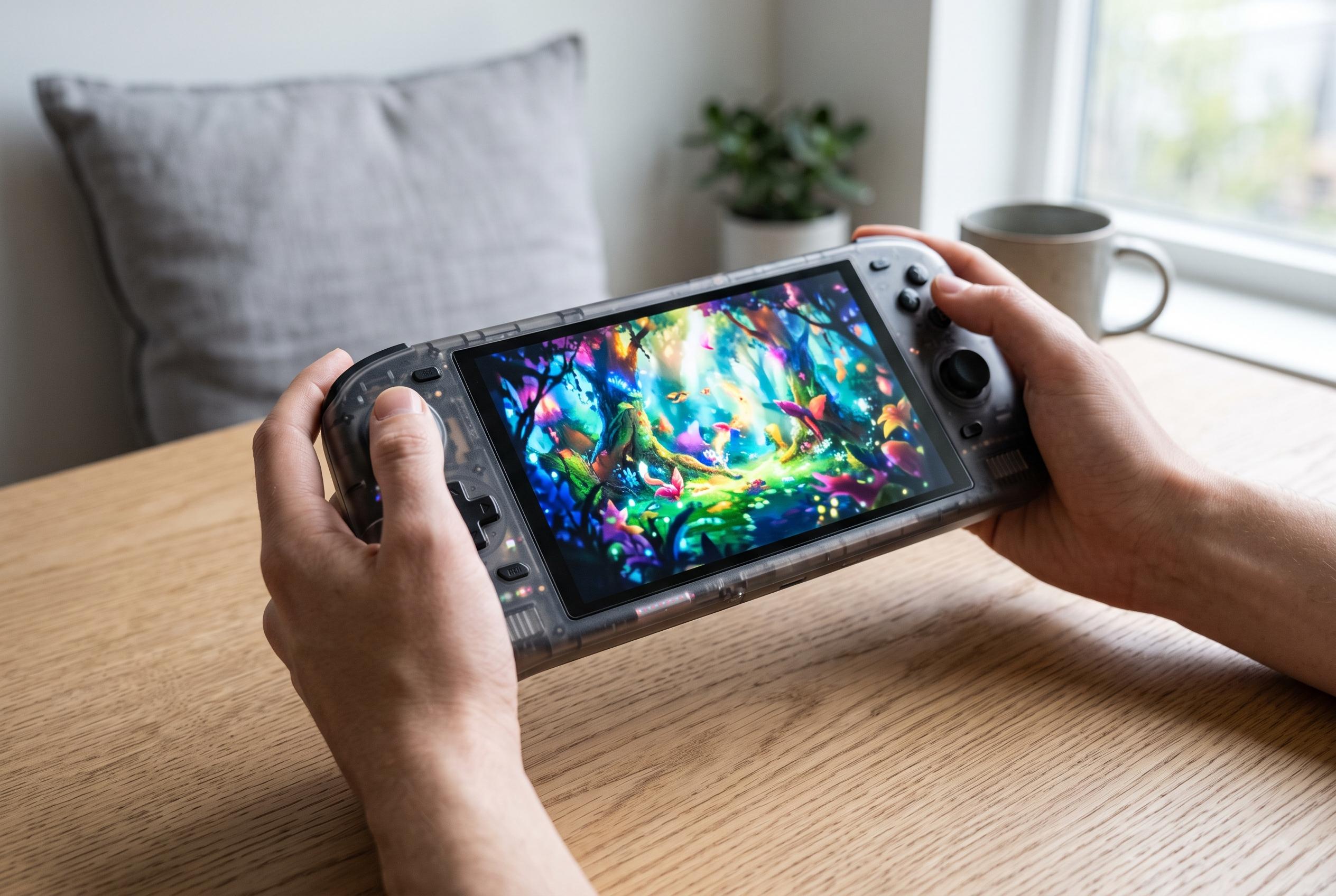

Asus’s $1,299 anniversary handheld brings a brighter 120Hz OLED display, upgraded controls and a translucent finish, but offers little extra performance over the cheaper Ally X.
Asus has added a higher-end model to its ROG Xbox Ally line, marking the 20th anniversary of Republic of Gamers with a handheld that prioritises display quality and finish over raw computing gains. According to reviews of the ROG Xbox Ally X20, the most significant change is the move to a 7.4-inch OLED panel, paired with a translucent chassis and a set of control refinements that make the device feel more luxurious in the hand.
The new model keeps the same core performance platform as the earlier Xbox Ally X, which launched at $999, while the X20 arrives at $1,299. Reviewers note that it still uses AMD’s Ryzen Z2 Extreme-class silicon, 24GB of LPDDR5X memory and a 1TB SSD, so buyers should not expect a meaningful jump in frame rates. In practice, the device appears to be a premium revision rather than a new performance tier.
That distinction matters because Asus is clearly targeting users who value presentation as much as speed. PC Gamer reported that the OLED screen reaches 120Hz and peaks at 1,400 nits, while Tom’s Guide and Notebookcheck both praised the brighter colours, deeper contrast and more polished feel of the revised chassis. The screen is the most obvious upgrade: it should make dark scenes easier to read and colourful games far more striking than on the original LCD model.
There are practical refinements beyond the panel as well. Windows Central reported that the anniversary edition uses a semi-transparent black shell with gold accents, alongside upgraded controls, including TMR joysticks and improved buttons. That should help with long-term durability and reduce the risk of analogue stick wear, although it does not make the handheld fundamentally different to use from its predecessor. For most players, the larger benefit is comfort and perceived quality rather than a dramatic change in responsiveness.
Battery life appears only modestly better. In the supplied testing, the X20 lasted nine minutes longer than the original Ally X in a Cyberpunk 2077 run, which is an incremental improvement rather than a breakthrough. That fits the wider picture: OLED can be more efficient in certain scenes, but the demands of a high-performance handheld running Windows 11 still limit endurance.
Software remains the most awkward part of the package. The older Xbox Ally X already showed the strain of putting Windows on a controller-first device, and the X20 inherits the same basic operating system constraints. That means the new hardware solves a display complaint more convincingly than it solves the broader usability problems that often affect Windows handhelds. For buyers who mainly want a portable PC with broad compatibility, that may be acceptable; for those expecting a console-like experience, it will still feel imperfect.
Taken together, the ROG Xbox Ally X20 looks like a carefully judged premium refresh. It is not a new generation in performance terms, but it does address one of the weakest parts of the original machine and adds a more distinctive design. For new buyers, the case for the X20 is stronger than for existing Ally X owners, who may find the extra $300 difficult to justify unless OLED quality and the revised controls are their top priorities.
Disclaimer: This content is intended for informational purposes only. Readers are advised to exercise their own judgement, conduct due diligence, or consult a qualified expert before acting on any information provided.