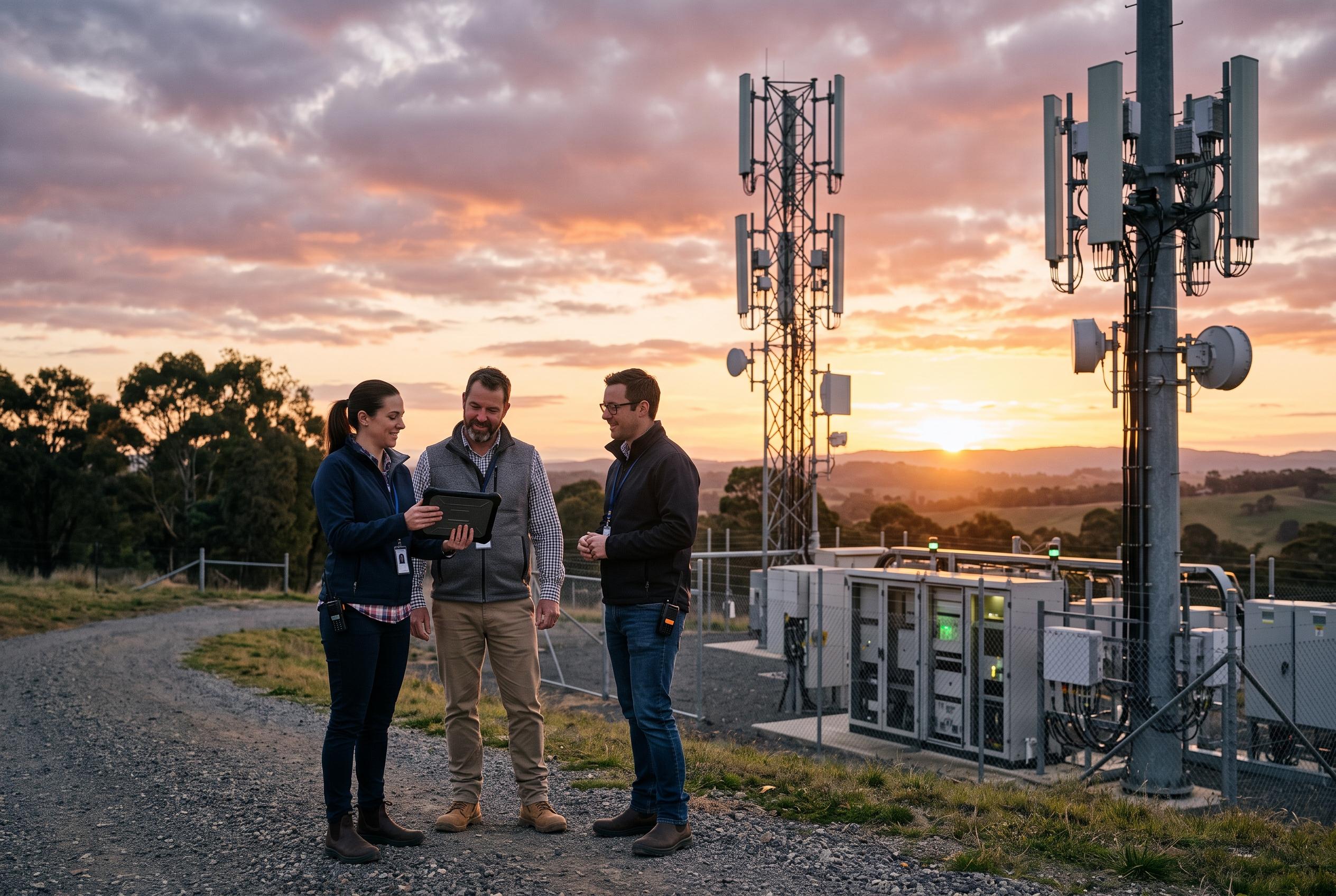

Ericsson says its AI-native link adaptation is delivering a 10% spectral-efficiency gain across more than 60,000 live base stations, challenging Nokia’s GPU-led vision for future mobile networks.
Ericsson has set out a clear counterargument to the growing enthusiasm for GPU-based AI-RAN, insisting that operators should not assume custom silicon is the wrong answer. On its third-quarter earnings call on 15 October, chief executive Per Narvinger said the company is prepared to use whatever architecture makes commercial sense, after being asked whether graphics processors in the baseband had been ruled out. Ericsson’s current AI-native link adaptation feature is already running on deployed baseband hardware, which gives the vendor a practical example of what it sees as a lower-friction route to AI-enabled gains in radio networks. According to Ericsson’s account of the call, the feature has delivered a 10% improvement in spectral efficiency and is in service on more than 60,000 base stations across three operators, including Optus, while AT&T, Bell Canada and T-Mobile are reportedly testing it.
The argument matters because the economics of AI-RAN remain contested. Narvinger suggested that a 10% gain in spectrum efficiency could be worth about $800 million, a comparison that underscored how much value can come from making better use of licensed spectrum rather than buying more of it. But the figure is illustrative rather than a measured market benchmark, and the underlying savings will depend on how close a site is to a capacity upgrade trigger. In its analysis of Ericsson’s call, RCR Wireless also noted that the company beat expectations with 7% organic sales growth, led by stronger network demand, but warned that AI-related component inflation would continue to weigh on margins through 2027. Ericsson separately said structural price rises would be needed next year and confirmed a reorganisation for 2027 aimed at improving efficiency and development output.
Nokia is taking a different path. The company has said it is building its AI-RAN strategy around Nvidia GPUs and has moved away from new custom silicon, with operators now entering field trials and commercial availability expected in early 2027. Nokia says its AI-RAN platform has already shown more than 20% gains in spectral efficiency and expects further software-driven improvements in 2027 and 2028. That approach is closely tied to Nvidia’s broader push into telecoms, including a $1 billion investment announced in 2025 and a plan to develop AI-native mobile infrastructure for 5G and 6G on Nvidia’s accelerated computing platforms.
The contrast between the two vendors is not simply technical; it is financial and operational. Ericsson’s case is that operators can extract value now from silicon already installed in the field, avoiding the cost, power draw and site upgrades that GPU-based systems would likely require. Nokia’s case is that accelerated computing will become the basis for more capable AI-native networks and new edge services. Whether that wager pays off will depend on whether the extra performance from GPUs is sufficient to justify their heavier infrastructure demands. For now, Ericsson can point to live deployments on existing hardware, while Nokia is asking the market to judge a future architecture before its commercial economics have been fully tested.
Disclaimer: This content is intended for informational purposes only. Readers are advised to exercise their own judgement, conduct due diligence, or consult a qualified expert before acting on any information provided.