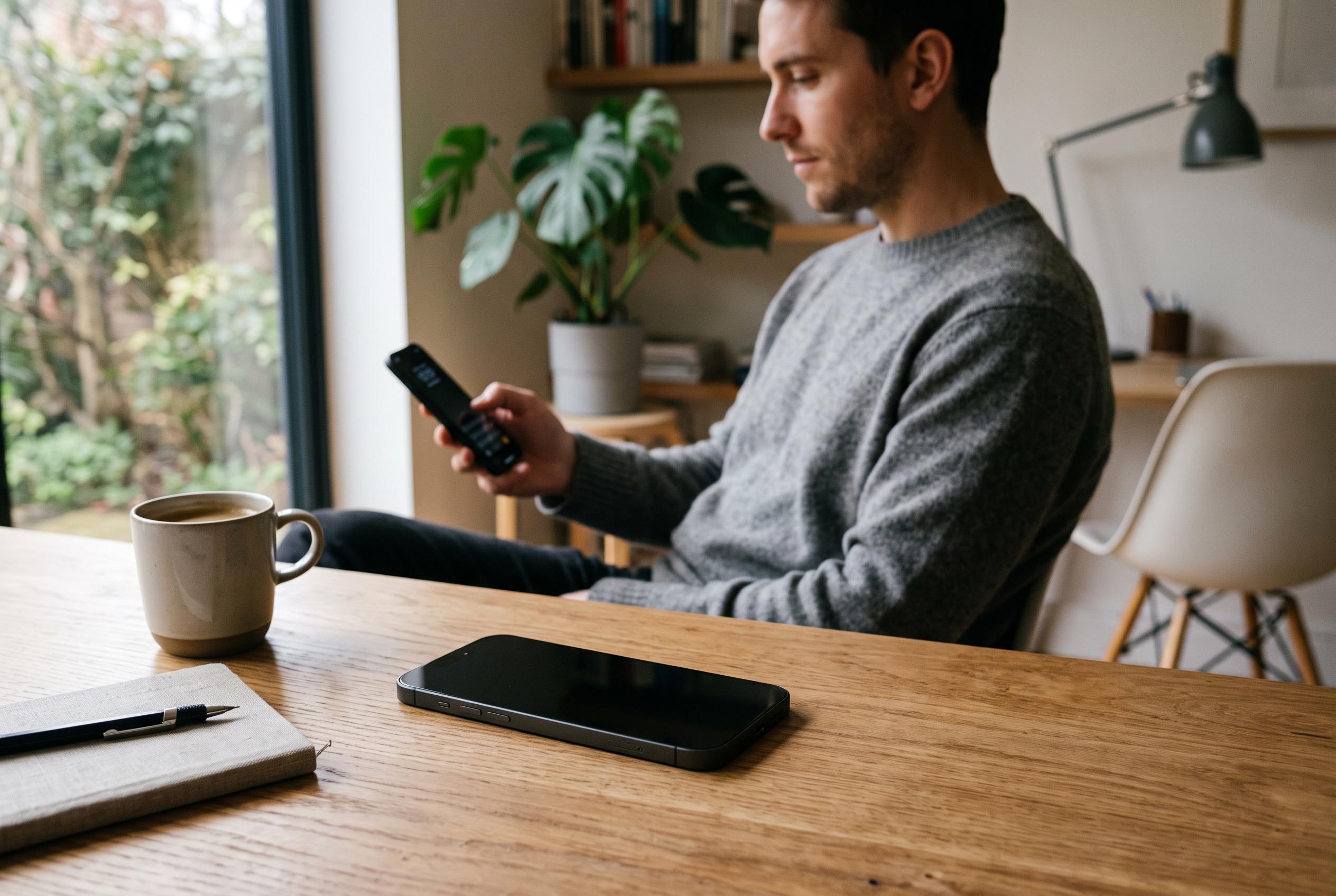

Apple’s flagship delivers longer battery life and stronger performance, while Google’s phone offers cheaper high-storage options, a lighter design and longer optical zoom.
The iPhone 18 Pro Max and the Pixel 11 Pro XL are priced to look equal at first glance, but the comparison only stays even at the entry level. According to Apple’s US store and Memeburn’s pricing breakdown, both handsets start at $1,299 for 256GB. Once storage increases, the gap opens quickly: Apple asks $1,499 for 512GB, $1,899 for 1TB and $2,499 for 2TB, while Google charges $1,419 for 512GB and $1,649 for 1TB, with no 2TB option. That makes the Pixel the more economical choice for buyers who need more local storage, especially because its higher-capacity models also move up to 16GB of RAM, according to Memeburn’s summary of the two phones.
Battery life is one of the clearest areas where the iPhone pulls ahead. Tom’s Guide said the iPhone 18 Pro Max lasted 18 hours and 27 minutes in its continuous web-browsing test over 5G at 150 nits, while the Pixel 11 Pro XL managed 14 hours and 28 minutes in the same run. That gives Apple roughly a four-hour advantage, and the same test suggests the lead is driven more by power efficiency than by battery size alone. Tom’s Guide and Mac Observer both attribute the iPhone’s improvement to the A20 Pro chip and a larger battery, while MacRumors reported that the phone can reach 50% charge in 15 minutes with a 60W or higher adapter.
Processing performance follows the same pattern. Memeburn notes that the iPhone 18 Pro Max already had a substantial advantage over the Pixel 11 Pro XL before the new A20 Pro arrived, based on Geekbench 6 results reported by Tom’s Guide. In those earlier runs, the previous iPhone generation scored 3,871 in single-core and 9,968 in multi-core tests, compared with 2,713 and 7,453 for the Pixel. Expert Reviews then measured the A20 Pro as 22% faster in single-core work and 28% faster in multi-core performance than the iPhone 17 Pro Max, reinforcing Apple’s lead. PhoneArena also described Google’s Tensor G6 as significantly slower than rival flagship chips, which is most relevant in gaming, video exports and on-device AI tasks.
The camera systems are tuned for different priorities rather than a simple overall win. The iPhone 18 Pro Max uses three 48MP rear cameras, including a main sensor with variable aperture and a 4x telephoto lens. The Pixel 11 Pro XL answers with a 50MP main camera, a 48MP ultrawide and a 48MP 5x telephoto, which gives it the longer optical reach. It also has a much higher-resolution 42MP front camera, compared with 18MP on the iPhone, which may matter more to people who rely heavily on selfies and video calls. On the other hand, the iPhone’s variable aperture offers additional control over exposure and depth of field, so the better choice depends on how the camera is used rather than on specification alone.
Display and physical design are closer than the marketing numbers suggest, but there are still practical differences. Google rates the Pixel 11 Pro XL’s screen at up to 3,600 nits and Apple rates the iPhone 18 Pro Max at 3,000 nits, yet the lab measurements cited by Memeburn and Tom’s Guide were almost identical in real-world high-brightness testing. The more noticeable distinction is weight: the Pixel is 227g, while the iPhone weighs 249g. That makes Google’s phone easier to handle over long sessions, while Apple’s remains the heavier but generally stronger device on measured performance. For buyers deciding between them, the choice comes down to whether they value speed and battery endurance more than cheaper higher-capacity storage, a lighter body and a 5x zoom lens.
Disclaimer: This content is intended for informational purposes only. Readers are advised to exercise their own judgement, conduct due diligence, or consult a qualified expert before acting on any information provided.