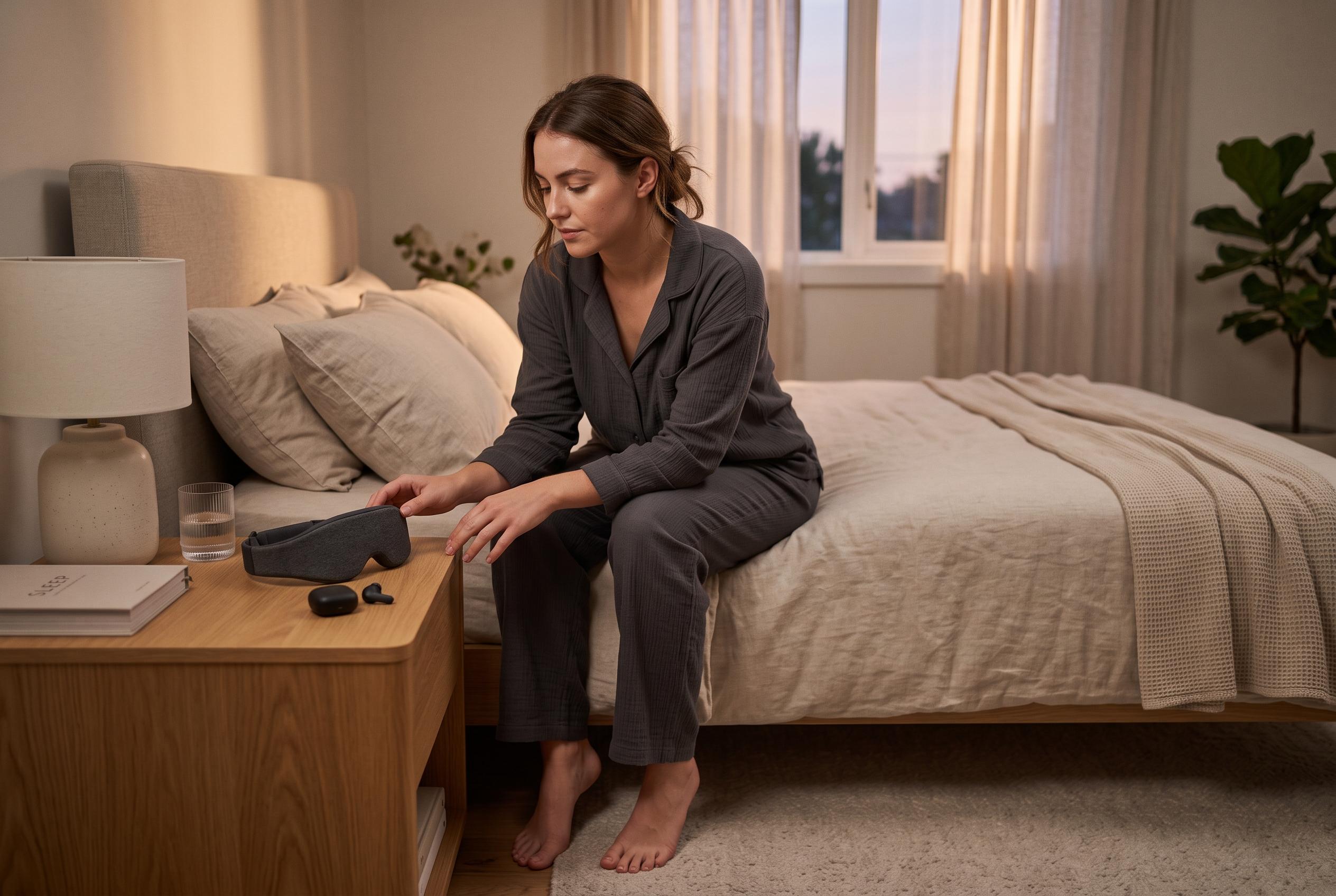

Sleep technology is moving beyond tracking as brain-sensing headbands and bed-friendly headphones offer competing ways to improve rest, but experts warn that prolonged in-ear audio may carry hearing risks.
Sleep technology is moving from simple sleep tracking towards devices that try to intervene while a person is still in bed. That shift has created two distinct wearable categories: brainwave-reading headbands and sleep headphones that focus on masking noise, playing sound more comfortably through the night, or both. The National Sleep Foundation’s 2025 Sleep in America Poll found that most adults still struggle to get enough quality rest, while market forecasts from Healthcare Foresights and other analysts point to a fast-expanding global sleep tech sector.
The difference between the two products is more than cosmetic. Sleep headbands are designed to detect brain activity in real time and respond with timed sound or vibration cues, a method often described as closed-loop auditory stimulation. Sleep headphones, by contrast, are generally adapted from conventional audio wearables: they aim to sit more comfortably in bed, reduce outside noise and, in some cases, add sleep sounds or tracking functions. For buyers, the practical question is whether they want a device that actively nudges sleep stages or one that simply makes the sleeping environment quieter.
The appeal of active intervention is clear in a market shaped by frustration as much as by innovation. According to the National Sleep Foundation, the latest poll focused on how sleep health affects daily functioning, while a 2026 poll looked at family sleep health and found that most respondents considered good sleep essential to how a household operates. That broad anxiety is helping the category grow. Healthcare Foresights estimates the global sleep tech devices market at roughly $29.3 billion in 2025, with a further rise expected in 2026, and says the sector could grow strongly through the next decade as sleep disorders become more widely recognised and AI-enabled tools improve.
Research and expert opinion suggest, however, that the two wearable routes serve different needs. Sleep specialists quoted by Forbes and Sleep.com argue that devices which deliver sound or vibration at the right moment may help some people settle more easily, particularly if the hardware encourages relaxation rather than distraction. At the same time, the apparent benefit may be partly psychological: if a user believes a forehead-mounted device will improve sleep, that expectation alone may help them relax. The result is a category in which perception, comfort and clinical plausibility all matter.
The cautionary note is that all-night audio in the ear is not risk-free. Audiology Australia’s Dr Emma Laird warned that the volume of sound and the length of listening both matter, and that prolonged exposure can raise the risk of noise-related hearing damage. She has advised that sleepers who want sound should consider soft headbands with flat speakers or a pillow speaker, because these leave the ear canal more open. That makes the likely market split fairly easy to read: headbands with brain sensing will appeal to people seeking active intervention and sleep-stage data, while flatter, speaker-based designs should suit side sleepers, shift workers and anyone who wants sound without placing a device inside the ear.
Disclaimer: This content is intended for informational purposes only. Readers are advised to exercise their own judgement, conduct due diligence, or consult a qualified expert before acting on any information provided.