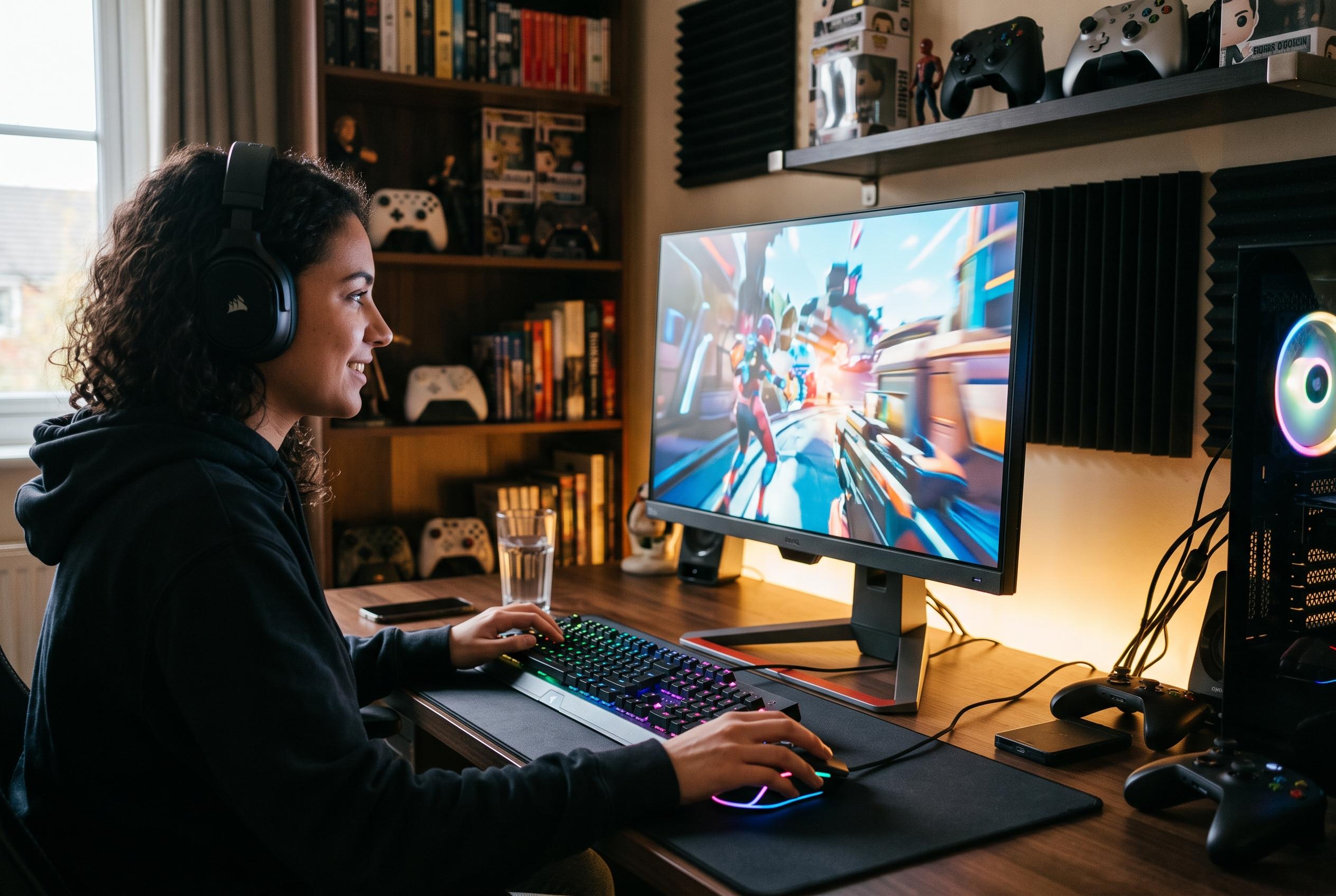

From affordable 1440p screens to premium OLED ultrawides, the right gaming monitor depends on refresh rate, resolution and panel technology more than size alone.
Choosing a gaming monitor is less about chasing the biggest panel and more about matching the display to the way you play. The Mercury News guide says screen size and resolution are the two first decisions most buyers should make, with 27 inches or larger and at least 2560 x 1440 pixels often cited as the practical starting point. That broad advice is consistent with 2026 buying guides from PCWorld and TechSpot, which both stress that panel choice should be driven by resolution, refresh rate and the type of games being played rather than by size alone.
Among the models singled out in the Mercury News piece, the Alienware Curved QD-OLED Gaming Monitor is the premium pick, with a 34-inch curved panel, a 165Hz refresh rate and strong colour accuracy that makes it useful beyond gaming. The AOC 27-inch 2K QHD Gaming Monitor is presented as the value option, pairing 1440p resolution with a 180Hz refresh rate and a three-sided frameless design. For buyers who want a faster ultrawide panel, the LG Ultragear OLED Curved Gaming Monitor offers a 240Hz refresh rate, 1440p support and an ultra-low response time, features that align with Tom’s Hardware’s and TechSpot’s wider praise for OLED gaming displays and their motion clarity.
That broader market context matters because modern gaming monitors now tend to trade on a small set of measurable strengths: refresh rate, response time, resolution, panel type and connectivity. Tom’s Hardware’s 2026 OLED monitor round-up highlights why OLED remains so attractive to serious players, citing its deeper blacks and high contrast, while PCWorld’s guide adds that HDR and high refresh rates can materially improve both cinematic single-player games and competitive titles. The Mercury News article also notes that gaming monitors usually include HDMI, DisplayPort and sometimes DVI inputs, which is important for buyers connecting consoles as well as PCs.
Price remains one of the clearest dividing lines. The Mercury News guide places entry-level gaming monitors at roughly $300 to $500, mid-range models below about $750 and top-end displays above $1,200, especially for larger screens. That framework is broadly in step with other 2026 buying round-ups, which continue to separate budget models from higher-end OLED and ultrawide options. The practical conclusion is straightforward: casual players can usually buy for resolution and value, while competitive and enthusiast gamers should pay closer attention to refresh rate, input lag and panel technology.
Disclaimer: This content is intended for informational purposes only. Readers are advised to exercise their own judgement, conduct due diligence, or consult a qualified expert before acting on any information provided.