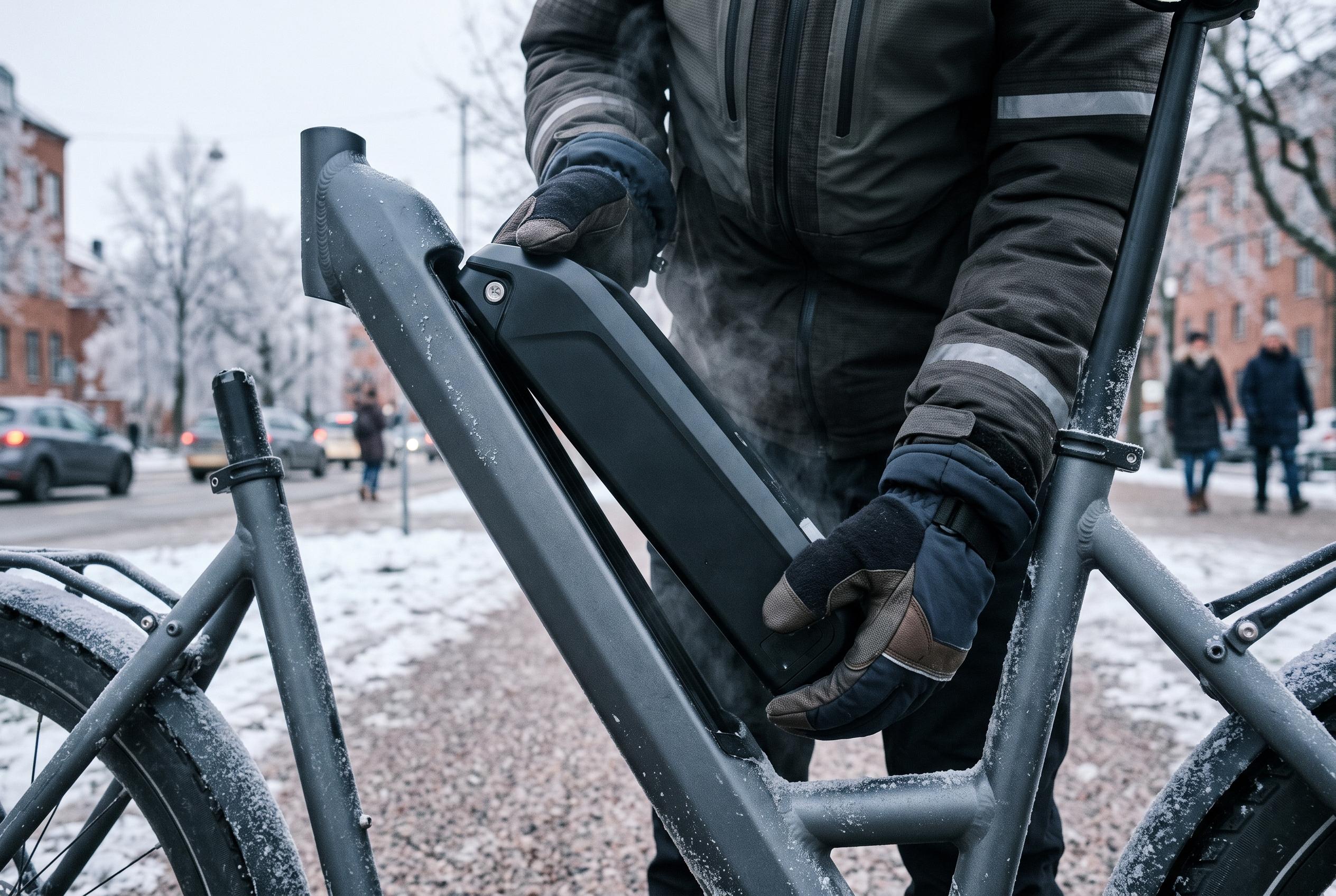

Cold weather temporarily cuts e-bike range, but charging a chilled or damp battery can create more serious risks. Keeping packs warm, dry and acclimatised is the key to safer winter riding.
Winter puts e-bike batteries under predictable strain. Cold weather slows the electrochemistry inside lithium-ion cells, raising internal resistance and cutting usable range. The practical answer, according to several winter-care guides, is to begin each ride with a battery that has been kept indoors at room temperature and to avoid asking a chilled pack to charge before it has warmed up naturally.
That principle matters because cold does not usually destroy capacity; it suppresses it temporarily. Bike Magazin says batteries should be stored in dry, frost-free conditions of about 10°C to 20°C, while other guides recommend broadly similar room-temperature storage and caution that range losses in winter are usually reversible once the pack warms up again. The real risk comes when riders try to recharge a cold battery, especially one that has been brought in from freezing conditions and has not yet reached a stable indoor temperature.
A simple routine is the safest one. Remove the battery from the bike when it is parked for long periods, keep it indoors, and fit it only immediately before departure. If the battery or frame is exposed to snow, slush or road salt, keep the contacts clean and dry, because moisture and corrosion can create avoidable faults. For e-MTBs and bikes with integrated packs, Bike Magazin notes that storing the whole machine in a sheltered place is preferable when the battery cannot be removed easily.
Insulation can help, but it is not a substitute for warmth. A neoprene sleeve or similar thermal cover does not generate heat; it merely slows heat loss and helps retain the warmth created by the battery during discharge. That makes it useful during a ride that starts from a warm battery, particularly in wind and slush. It is far less helpful if the pack has already been left in the cold for hours, because insulation will then preserve the cold rather than create useful heat.
How the bike is ridden also matters. HD-Ebike and Favourite Bikes both advise using moderate pedal assist at the start of a winter ride rather than immediately demanding maximum power. Gentle loading allows the battery to warm gradually from the inside while limiting sudden voltage sag, which can otherwise trigger early shutdowns. Several guides also warn against running the battery flat in winter, since deep discharge adds unnecessary stress at a time when the cells are already operating less efficiently.
Charging remains the point where winter mistakes become most damaging. The consistent advice across the sources is not to charge a battery that is still cold, damp or frozen. Tom’s Guide, in a separate safety-focused piece on e-bike batteries, stresses the importance of following manufacturer instructions and buying certified products, especially because moisture, poor storage and improper charging all raise fire risk. In practice, that means letting the pack acclimatise indoors, checking that the casing and port are dry, and only then connecting the charger.
For riders looking for a more comfortable winter commute, Himiway’s own guidance adds that sensible battery care pairs well with the right bike setup. Its D5 2.0 20″ is presented as a practical winter option thanks to its motor, fat tyres and full suspension, but the broader message is the same regardless of model: battery performance in winter is largely a matter of temperature management. Keep the pack warm before the ride, insulate it during use, and never rush the charging process afterwards.
Disclaimer: This content is intended for informational purposes only. Readers are advised to exercise their own judgement, conduct due diligence, or consult a qualified expert before acting on any information provided.