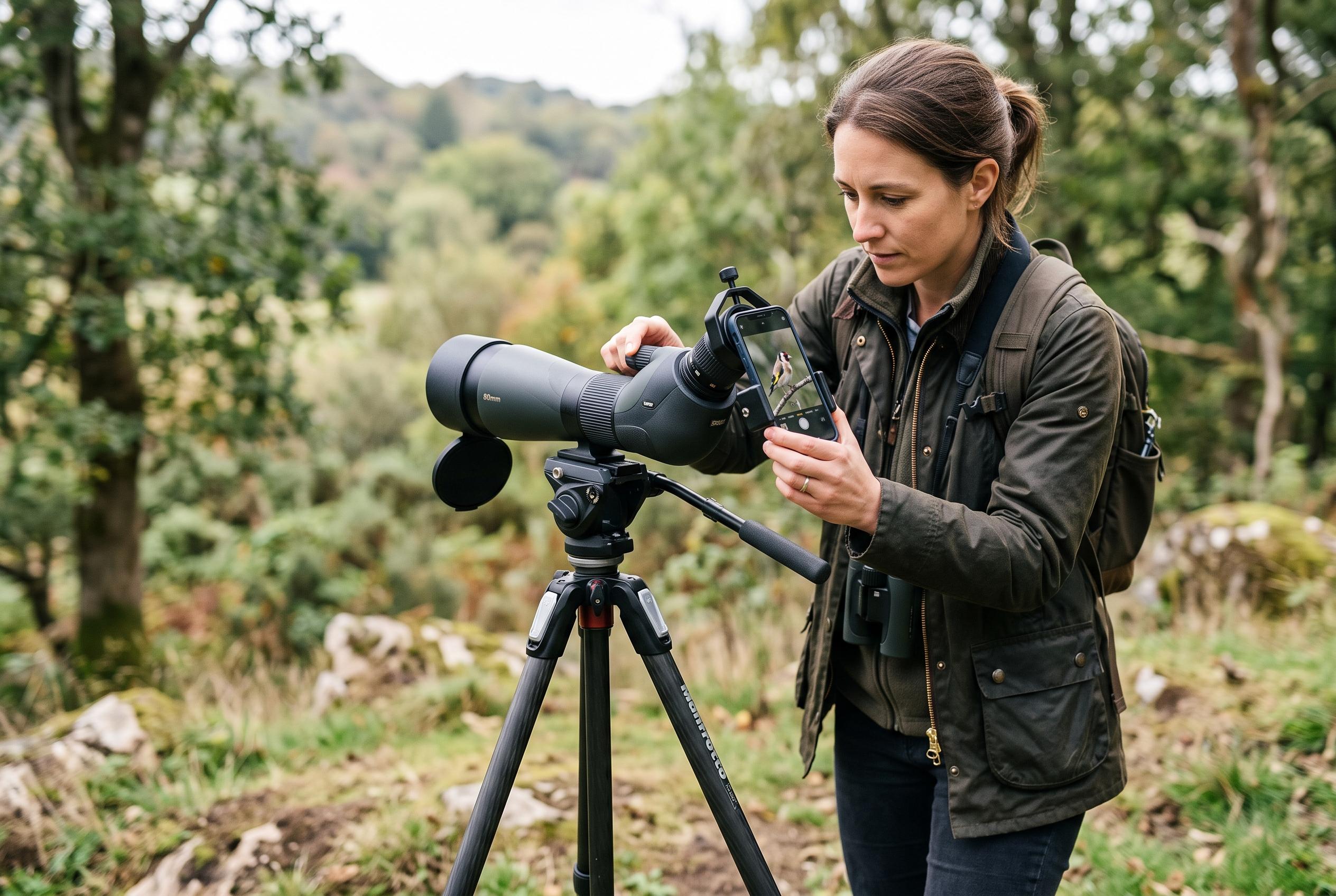

Clear optics, stable support and precise phone alignment matter more in the field than headline magnification figures, according to recent buying guides.
Choosing a spotting scope with a phone adapter is less about chasing the highest magnification figure and more about finding a system that remains usable in the field. The strongest options in this category combine clear optics, enough light transmission for outdoor viewing, a tripod that limits vibration, and an adapter that keeps the phone camera properly centred over the eyepiece. Recent buying guides from GoGrounded and Zen Bicycle Fabrication both stress that the best results come from balance: practical zoom, stable support and dependable alignment, rather than headline-grabbing numbers alone.
That is why complete kits still make sense for many buyers. A model such as a 20-60×80 scope appeals to birdwatchers, hikers and target shooters because it offers a familiar middle ground between reach and field of view, while also bundling a tripod, case and phone mount. GoGrounded’s roundup also includes a heavier 30-90×92 option for users who want maximum reach, but it notes the trade-off: larger, more powerful scopes tend to be less forgiving of movement and more demanding on support gear.
For readers who already own decent optics, a standalone phone adapter can be the smarter purchase. NerdTechy’s review of phone mounts focuses on the features that matter most in practice: solid construction, accurate alignment and compatibility with both the eyepiece and the handset. That is where three-axis mounts such as the Tridaptor stand out, because they allow fine forward, backward and lateral adjustment, which helps reduce vignetting and makes framing easier when the phone is being used for digiscoping.
Magnetic mounts are another useful branch of the market, particularly for iPhone users. GoGrounded highlights MagSafe-style adapters as a convenience option for compatible phones and cases, while also warning that users should check eyepiece diameter carefully before ordering. The same caution applies to broader universal mounts such as the GOSKY, CELTICBIRD and FANAUE models, which promise wide device compatibility but still depend on accurate measurement of the scope or binocular eyepiece before purchase.
The wider theme across the roundups is that digiscoping works best when the whole setup is treated as a system. BestReviews and Eepmekong both underline the importance of waterproofing, fog resistance and multi-coated optics for outdoor use, particularly where weather and lighting can change quickly. They also point out that a sturdy tripod is not optional at higher magnifications: even tiny movements become obvious once the image is enlarged on a smartphone screen.
In practical terms, the best choice depends on how the equipment will be used. Beginners and casual wildlife observers are usually better served by a complete 20-60x kit with a phone adapter included. Users who want faster setup may prefer a magnetic mount, provided their phone is compatible. Serious digiscopers, meanwhile, are likely to value precision alignment and a rigid metal mount more than the broadest possible compatibility. Across the sources reviewed, the common conclusion is consistent: the best spotting scope for phone use is the one that matches the eyepiece, the phone and the field conditions, not just the one with the biggest magnification claim.
Disclaimer: This content is intended for informational purposes only. Readers are advised to exercise their own judgement, conduct due diligence, or consult a qualified expert before acting on any information provided.