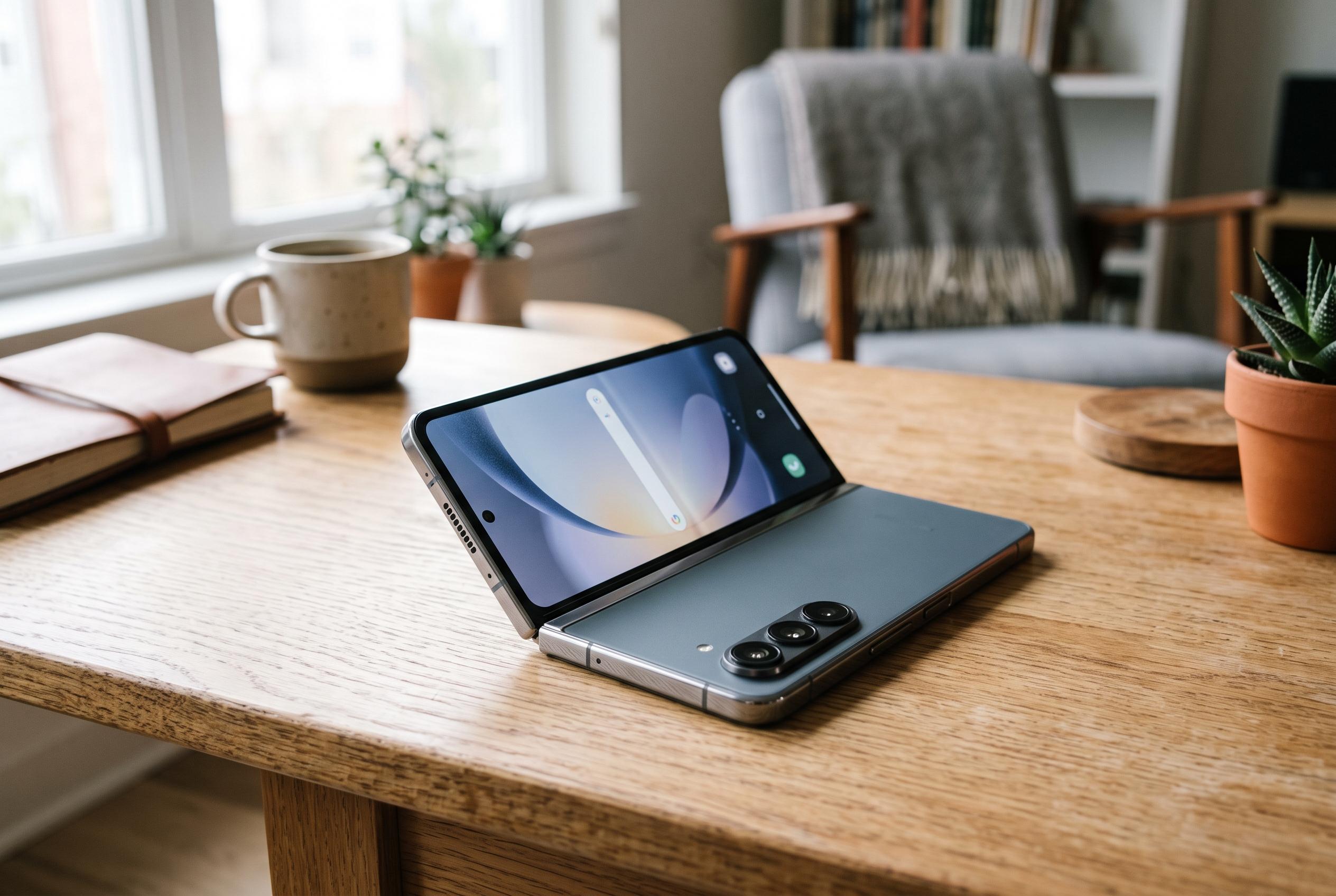

Early demand for Apple’s $1,999 iPhone Duo suggests the company can make foldables desirable and profitable without making them mainstream.
Apple’s entrance into foldables is less a sudden experiment than the latest proof that timing matters as much as design. For years, smartphone makers tried to persuade buyers that a bendable handset was the next obvious step. The market’s response was lukewarm. The category grew, but slowly, and it remained a sliver of global phone sales. Apple has now arrived with its iPhone Duo, and early signs suggest that its real advantage is not the hinge but the company’s ability to turn a niche format into a highly desirable object.
That contrast is easier to see in the numbers. Counterpoint Research said global foldable shipments reached 18.2 million units in 2025, up 6% year on year, with a peak quarterly share of 2.5% of worldwide shipments in the third quarter. In Europe, foldables accounted for only 1.5% of sales in the first quarter of 2025, despite modest growth. Yet the first half of 2026 was weaker, with global foldable shipments falling 21.6% from the same period a year earlier. The technology is improving, but demand remains fragile.
Apple’s launch has changed the tone, at least for now. MacRumors reported that pre-orders opened on 16 October 2026 at 5 a.m. Pacific time and that delivery estimates slipped within minutes, moving from launch day to November and then to January within half an hour. Apple described demand as “extraordinary”, while also signalling that availability would remain tightly managed. That kind of early surge does not prove mass-market success, but it does show how quickly Apple can transform a product category that others struggled to normalise.
Pricing helps explain why the Duo is not aimed at everyone. According to Apple’s launch information reported by MacRumors, the device starts at $1,999 in the US for 256GB of storage and rises to $3,199 for the 2TB version. Research from IDC suggests foldables will make up only 2.2% of smartphone unit sales in 2026, but as much as 6.9% of sector revenue. That matters for Apple. It does not need foldables to become mainstream to make money from them. It only needs a share of customers who already buy premium iPhones and are willing to pay more for a larger, more flexible screen.
The risk, however, is equally clear. Repair bills are steep. T3 reported that replacing the inner folding display can cost $999 without AppleCare+, while other repairs also come at a premium. AppleCare+ reduces those charges sharply, but the underlying message is the same: the device is expensive to buy and expensive to fix. That may help explain why foldables have remained aspirational rather than practical for many buyers, even as manufacturers have improved durability, reduced thickness and refined the crease. Apple’s arrival does not erase those objections. What it does do is make the category feel less like a curiosity and more like a premium product line with commercial momentum.
The wider smartphone market adds another layer. Tom’s Guide reported that global smartphone shipments fell sharply in the third quarter of 2026, as higher memory costs and weaker demand continued to squeeze the industry. In that context, Apple’s foldable launch looks less like a bet on a booming mass market and more like a bid to capture value in a stagnant one. The company may not have invented the format, but it has once again shown that invention and market power are not the same thing. For now, the iPhone Duo appears to confirm that Apple can make a product desirable long before it makes it universal.
Disclaimer: This content is intended for informational purposes only. Readers are advised to exercise their own judgement, conduct due diligence, or consult a qualified expert before acting on any information provided.