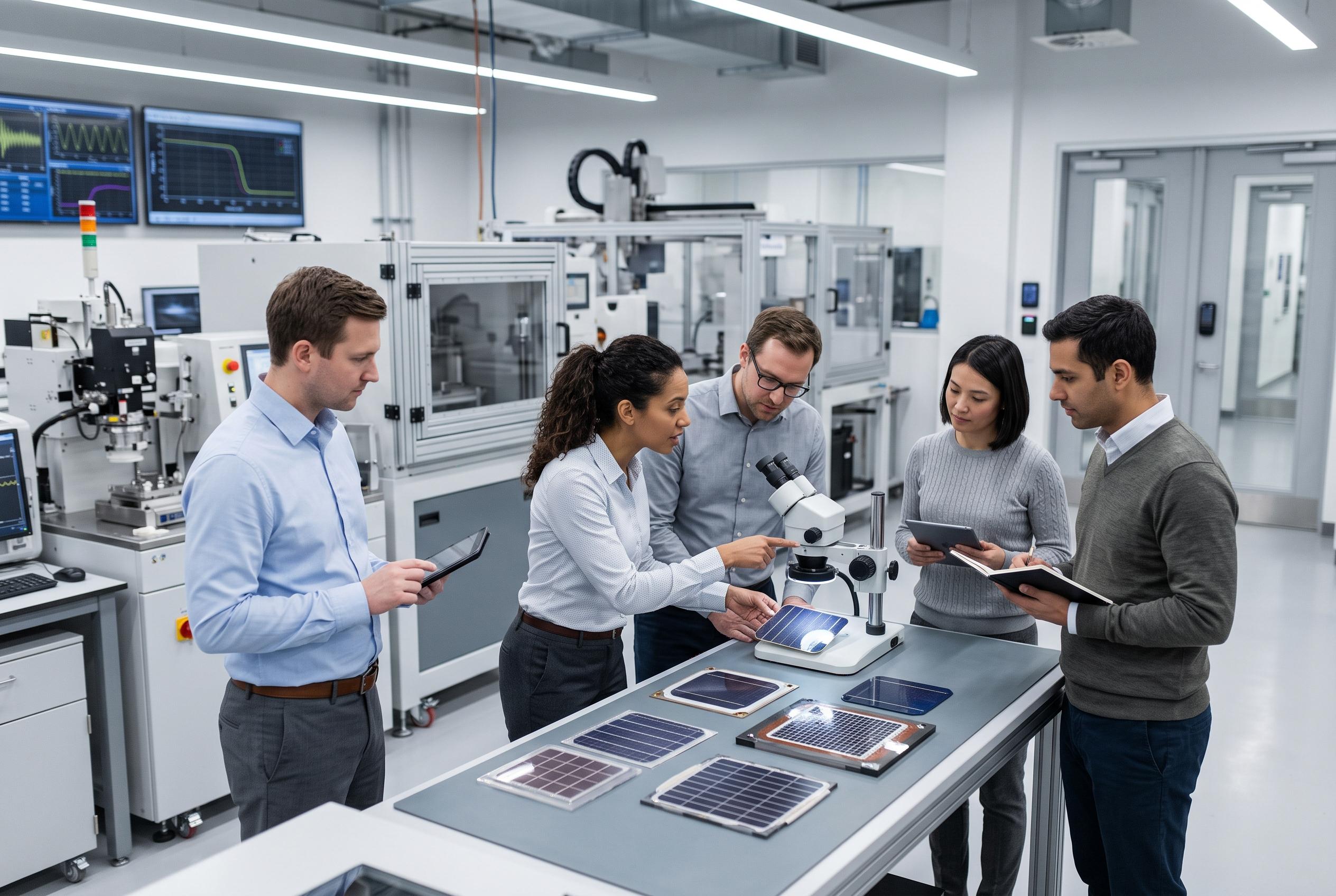

Beijing is proposing restrictions on 12 solar manufacturing technologies, including methods for producing perovskite, tandem and other advanced cells, citing national security and misuse risks.
China’s move to tighten oversight of solar manufacturing technology reflects a broader effort to control know-how in sectors it sees as strategically sensitive. According to Reuters, the Ministry of Commerce has proposed export restrictions on 12 technologies used to make solar equipment, alongside a wider review of biotechnology and artificial intelligence technologies. The ministry said such controls were necessary to prevent the “out of control or improper use” of technology while preserving legitimate international exchange and co-operation.
The proposal would cover technologies linked to the production of advanced solar cells, including equipment and processes used for perovskite and tandem cells, as well as large-scale fluidised-bed polysilicon production. Perovskite is a newer solar material that can improve conversion efficiency, while tandem cells combine perovskite with silicon to capture more sunlight. Reuters reported that the draft would also target export of advanced manufacturing methods such as TOPCon, HJT and XBC, which are among the more sophisticated designs in the industry.
Beijing’s concern, as set out by the ministry, is that photovoltaic technology could be diverted into highly sensitive uses, including aerospace and national defence. That framing places solar manufacturing within the same strategic category as other frontier technologies increasingly subject to government scrutiny. It also comes as countries seek to strengthen their energy and industrial sovereignty, with India, for example, pushing to reduce reliance on Chinese manufacturing in solar supply chains.
The proposal fits a wider pattern of industrial policy in which access to key technologies is treated as a tool of economic and strategic leverage. In Europe, for instance, German battery recycling start-up Tozero opened a Munich industrial facility in March aimed at reducing dependence on China for lithium, graphite and nickel-cobalt supply. The plant is designed to process 1,500 tonnes of waste a year, turning end-of-life lithium-ion batteries into materials for electric vehicles, grid storage and industrial electrification.
Disclaimer: This content is intended for informational purposes only. Readers are advised to exercise their own judgement, conduct due diligence, or consult a qualified expert before acting on any information provided.