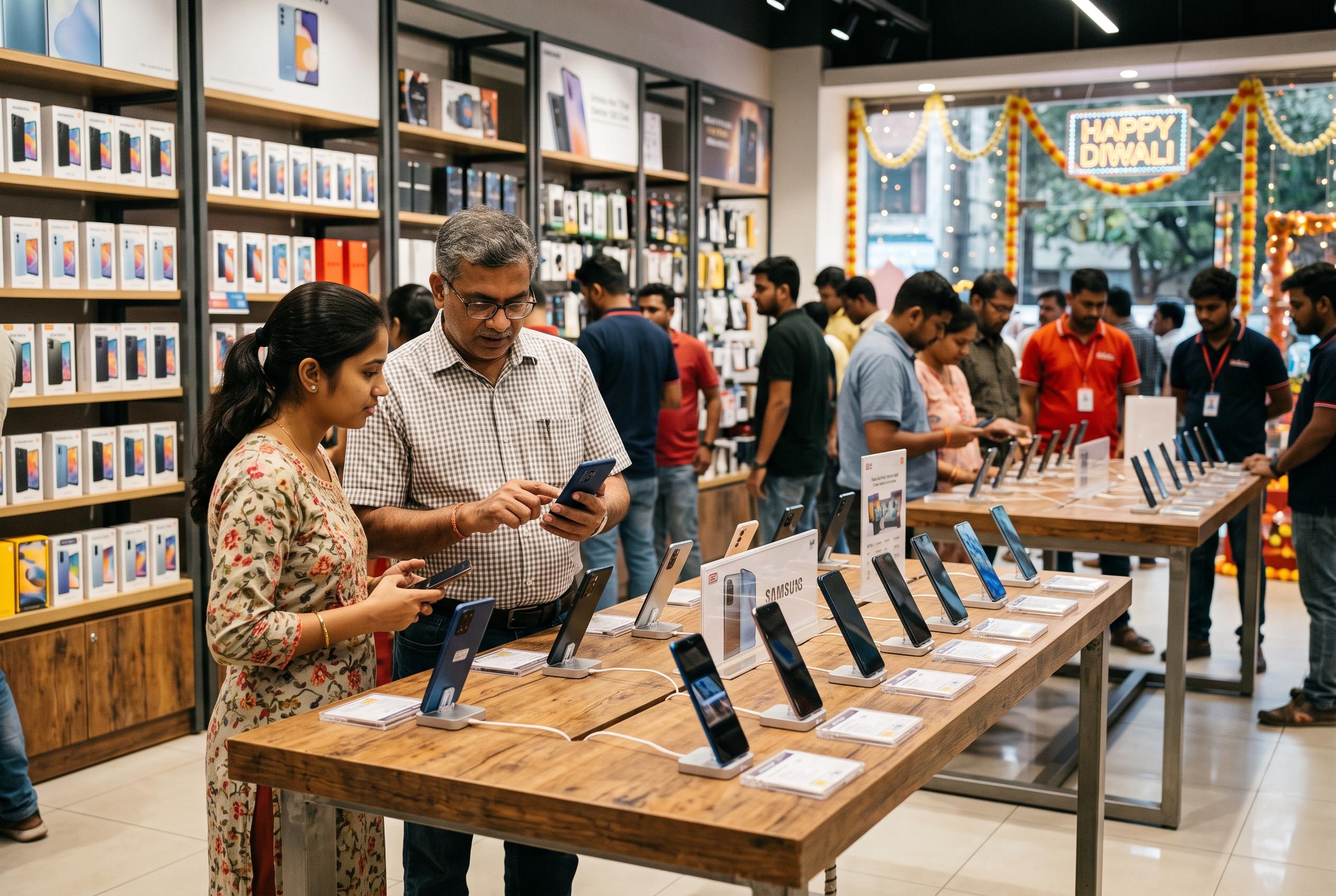

India’s smartphone shipments have fallen for a third consecutive quarter as a memory-chip shortage pushes up handset prices and weakens the impact of festive discounts.
India’s smartphone market has entered the festive shopping season in a fragile state, with analysts warning that falling demand is colliding with sharply higher handset prices. Counterpoint Research said shipments in the country dropped 20% in the third quarter of 2026, the third straight quarter of decline, while a separate estimate from Omdia put the fall at 26% to 35.8 million units, the weakest third-quarter reading in nearly a decade. Both assessments point to the same underlying problem: buyers are holding back just as retailers would normally expect a seasonal lift.
The price shock is central to that slowdown. Counterpoint Research says smartphone prices in India rose 21% over 2026, the steepest increase in any major market it tracks. Globally, the same research firm found that existing handset prices climbed about 15% this year, while newly launched models were roughly 25% more expensive than comparable devices released a year earlier. The pressure is being driven by a shortage of memory chips, with artificial intelligence infrastructure absorbing more DRAM and NAND supply and forcing manufacturers to pay more for key components.
That has left discounting with less power than usual. Counterpoint expects India’s festive-season smartphone volumes to fall by around 12% year on year, even though the value of sales may still rise by about 5% because each device costs more. The firm has also pointed to longer replacement cycles, as consumers either postpone upgrades, stretch their budgets or move towards refurbished handsets. In practice, that means the traditional Diwali sales push is doing less to restore momentum than it has in past years.
The Indian slowdown is part of a broader global downturn. Reuters reported that worldwide smartphone shipments fell 20% in the third quarter of 2026 to their lowest level for that period since 2012, again citing Counterpoint Research. The analyst firm said memory shortages and higher component costs have pushed manufacturers to prioritise profitability over volume, a shift that is visible across the industry as Samsung, Apple, Xiaomi, Oppo and Vivo all contend with weaker shipment trends. For buyers, the immediate result is a market where even aggressive festive promotions may not be enough to offset a structural rise in prices.
Disclaimer: This content is intended for informational purposes only. Readers are advised to exercise their own judgement, conduct due diligence, or consult a qualified expert before acting on any information provided.