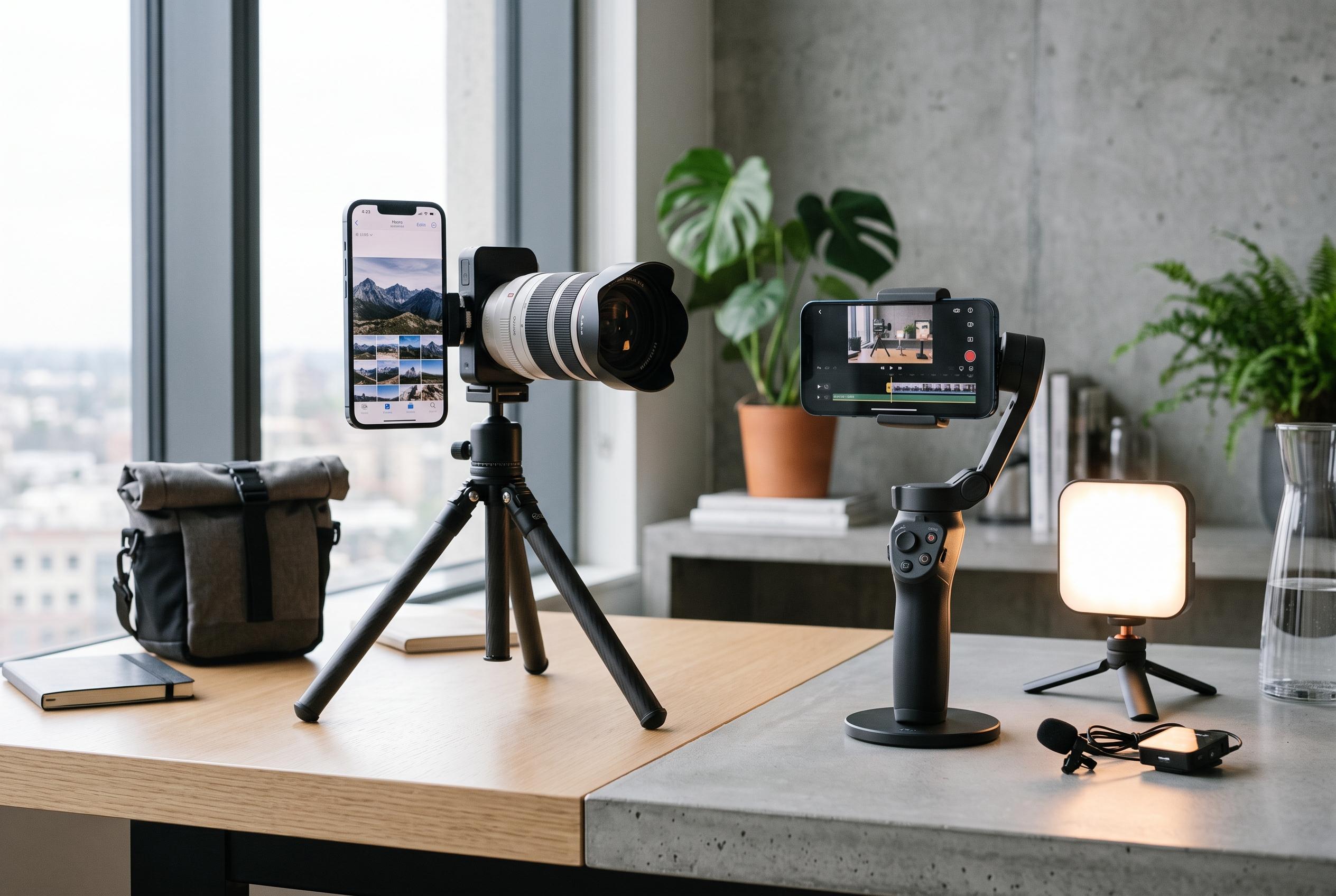

The Oppo Find X9 Ultra and Vivo X300 Ultra share a 170 DXOMARK score and Sony’s 200MP LYT-901 sensor, but their different lenses and accessories target distinct kinds of photographers.
For photographers deciding between Oppo’s Find X9 Ultra and Vivo’s X300 Ultra, the real distinction is not image quality alone but how each maker has allocated a very similar camera budget. Both phones were rated 170 by DXOMARK, and both use the same 200-megapixel Sony LYT-901 main sensor. Yet Oppo leans towards long-range stills, while Vivo has built a more video-focused device, with a different lens layout and accessory ecosystem shaping the experience far more than the headline score suggests. According to the launch details, Vivo unveiled the X300 Ultra in China on 30 March and brought it to international markets on 16 April, while Oppo introduced the Find X9 Ultra on 21 April and opened sales in the UK and Europe on 8 May; neither model is sold officially in the United States.
Oppo’s strongest argument is simple: it gives you a true 10x periscope inside the phone. TechRadar and other hands-on coverage describe a 70mm 3x camera alongside a 230mm 10x module, which means the Find X9 Ultra can reach far beyond what the Vivo can do natively. That matters because Vivo’s built-in telephoto tops out at 85mm, so matching Oppo’s reach requires either heavy cropping or a clip-on lens. DXOMARK’s review of the Oppo praises detail retention, noise control and long-range zoom performance, even while noting some exposure instability and low-light noise.
Vivo, by contrast, is the more ambitious video tool. DXOMARK says the X300 Ultra matches Oppo’s overall score, but highlights video strengths, including 8K capture and 4K at 120 frames per second with 10-bit log recording. The device also records 4K 120fps log footage on all three rear cameras, including the ultrawide, and supports modular teleconverters that extend its reach to 200mm and 400mm. Digital Camera World and Android Central both point to those attachments as a major part of the phone’s appeal, especially for users who want a flexible kit rather than a fixed lens arrangement. The 35mm equivalent main camera is also unusual in a flagship phone, and may suit street, portrait and documentary work better than the more conventional wide-angle main lens on the Oppo.
Battery life also favours Oppo. The Find X9 Ultra carries a 7,050mAh cell, compared with 6,600mAh in the Vivo, and TechRadar lists 100W wired charging for the Oppo, alongside 50W wireless charging. In practical terms, that larger battery gives the Oppo a useful margin for heavy camera use, particularly when long telephoto shooting and previewing consume power quickly. The Vivo still charges at 100W by cable, but its wireless charging is slower at 40W, which may matter more to buyers who plan to use the device as a travel camera and phone in one.
Price and support also push the choice in different directions. The Oppo is more expensive in the markets where both are sold, with a premium of about 7% in China and roughly 6% in India, while in the UK it is the only one of the pair officially available, at £1,449 for a 12GB and 512GB configuration. Vivo, however, offers the longer security support period, with seven years of patches against Oppo’s six, which may matter to buyers treating the phone as a long-term professional tool. On balance, the Oppo Find X9 Ultra is the better buy for still photographers who want the strongest built-in zoom and the larger battery, while the Vivo X300 Ultra is the more interesting option for creators who value video, teleconverter flexibility and the 35mm look.
Disclaimer: This content is intended for informational purposes only. Readers are advised to exercise their own judgement, conduct due diligence, or consult a qualified expert before acting on any information provided.