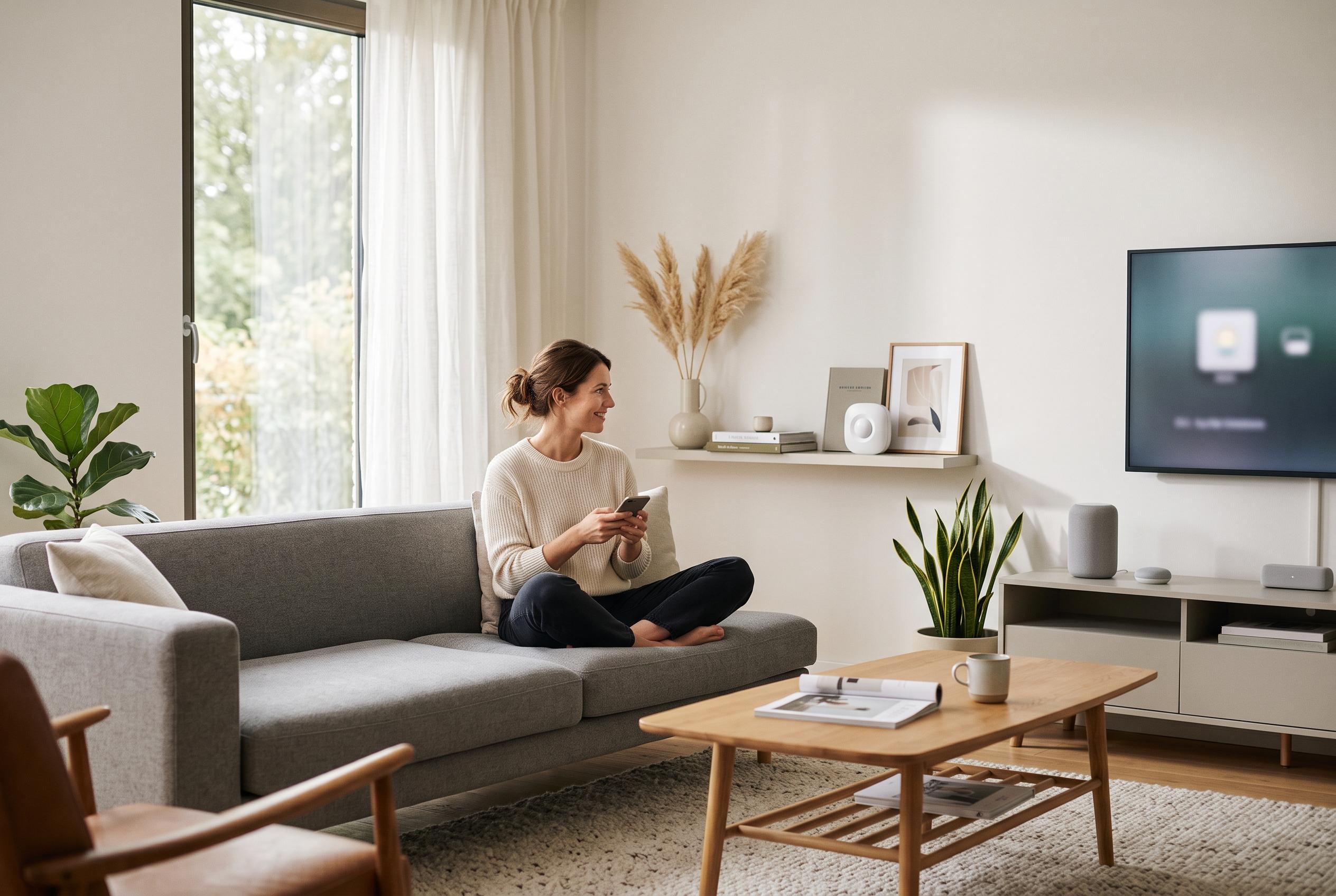

Ikea’s modular Home Safety range offers cheap Matter-compatible sensors and broad smart-home integration, but no professional monitoring or dedicated cameras.
Ikea’s move into home security is less about selling a complete alarm package than about offering a low-cost, modular system that fits into existing smart home setups. The Home Safety range is built around the Dirigera hub and a small set of Matter-compatible sensors, allowing users to link the kit with Alexa, Google Home, Apple Home and SmartThings. In PCMag’s testing, a system made up of one hub, two door and window sensors, one motion sensor and one water sensor cost $187.95, which is low for a system that is this configurable.
The hardware is deliberately simple. The Dirigera hub uses Ethernet rather than Wi-Fi and acts as a Thread border router as well as a Matter bridge and controller, so it can also manage compatible third-party devices. Ikea’s sensors are compact and inexpensive: the Myggbett door and window sensor costs $11.99, the Myggspray motion sensor is also $11.99, and the Klippbok water leak sensor is $11.99. That pricing undercuts many rivals, including SimpliSafe, which PCMag notes charges more for equivalent individual sensors.
The trade-off is that Ikea is selling self-monitored security rather than a fully managed alarm service. There is no professional monitoring, and the range does not include dedicated security cameras. Instead, users must rely on the Ikea Home Smart app or connected platforms to receive alerts and trigger automations. The app supports rooms, scenes, activity logs and Smart Actions, which can be used to push notifications or activate other devices.
On performance, the system appears to deliver the basics well. PCMag found setup straightforward, with the hub and sensors detected quickly and Matter pairing working without friction. Alerts were reported immediately when sensors were triggered, and automation tests ran reliably, including a routine that changed a smart bulb’s colour when motion was detected. That makes the system more attractive as a budget-friendly, DIY security layer than as a replacement for a traditional monitored alarm.
Disclaimer: This content is intended for informational purposes only. Readers are advised to exercise their own judgement, conduct due diligence, or consult a qualified expert before acting on any information provided.