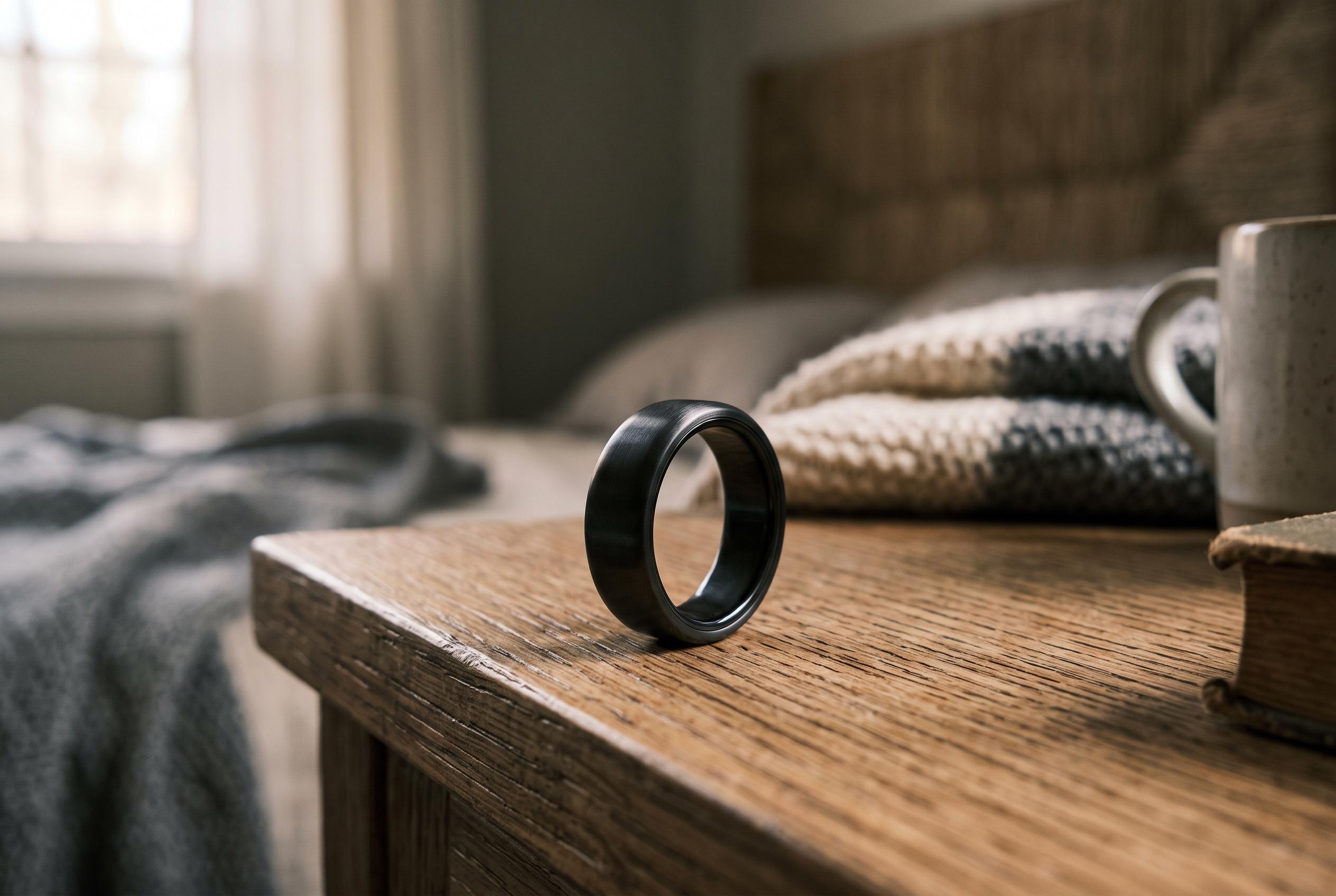

The lightweight smart ring delivers useful sleep and recovery insights without a monthly fee, although its fit, app complexity and limited workout features may give buyers pause.
Ultrahuman’s Ring Air is pitched as a discreet health tracker rather than a gadget that advertises itself. The silver version reviewed here is understated, with a slim external finish and a visible sensor array on the inside. It arrives with a charging cradle, USB-C cable and a quick-start guide that points users to the companion app, where setup is handled through a straightforward pairing process.
Fit matters more than it does with a conventional ring. Ultrahuman provides a sizing kit with mock rings across a broad range, because a loose fit can undermine the accuracy of the readings. There are no half sizes, which may force some buyers to choose a different finger rather than an ideal diameter. The company recommends wearing the sizing ring for a couple of nights to check comfort and rotation before committing.
Like other smart rings, the Ring Air is thicker than a normal piece of jewellery, although it is notably light. That makes it easy to wear through the day, but less suitable for tasks that demand a firm grip. Extended wear can also trap moisture beneath the band, a familiar issue in this category. The practical answer is to take it off regularly, even though the battery is designed to last several days between charges.
The main commercial appeal is that Ultrahuman does not require a subscription for core use. Reviewers at Tech Advisor, Android Central, TechRadar and WIRED all highlight that point as a major advantage over rival wearables that lock basic data behind monthly fees. Ultrahuman does sell optional add-ons, including heart rhythm and cycle-related tools, but the central health-tracking functions remain available without an ongoing payment. That model makes the ring easier to justify for users who want continuous monitoring without a recurring cost.
The app is where the device either proves its value or becomes overwhelming. It presents sleep, stress, movement and recovery information in card-based views, with sleep scoring and stage analysis among the most prominent features. Android Central praised the sleep data and heart-health monitoring, while TechRadar noted that the volume of information can be hard to digest. Across the reviews, the picture is consistent: the Ring Air is strongest as a passive health monitor, with a comfortable fit, useful insights and good battery life, but it is less convincing as a dedicated workout tool and may be vulnerable to cosmetic wear over time.
Disclaimer: This content is intended for informational purposes only. Readers are advised to exercise their own judgement, conduct due diligence, or consult a qualified expert before acting on any information provided.