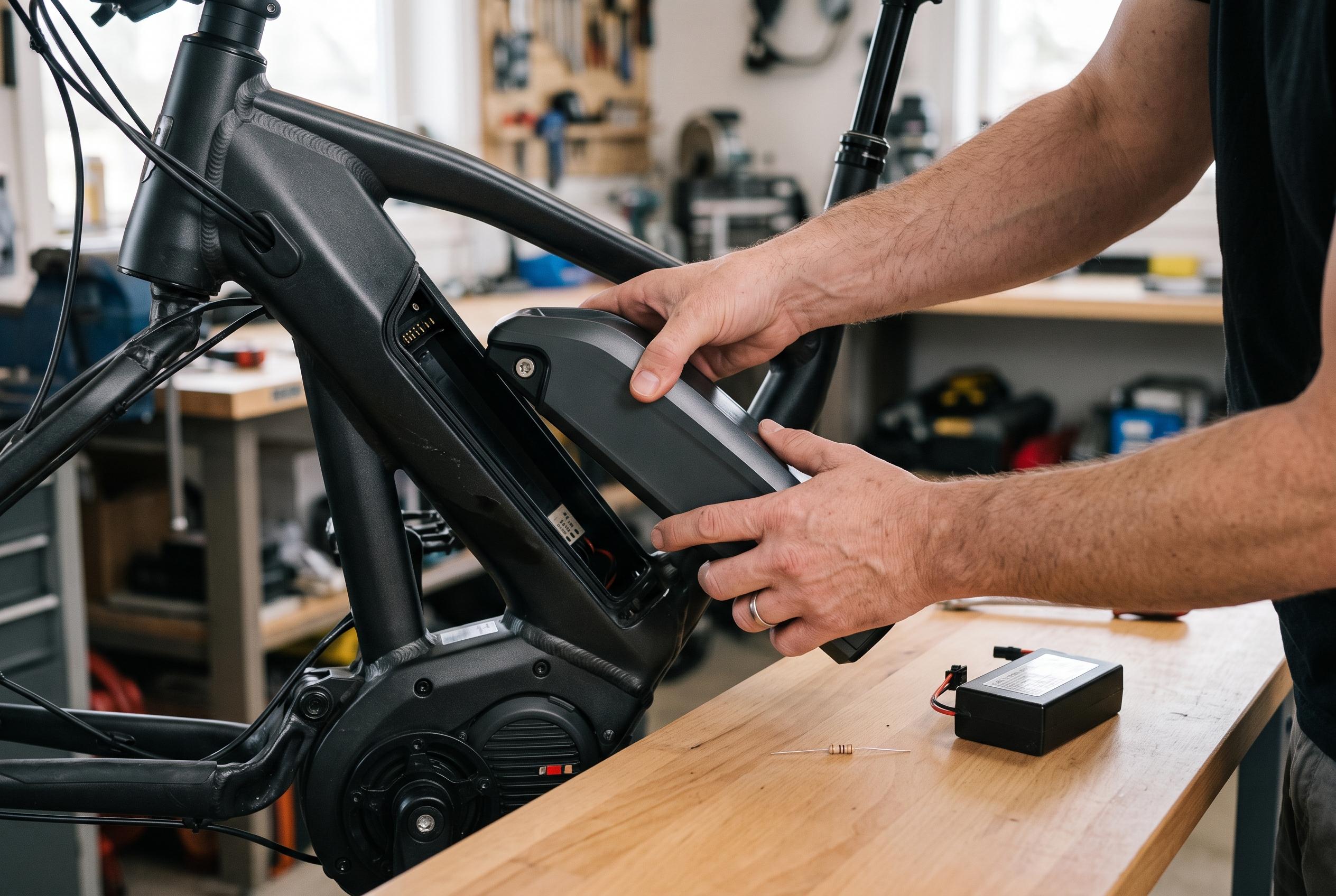

Official expansion packs offer integrated battery management and warranty protection, but cheaper third-party builds and an XT150 resistor workaround are attracting owners willing to accept greater technical and safety risks.
For owners of the De3 series, the most common question in recent months has not been about output in watts, but where to buy an expansion battery pack and whether the upgrade can be done at home. With Singles’ Day discounts pushing main units lower, many drivers of the 1 kWh and 1.5 kWh models are now weighing a familiar problem: how to make the system hold more energy without creating a new maintenance headache.
According to a recent article on Smzdm, there are now three clear paths. The most straightforward is the official expansion pack, which does more than simply add capacity. For the De3 series, the official 1 kWh add-on has been discussed at a reference price of around 1,700 yuan on Pinduoduo. Larger official options are also available in the wider De family: the DePro can be expanded by 3.6 kWh to a total of 7.2 kWh, while the DePro 3 is said to support growth to 12 kWh. The appeal of the factory route is not only the extra energy, but also the charging and discharging logic built into the system.
That logic matters because, as the article notes, some owners who have added official packs report that the vehicle manages the batteries as a matched set. One De2 Max owner who added two expansion packs described the principle as balancing charge and balancing use, so that the two batteries complete similar numbers of cycles and age at roughly the same pace. That is the part most DIY solutions cannot replicate. In practical terms, the official pack is not just hardware; it is also a managed integration with the main power system.
The second route is to build a third-party battery pack from individual cells, and here the price gap is dramatic. The Smzdm article cites a camper owner who modified the De3 expansion interface and fitted third-party storage cells from a ZTE base-station server application, using 16 series aluminium-cased large cells. The result was a 51.2V, 100Ah pack, roughly 5 kWh in capacity, for about 2,000 yuan. The same article also cites a Japanese motorhome blogger who compared an official two-pack expansion costing 90,000 yen with a full system at 300,000 yen, versus a self-built 16 kWh arrangement for 250,000 yen. The point is not that one number is always better than another, but that unit cost can change sharply once the work moves outside the dealer network.
The third path is the most talked about in recent months: a low-cost workaround built around the XT150 interface. According to the article, the connector contains four power pins and eight sensing pins used by the vehicle to determine whether an external pack is attached. Hobbyists have reportedly mapped those pins online, and one popular trick is to connect a 1k resistor so the main unit believes an expansion battery is present. Once the system is fooled, the port begins producing output and can be used with a third-party 48V battery pack or, in some cases, to power 48V equipment directly. The appeal is obvious, but so are the risks. Commenters keep asking whether the display will flag charging faults, whether the protection board will still function properly, and how much load the modified setup can really support. The original poster also made clear that the method was only for study and carried responsibility for any failure.
For buyers trying to decide, the article’s conclusion is pragmatic. If the vehicle needs more than 2 kWh on a regular basis, and it is being used for camping, mobile living, market stalls or long periods off-grid, the official pack remains the safest choice because the balancing logic, certification and five-year warranty come built in. During promotion periods, buyers may even recover some money through price protection; one owner was said to have reclaimed 93 yuan. By contrast, if the pack will only be used occasionally, it may spend most of its life idle. And for those tempted by the workaround route, the evidence remains limited to owner testing rather than manufacturer support. In other words, the cheapest path is not always the least expensive one once reliability, after-sales service and risk are factored in.
Disclaimer: This content is intended for informational purposes only. Readers are advised to exercise their own judgement, conduct due diligence, or consult a qualified expert before acting on any information provided.