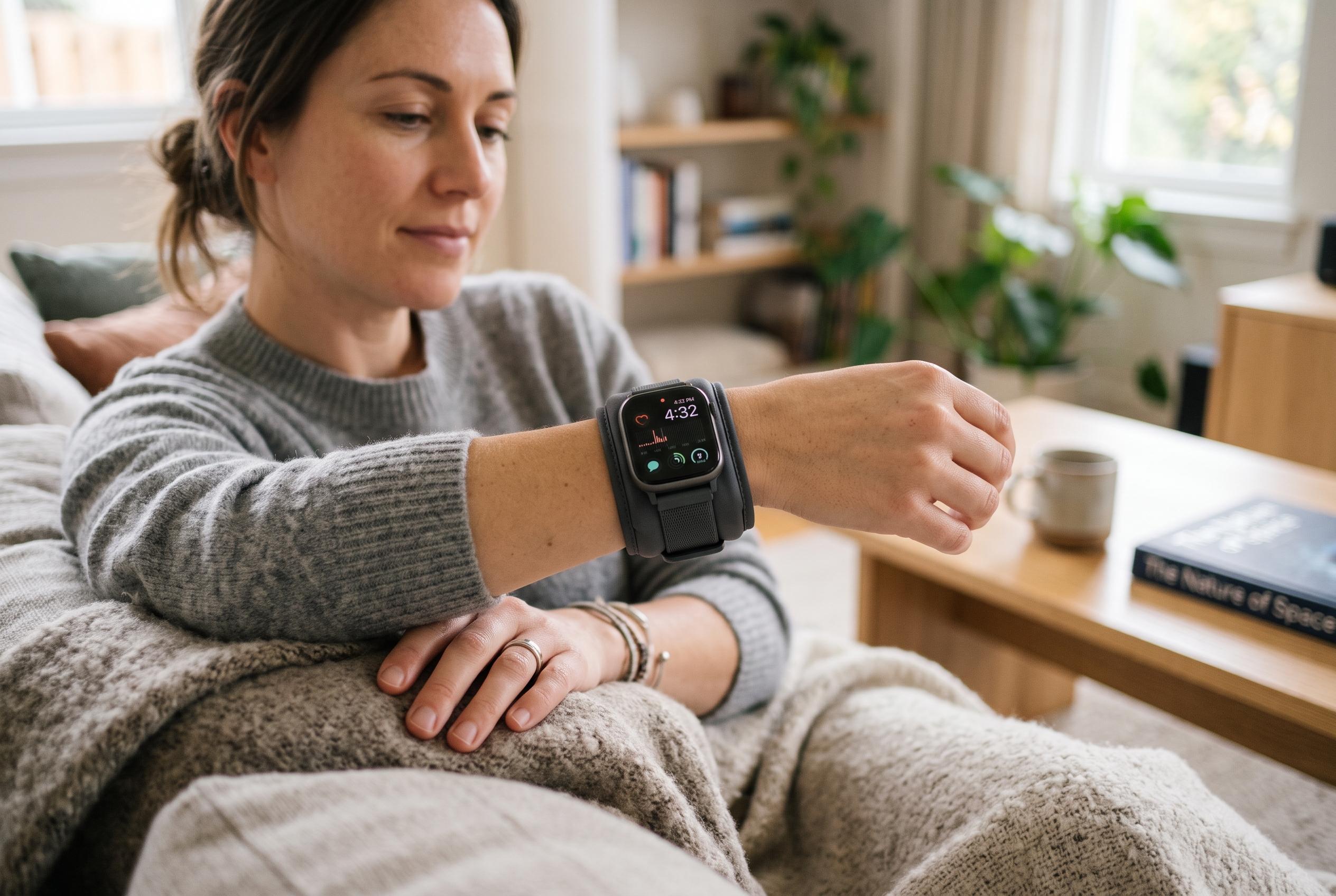

The Watch D3 combines a built-in inflatable cuff with continuous monitoring, giving Huawei’s latest smartwatch a more focused medical purpose than most fitness wearables.
Huawei’s Watch D3 is a reminder that a smartwatch can be more than a fitness accessory. It is a consumer device designed around one specific medical task: measuring blood pressure without the bulk of a conventional arm cuff. That is the central idea behind the product, and it is what gives the Watch D3 a different purpose from most wearables on the market. Huawei says the device uses a miniaturised air cuff built into the strap rather than an optical sensor, and that approach has earned CE certification under the European Union’s Medical Device Regulation.
In everyday use, the watch does not look like a medical instrument. According to TechRadar, it is 11.3mm thick and weighs 40g, making it slimmer and lighter than its predecessor. The display is a 1.92-inch AMOLED panel with peak brightness of up to 3,000 nits, which should help with outdoor visibility. Huawei offers the watch in black, white and Mocha Gold, and that restrained design matters because many users do not want a device on their wrist to advertise a health condition. The discreet appearance is part of the product’s appeal: it is meant to be worn continuously without drawing attention.
The blood pressure system itself is built around a simple workflow. CNET reported that users press a button, remain still for about a minute and then receive systolic and diastolic readings on the watch face. The strap’s air cuff inflates during measurement and the device uses the oscillometric method, the same broad principle used by electronic medical devices in clinics. That matters because the Watch D3 is not estimating blood pressure from pulse variations alone. It is taking a direct cuff-based reading in a wearable form factor, which is a more credible approach than many wrist-worn health features.
The more valuable feature is continuous monitoring over time. Huawei says the Watch D3 can record readings throughout the day, including during sleep and physical activity, while Wareable noted that users can set daytime intervals and the watch adapts its overnight behaviour to reduce disruption. That longer view is important because blood pressure changes naturally across the day. A single reading may reflect stress, posture or timing rather than a person’s usual pattern. The point of 24-hour monitoring is to build a clearer picture of trends that can be discussed with a clinician. Wareable also reported that the watch can prompt users to take readings when conditions change, such as after a drop in temperature or at higher altitude.
Huawei is also trying to make the watch useful outside pure monitoring. Android Central reported that the Watch D3 supports Bluetooth calling, Curve Pay payments and works with both Android and iOS phones. Battery life is rated at up to six days on a charge. The broader health stack includes sleep analysis, stress features and access to services such as Headspace, komoot and FIIT through Huawei MultiPass. Those additions do not change the core proposition, but they make the device easier to live with as an everyday wearable rather than a single-purpose medical gadget.
The result is a smartwatch with a narrower ambition than many rivals, but a clearer one. The Watch D3 is aimed at people who need to track blood pressure regularly, at active users who want to understand how exercise affects their readings, and at anyone looking for a more discreet way to keep an eye on cardiovascular health. As The Verge noted, its value lies in making blood pressure data more accessible throughout the day, not just in a doctor’s office. That makes it less of a general-purpose smartwatch and more of a specialist health tool, which may be exactly where its strength lies.
Disclaimer: This content is intended for informational purposes only. Readers are advised to exercise their own judgement, conduct due diligence, or consult a qualified expert before acting on any information provided.