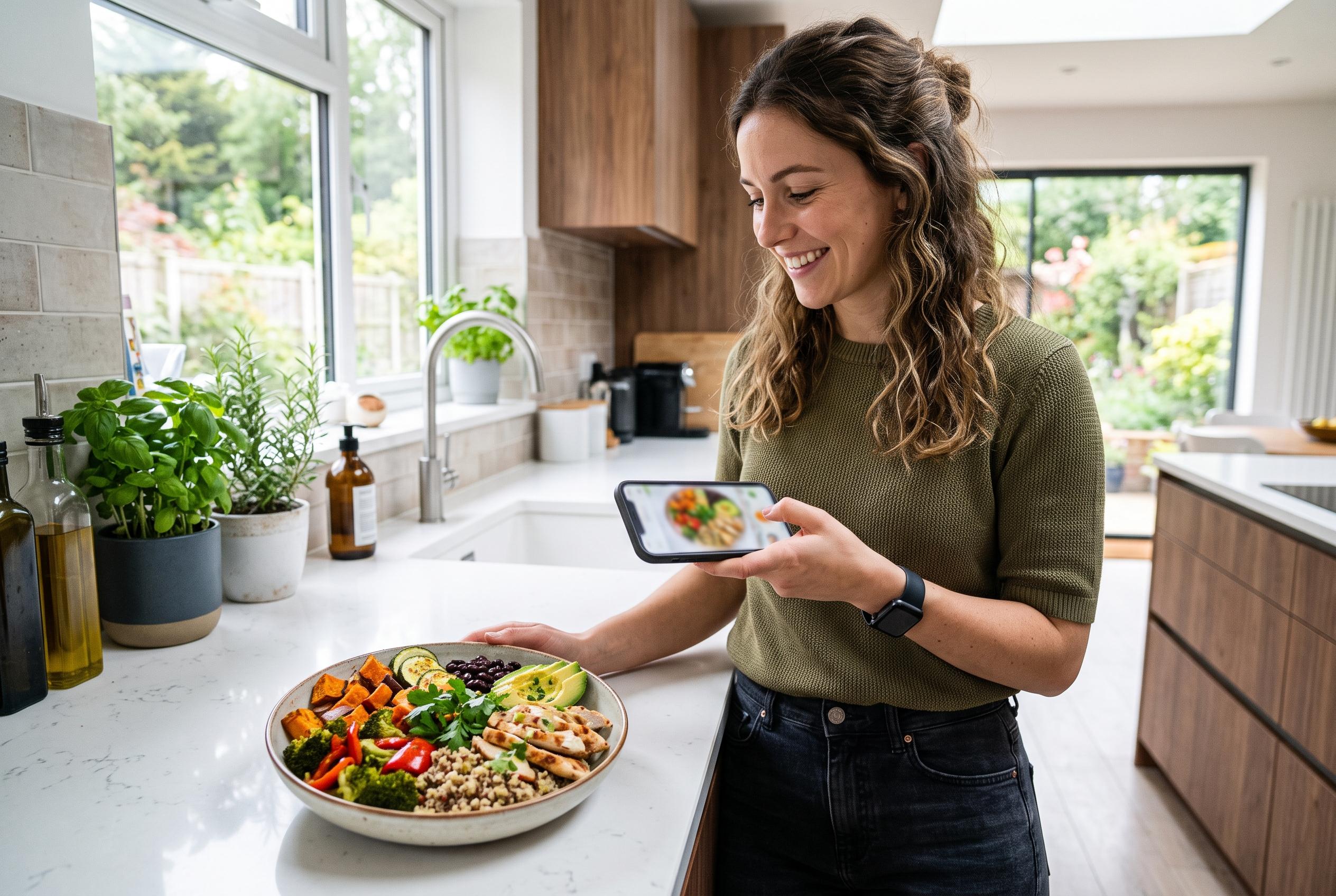

The Ukrainian-developed app uses AI to estimate calories and macronutrients from photographs, while acknowledging that hidden ingredients make precision impossible.
The appeal of photo-based calorie counting is straightforward: instead of weighing every ingredient or searching through food tables, a user can point a phone camera at a meal and get an instant estimate of its energy and nutrient content. That approach is now built into Formo, an app from Ukrainian developer Priority Apps that has become one of the better-known local entries in a crowded nutrition-tracking market.
According to the app’s listings in the Apple App Store and Google Play, Formo uses artificial intelligence to identify calories and macronutrients, including protein, fat and carbohydrates, from a food photograph. The company says the result appears within seconds and is intended to replace much of the manual work normally associated with meal logging. Formo is available on both iPhone and Android, and its positioning is broad enough to cover weight loss, maintenance and muscle gain.
That convenience, however, comes with an important limitation. A picture can show the surface of a dish, but not every ingredient hidden inside it. Salad dressing, cooking oil, sauces and mixed recipes are all difficult to assess accurately from appearance alone. In practical terms, the technology works best as a fast estimate rather than a precise laboratory reading, which is why Formo also allows users to edit the result after the scan.
The app’s own materials suggest that it tries to bridge that gap between speed and accuracy. On its website, Formo says the interface opens directly to the camera and can return nutritional values in roughly three seconds. It also presents itself as a deliberately simple tool, with a minimalist design that avoids the heavier, more complex features seen in some rival health platforms.
Formo also offers alternatives to photography for people who cannot or do not want to capture every meal on camera. Users can log food by text or voice, and the app then interprets the description to estimate the calorie content and nutrient breakdown. That can be useful for meals eaten away from home, late entries added after the fact, or situations in which a photo was forgotten.
Beyond single meals, the app tries to give users a broader view of their eating habits. It asks for details such as age, height, weight, activity level and target weight, then estimates a daily calorie allowance and projected timeline for reaching the goal. That prediction should be treated as indicative rather than certain, since body weight changes are affected by many variables. Formo also keeps a food diary, allowing users to review patterns over time, including the calories and macronutrients that are easy to overlook, such as milk in coffee, soft drinks, sauces and snacks.
The app’s momentum suggests there is real demand for this kind of simplified tracking. Formo’s Ukrainian-language promotion says it has passed 700,000 downloads and has topped the health and fitness charts in Ukraine’s App Store and Google Play rankings. The wider category is competitive, with international rivals such as MyFitnessPal, FatSecret, YAZIO, Lose It! and Cal AI all targeting the same problem: making nutrition tracking less tedious and more accessible.
Disclaimer: This content is intended for informational purposes only. Readers are advised to exercise their own judgement, conduct due diligence, or consult a qualified expert before acting on any information provided.