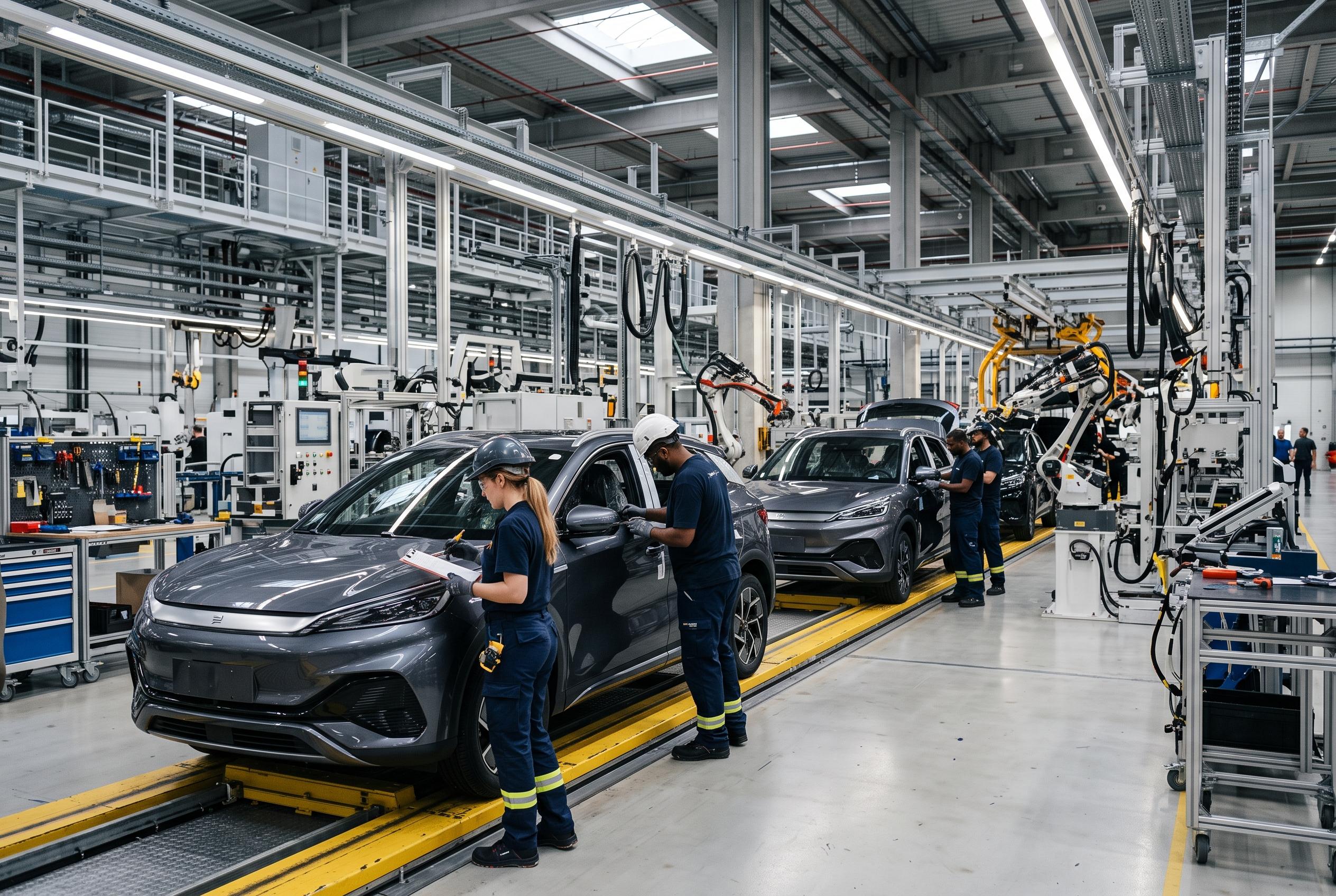

Chinese automotive groups are weighing European factories and local partnerships to bypass import tariffs and quotas, while seeking exemptions for selected China-made models.
Chinese carmakers are preparing a broader shift in Europe as trade barriers push them away from a purely export-led model. According to the South China Morning Post, manufacturers are considering major investment in local production, either through new plants or by using spare capacity at established international factories, in order to protect sales in one of the world’s largest automotive markets. Morgan Stanley analysts said the change would move Chinese groups from shipping vehicles into Europe towards building them there, while also encouraging a transition from volume-led expansion to a strategy built more firmly on margins and multiple sales channels.
The pressure comes as the European Union tightens its approach to Chinese EV imports. Reporting from FutureWatt said the bloc’s 45% tariff on Chinese battery-electric vehicles has already encouraged Chinese groups to lean more heavily on plug-in hybrids, while a recent quota agreement has capped imported Chinese hybrids at 350,000 units a year and left vehicles assembled inside the EU outside that limit. That framework makes local manufacturing more attractive for brands that want to keep growing in Europe without running into quota constraints.
There are also signs that companies want to secure relief through negotiations rather than rely only on new factories. RTÉ reported that, after Volkswagen won tariff exemptions for its China-made Cupra Tavascan in February 2026, other Chinese carmakers began seeking similar arrangements with the European Commission. According to Investing.com’s factbox on the issue, EU rules now allow individual electric models imported from China to be granted exemptions if manufacturers accept conditions such as minimum pricing and annual volume caps. That creates a narrower but still workable route for some brands to keep selling China-made vehicles in Europe.
For investors, the key question is which groups can adapt quickly enough to benefit. Morgan Stanley said the likely winners are the Chinese EV leaders with sufficient scale, strong balance sheets and manufacturing plans already under way in Europe. The broader backdrop is a European market trying to balance industrial protection with consumer demand and competitive pricing. As Le Monde has observed in its coverage of Europe’s response to the so-called second Chinese shock, the bloc’s reaction has often been fragmented, giving Chinese carmakers time to adjust and making local production an increasingly practical answer to a shifting trade landscape.
Disclaimer: This content is intended for informational purposes only. Readers are advised to exercise their own judgement, conduct due diligence, or consult a qualified expert before acting on any information provided.