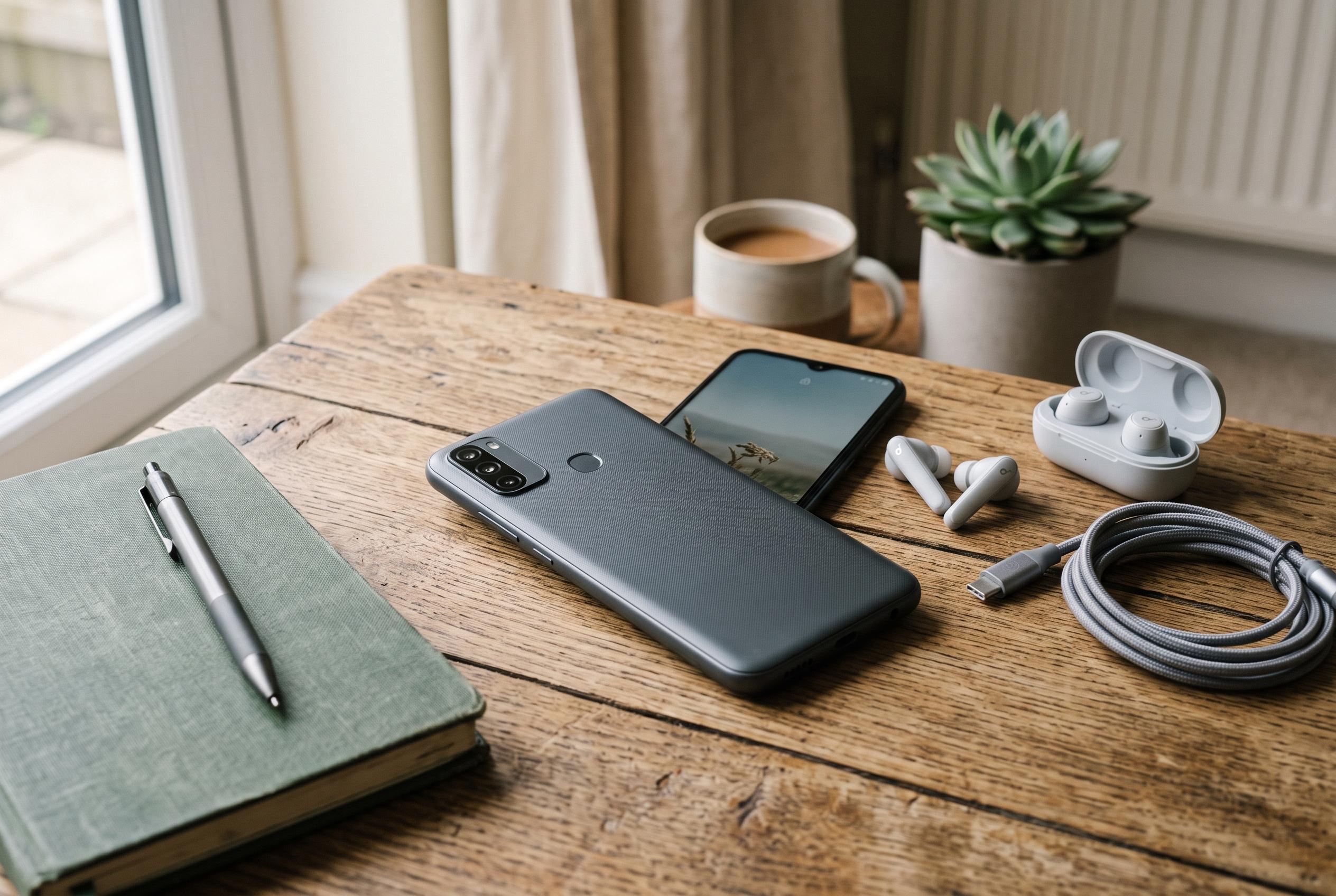

Xiaomi’s R3,800 Redmi 17 4G trades speed and screen sharpness for exceptional endurance, practical features and dependable everyday performance.
Xiaomi’s Redmi 17 4G is an unusually convincing budget phone for the money, although it is clear from the outset that it has been built to a strict cost. The handset launched locally at R3,800, and the broad consensus from independent reviews is that its value lies in endurance and practicality rather than speed or refinement. For buyers who want a simple device that can last through a long day without much fuss, that trade-off makes sense.
The phone is not subtle. At 8.8mm thick and 232g, it is heavier and bulkier than many rivals, with an all-plastic shell that keeps costs down and should help with durability, even if it also makes the device more prone to visible scuffs and marks. Its large 6.9-inch IPS LCD is another sign of Xiaomi’s priorities: the 120Hz refresh rate helps the interface feel smoother than the price suggests, but the 720p panel leaves the image less sharp than higher-priced alternatives. Reviews from Notebookcheck also point to expandable storage and a headphone jack, both of which increase day-to-day practicality.
Performance is the Redmi 17 4G’s most obvious compromise. Xiaomi says the handset uses a MediaTek Helio G91-Ultra, after confusion arose when benchmarking software identified a different MediaTek platform family. The company’s explanation is that benchmark tools can misread the underlying kernel platform ID, while the chip itself uses the G-series architecture with updated imaging and display tuning. Even so, the broader verdict remains unchanged: this is a budget processor first and foremost, and occasional slowdowns are part of the experience. According to comparison data from NanoReview, the Redmi 17 4G is positioned below the Redmi Note 17 4G on performance, even if it wins on battery capacity and efficiency.
Battery life is where the phone makes its strongest argument. The 7,500mAh cell is large by any standard, and reviewers describe it as the feature that most clearly justifies the handset’s size and weight. Xiaomi pairs it with 45W charging, which is hardly cutting-edge in 2026 but still useful at this price level, with a full charge taking roughly 80 minutes in testing. That kind of endurance is likely to matter far more to target buyers than raw processing power or gaming performance.
The camera system is better than expected for an entry-level model, but only in favourable light. The main 50MP camera captures respectable detail and largely natural colours, especially outdoors, though it struggles as light drops. The front-facing 8MP camera is less convincing, tending towards overly bright output, and video recording tops out at 1080p at 30fps. Taken together, the Redmi 17 4G looks like a sensible purchase for users who want a long-lasting, low-cost smartphone for everyday tasks, messaging and social media, provided they accept that it is built for function rather than speed or flair.
Disclaimer: This content is intended for informational purposes only. Readers are advised to exercise their own judgement, conduct due diligence, or consult a qualified expert before acting on any information provided.