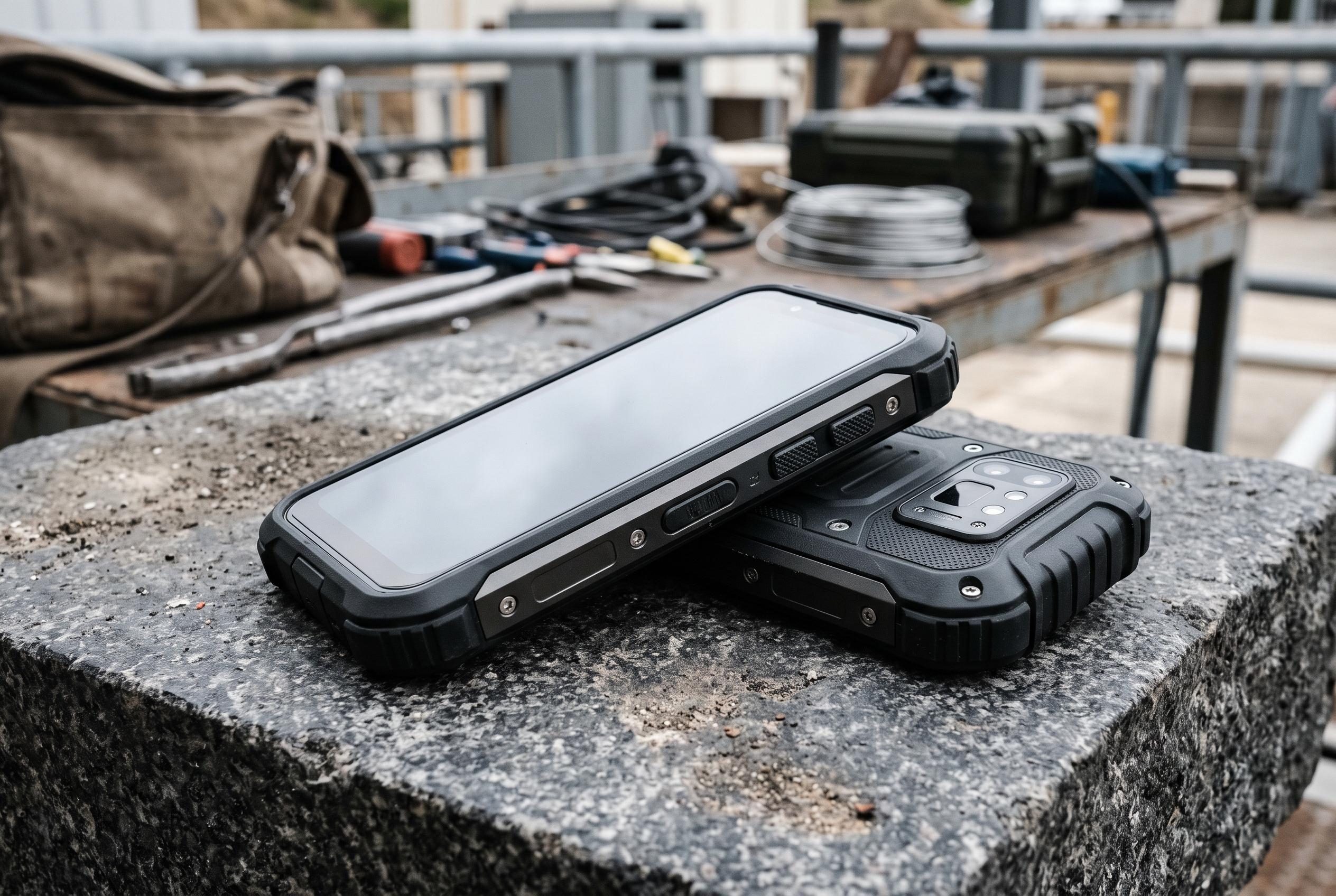

The latest miniature handsets offer modern hardware only by accepting compromises elsewhere, from rugged bulk and huge batteries to weak connectivity and limited performance.
Among mainstream smartphone makers, genuinely small handsets have largely disappeared. The gap has been filled by niche brands that trade on toughness, battery life, or sheer novelty rather than mainstream appeal. The clearest example in the material reviewed here is the Cubot KingKong Mini 4, which several independent reviews describe as a compact rugged phone with a 4.7-inch 90Hz IPS display, a Unisoc T616 chip, and a 4,700mAh battery. It is a reminder that, in 2026, the small-phone category is defined less by elegance than by compromise and specialisation.
That balance is visible in the Cubot itself. Notebookcheck, Root-Nation and other reviewers describe a device that is narrow and pocketable, but also thick and heavy for its size at around 192g. It combines IP68 protection with IP69K and MIL-STD-810H-class durability, which makes more sense for outdoor use than for someone simply seeking a slim everyday phone. The software side is more modern than many compact alternatives as well, with Android 15 on board and memory configurations of 6GB or 8GB of RAM paired with 128GB or 256GB of storage. In other words, this is a small handset, but not a lightweight one in either the physical or technical sense.
That pattern helps explain why the rest of the compact-phone market remains so fragmented. The lower end is still populated by tiny, low-cost devices such as the SERVO 16SE and SOYES A17, which prioritise minimal dimensions over performance, storage, or cellular flexibility. Both are far closer to basic communication tools than to full-featured smartphones, with 2GB of RAM, 16GB of storage, 3-inch displays and no 4G support. They are easy to carry, and cheap enough to treat as secondary devices, but their limits are obvious as soon as a user tries to install anything beyond messaging and calls.
A more capable alternative is the Unihertz Jelly Star, which sits in a different part of the market altogether. With 8GB of RAM, 256GB of storage, a MediaTek Helio G99, 4G support, VoLTE and VoWi-Fi, it is one of the few miniature phones that does not feel technically stranded. The Unihertz Tank Mini pushes in the opposite direction: it keeps the display relatively small, but wraps it in a far heavier body with a very large battery, strong memory configuration and unusual extras such as a laser rangefinder. Fossibot’s F101 Pro goes even further down the rugged route, with a 10,600mAh battery and a 340g frame that makes it more of a field tool than a conventional phone.
The result is a category with clear trade-offs rather than clear winners. Buyers who want a genuinely small handset must usually choose between price, durability, 4G support, battery life, or modern hardware. The cheapest options are weak on memory and connectivity, while the better-specified models often become expensive, thick, or heavy. That is why the small-phone market remains so specialised: it offers a few practical answers, but no universally neat one. The strongest devices in the segment succeed by being useful for a narrow purpose, not by trying to imitate a mainstream flagship in miniature.
Disclaimer: This content is intended for informational purposes only. Readers are advised to exercise their own judgement, conduct due diligence, or consult a qualified expert before acting on any information provided.