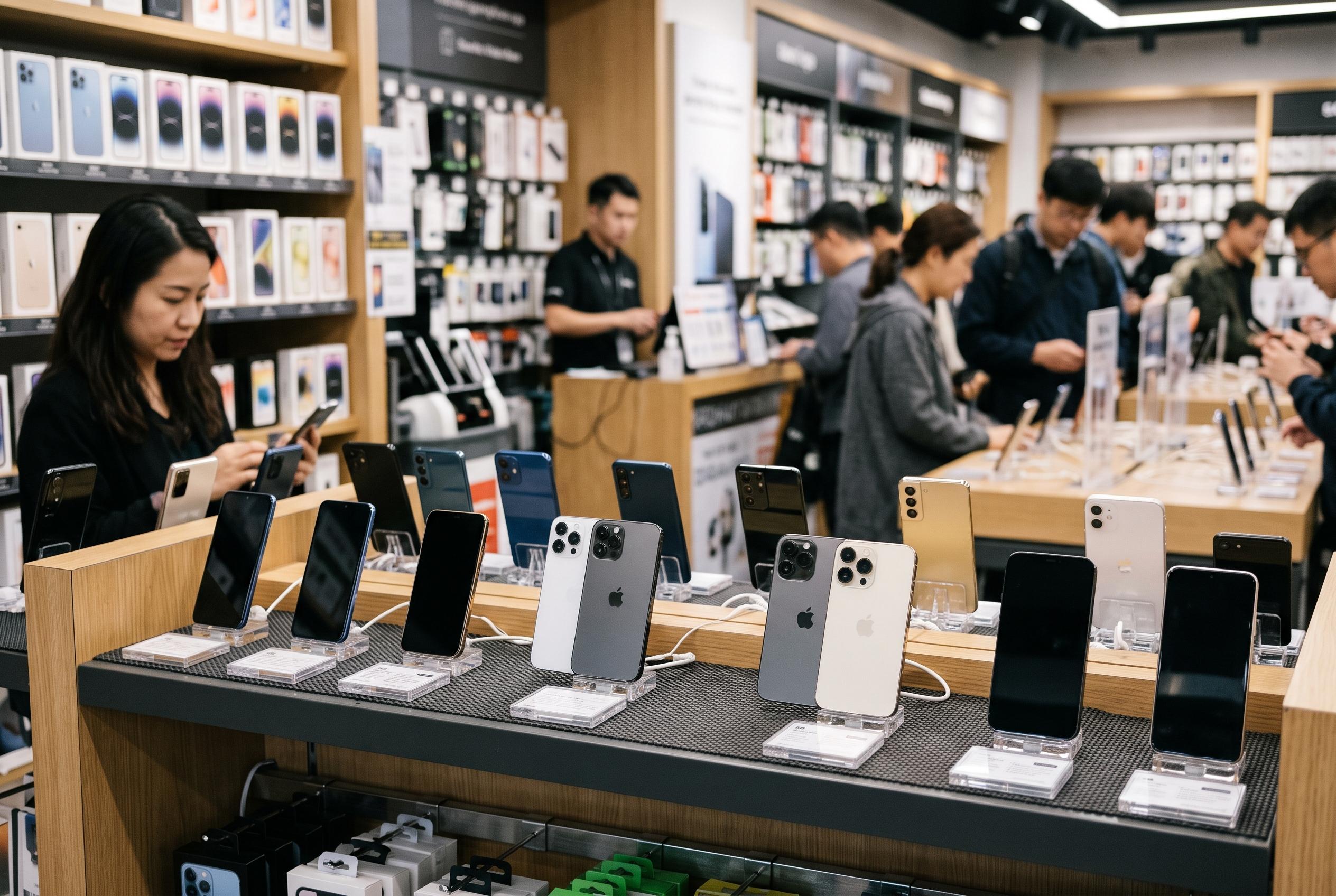

Global smartphone shipments fell 20% in the third quarter as soaring DRAM and NAND costs squeezed weaker brands, helping Apple and Huawei extend their lead.
Counterpoint Research’s latest partial data suggests the smartphone market weakened markedly in the third quarter, with both global and Chinese shipments coming under pressure as memory and flash storage costs surged. The result is a sharper split between the strongest brands and everyone else: Apple and Huawei have held or extended their positions, while the rest of the market has seen share erode as pricing pressure feeds through to consumers and buyer appetite cools.
On the global side, Counterpoint said smartphone shipments fell 20% year on year in the quarter, its weakest third-quarter reading since 2012. The five largest vendors remained Samsung, Apple, Xiaomi, OPPO and vivo, with shares of 23%, 22%, 12%, 9% and 8% respectively. That group accounted for 74% of the market, up from a year earlier, showing how smaller brands have been squeezed as the top tier consolidates. Counterpoint’s separate Q3 2025 global market note, however, showed a different pattern in the earlier cycle, with the worldwide market growing 4% year on year and Samsung leading on 19%; that contrast underlines how quickly conditions can change when component costs move sharply.
The Chinese market followed the same broad direction, although the contraction was less severe. Counterpoint said shipments in China fell 10% in the quarter, while the six leading brands together held 97.3% of the market, a sign of intense concentration at the top. Huawei led with 21.3%, followed by Apple on 19.5%, vivo on 15.2%, OPPO on 15.1%, Xiaomi on 13.5% and Honor on 12.7%. Compared with the same period last year, Huawei and Apple gained share while the other four lost ground, suggesting that the market has moved from a relatively even contest to one dominated by two clear leaders.
The pressure begins with memory. Counterpoint and industry analysts have warned that DRAM and NAND prices have risen steeply, raising the bill of materials for handset makers and making it harder to protect margins, especially in lower-priced models. Android Central reported comments from Nothing chief executive Carl Pei, who said smartphones are likely to become more expensive in 2026 because of surging memory costs and competition from AI data centres. Counterpoint’s Memory Price Tracker, cited by GSM Arena, showed mobile RAM prices up 50% quarter on quarter and NAND prices rising more than 90% in the same period, with the lowest-priced devices hit hardest.
That shift is already changing product strategy. Manufacturers are raising launch prices, trimming specification levels, delaying some standard models and putting more emphasis on premium devices where margins are better. In the article’s examples, this has meant higher starting prices for flagship phones, steeper increases for large-storage variants and the use of older chips in some lower-tier additions to flagship families. The logic is straightforward: when storage and chip costs rise at the same time, brands try to reserve scarce or expensive components for the models that can absorb them most easily.
Apple and Huawei appear better placed than rivals to manage this environment because they have stronger ecosystems, more direct control over core hardware and deeper customer loyalty in the premium segment. The article also cites model-level sales data from a digital analyst account showing strong early demand for the latest iPhone Pro line and for several Huawei flagship models. That is consistent with a market in which the largest players are not only defending share, but pulling further ahead by converting premium demand into volume. With the usual Double Eleven discount period offering less room for aggressive promotions, the industry appears unlikely to get quick relief. For now, the more likely outcome is continued consolidation, with the cost shock reinforcing a smartphone market increasingly shaped by a few super-premium brands.
Disclaimer: This content is intended for informational purposes only. Readers are advised to exercise their own judgement, conduct due diligence, or consult a qualified expert before acting on any information provided.