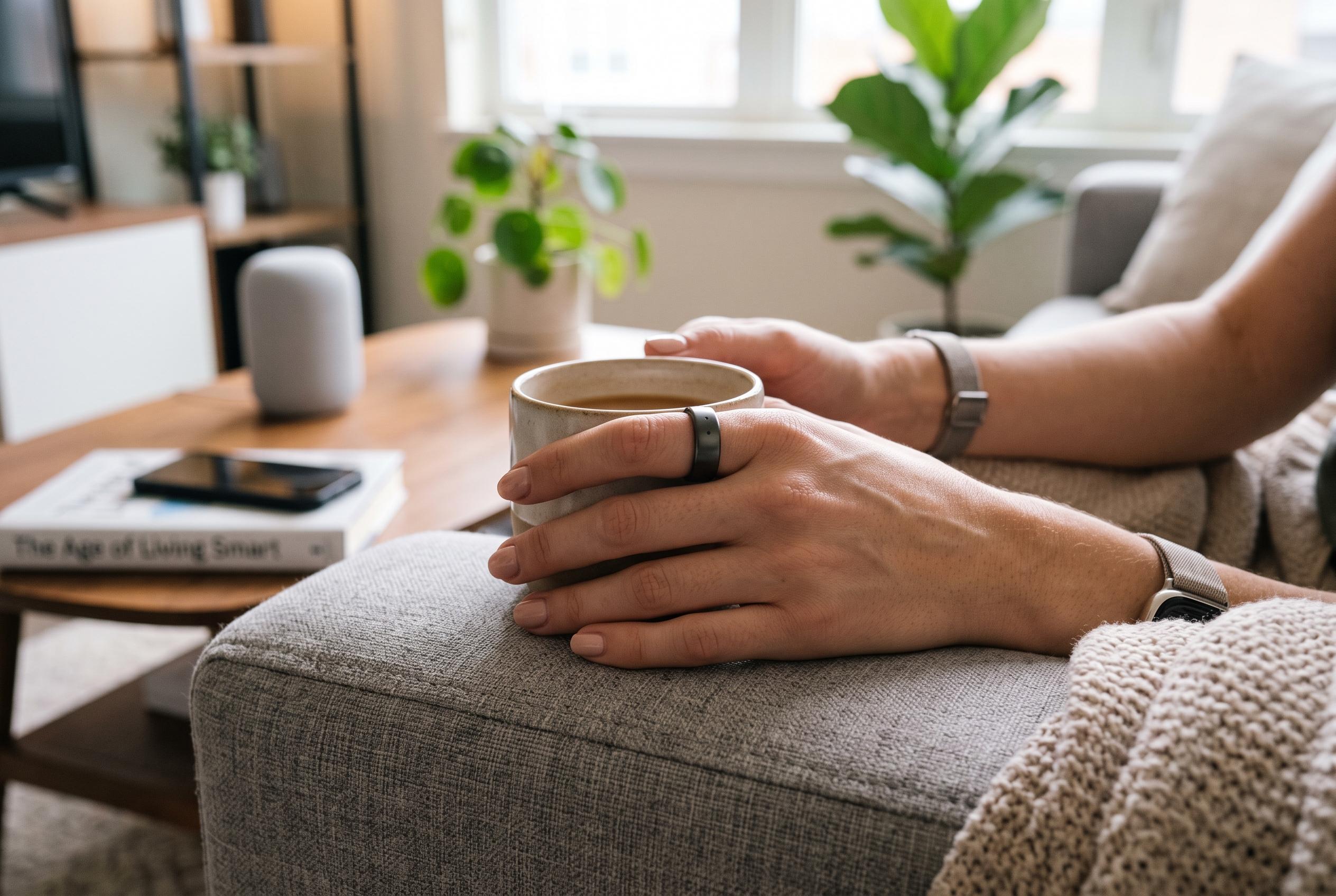

Oura’s slimmer Ring 5 improves comfort, sensing consistency and battery life, but its high price and subscription model make it a stronger first purchase than an essential upgrade for Ring 4 owners.
The Oura Ring 5 refines an already established formula rather than reinventing it. HardwareZone said the new model is notably smaller than the previous generation, with a narrower titanium body and a slimmer profile that makes it easier to wear for long periods, including overnight. The design changes are backed by a redesigned sensing system that Oura says uses multiple signal pathways to improve consistency across different finger shapes and skin tones, while the device also comes with a more scratch-resistant coating and comes in several finishes.
On first use, the appeal appears to be comfort as much as capability. Reviews from Forbes, Wareable and Tech Advisor all point to the ring’s discreet form factor, with the reduced size making it less intrusive than earlier models and easier to forget about during sleep. That matters because the Oura proposition remains different from that of a smartwatch: it is designed to stay on the finger continuously, gathering long-term health and sleep data without demanding much attention from the wearer. Industry reviews also note that the ring continues to track a wide range of metrics, including sleep, activity, heart rate and blood oxygen.
The software side is where Oura has added the most visible changes, although not all of them are exclusive to the latest model. HardwareZone highlighted Live Activity Tracking, which lets users start a workout in the app and monitor pace, distance and heart rate through a lock-screen widget. It also noted improved automatic activity detection covering more than 40 exercise types, including lower-motion workouts such as yoga and Pilates. Another addition, Health Radar, is intended to flag longer-term patterns in cardiovascular and breathing data, although Oura does not present it as a blood-pressure monitor or diagnostic tool, and HardwareZone said the feature was not yet available on its Singapore account.
Battery life is another area of improvement. HardwareZone said the Ring 5 is rated for six to nine days depending on size, and its own testing returned roughly eight days for a size 9 unit, compared with up to six days for the same size on the Ring 4. Forbes described the battery life as lasting about a week, while Wearable-focused reviews from Wareable and WearGraphy also singled out the longer endurance as one of the ring’s strongest practical upgrades. For a device meant to be worn almost constantly, that extra headroom is likely to matter more than headline specifications.
Even so, the value argument remains complicated. HardwareZone said several of the new app features will also arrive on older Oura rings, which weakens the case for owners of the Ring 4 to upgrade immediately. The price is also high: the Ring 5 starts at $599 for the Silver and Black finishes, while the premium finishes cost $749. Oura also continues to require a membership for detailed insights, priced at US$5.99 a month or US$69.99 a year. That combination of hardware cost and ongoing subscription charge leaves the Ring 5 looking like a polished, comfortable first purchase rather than an essential leap for existing users.
Disclaimer: This content is intended for informational purposes only. Readers are advised to exercise their own judgement, conduct due diligence, or consult a qualified expert before acting on any information provided.