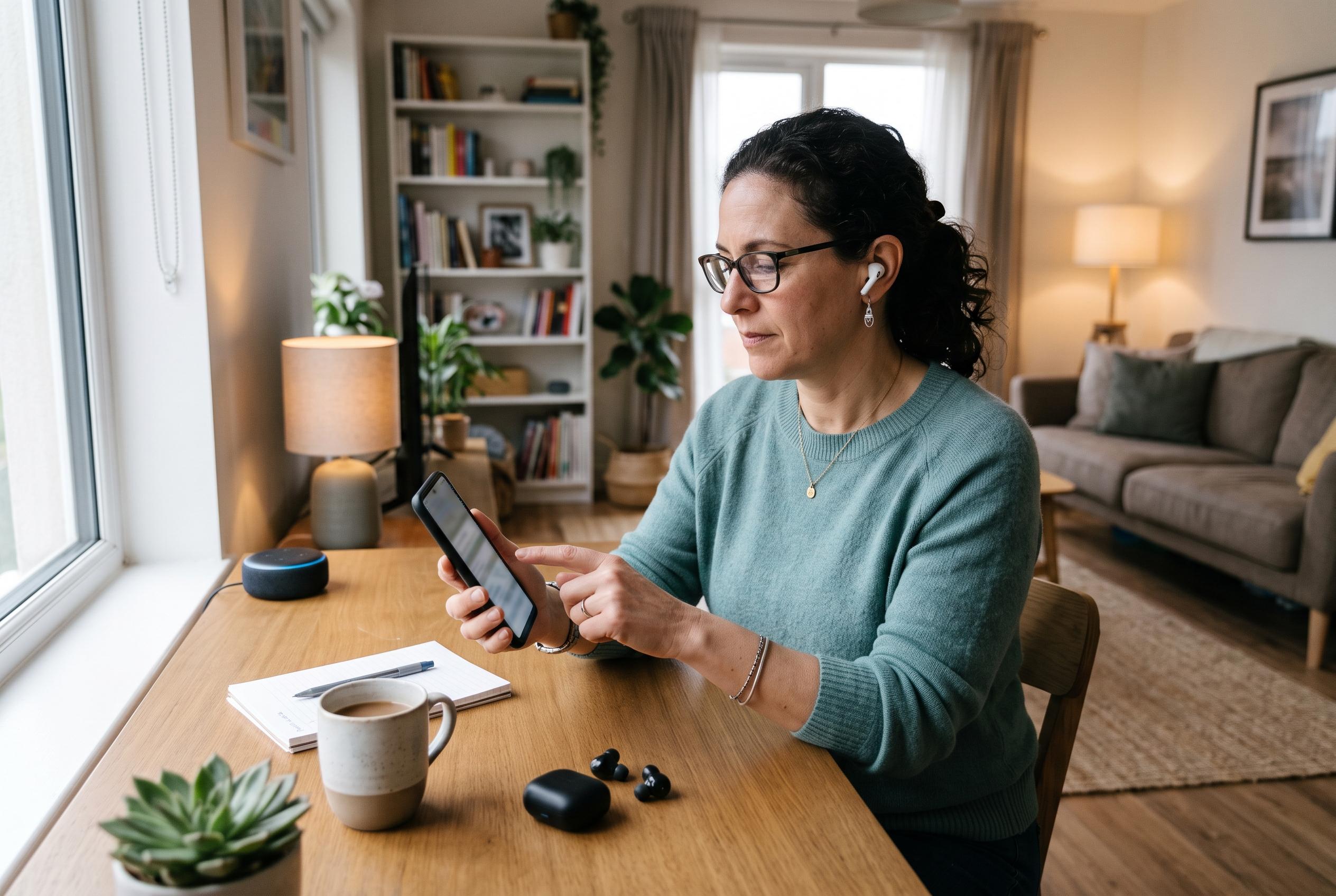

A University of Maryland study found that Be My AI often responds to short questions with lengthy, generic descriptions, forcing blind users to develop workarounds to find crucial information.
Researchers at the University of Maryland say popular AI photo-description tools can leave blind users with more text than they need and too little control over what is said first. In a study presented at the ACM Conference on Human Factors in Computing Systems, participants who identify as blind used Be My AI, the image-questioning feature within Be My Eyes, and often found that its replies were far longer than their prompts and not always aligned with the task at hand. The researchers argued that, in practice, the system can force users to sift through generic scene descriptions before reaching the one detail that matters.
The study examined 11 participants over a 10-day period and analysed 418 conversations with the app. According to the University of Maryland team, users typically posed short questions, but the app’s responses were often many times longer, sometimes stretching into dozens of exchanges. That is more than an inconvenience for blind users listening to synthetic speech; the researchers said it can slow decision-making and, in time-sensitive situations, raise safety concerns. They also found that more than half the participants regarded the app’s tendency to begin with a full image description as a serious problem.
The researchers said participants quickly developed their own ways of steering the system. Some explained the reason behind a question, while others framed the broader goal directly, such as asking for help with a kitchen renovation rather than requesting a catalogue of visible objects. Others split tasks into smaller checks, one detail at a time, to reduce the chance of missing something important. The team said these tactics showed ingenuity, but also underlined a broader point: users should not need elaborate workarounds to make an assistive AI tool useful.
The work sits within a fast-moving field. Be My Eyes says its platform now serves more than 1 million blind and low-vision users and 10 million volunteers, illustrating how large the market for accessible assistance has become. At the same time, related research is moving towards more adaptive systems. A Scientific Reports paper described a behaviour-aware AI assistant designed to personalise responses for blind users in real time, while UMD’s own TRAILS institute has explored verification layers to make AI answers more reliable. Together, the studies point to the same challenge: accessibility software is becoming more capable, but it still needs to become more precise, more selective and more responsive to user intent.
Disclaimer: This content is intended for informational purposes only. Readers are advised to exercise their own judgement, conduct due diligence, or consult a qualified expert before acting on any information provided.