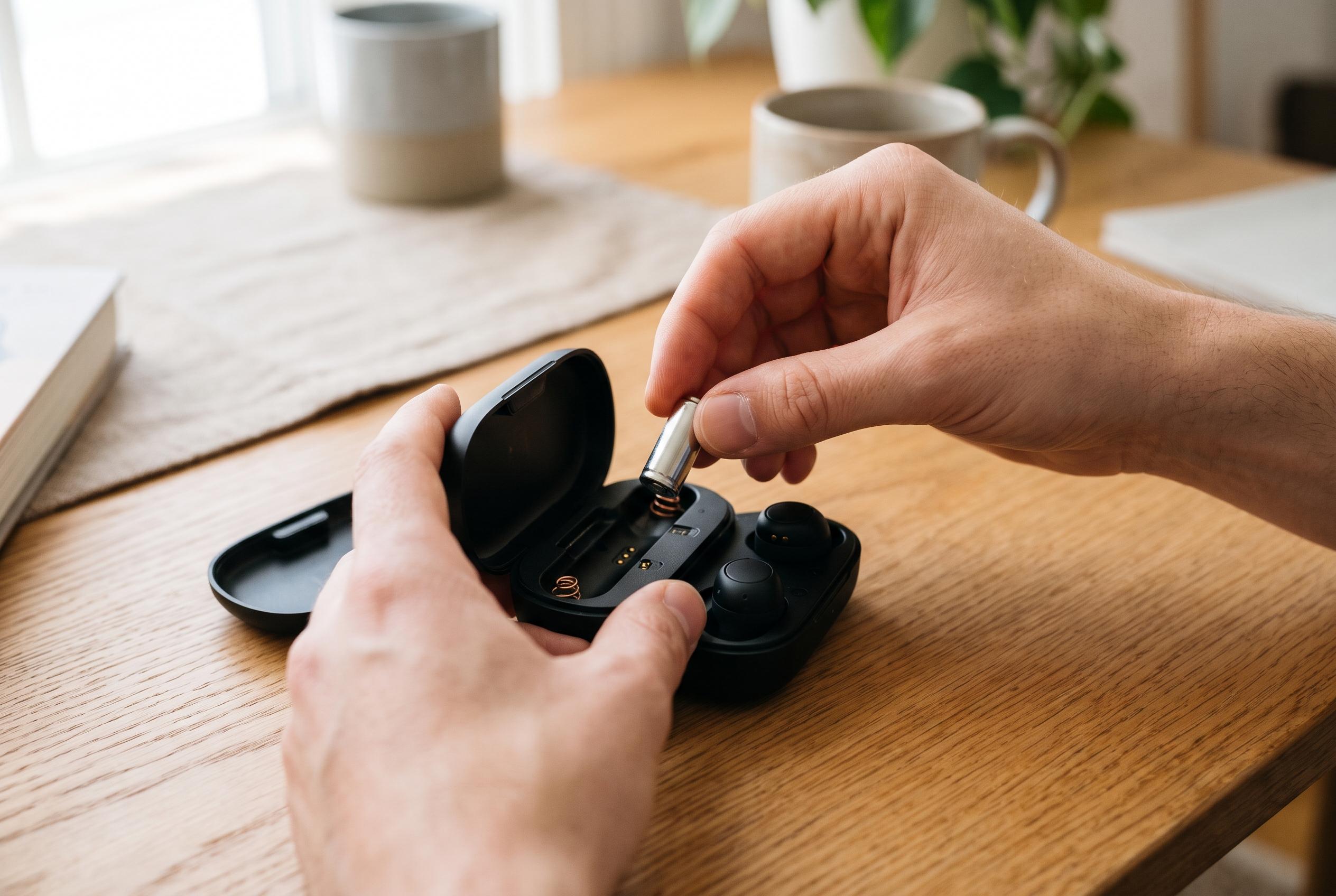

Fairphone’s cheaper, smaller Fairbuds 2 improve sound and everyday usability while keeping user-replaceable batteries and modular repairs at the heart of the product.
Fairphone’s Fairbuds 2 arrive as a sharper, more practical successor to the company’s first repairable earbuds, and they make a clear argument for buyers who care as much about longevity as about sound. The new model keeps the modular philosophy at the centre of the product, but refines the shape, shrinks the charging case and lowers the price to €119 in Europe, according to Fairphone’s launch details and subsequent reviews. That is a notable change from the first generation, which debuted at a higher price and with a bulkier design. The latest version also continues Fairphone’s effort to position the product as a lower-waste alternative to conventional wireless earbuds, at a time when large numbers of discarded audio products remain a persistent environmental issue.
The key selling point is still repairability. Fairphone says the Fairbuds 2 can be opened quickly with basic tools, and that seven parts can be replaced by the user, including the batteries in both the earbuds and the charging case. Independent coverage from tech sites notes that this is unusual in the earbuds category, where sealed construction is still the norm. The practical result is that owners should be able to swap out ageing cells rather than replace the entire set, which is especially relevant for a product category where battery degradation often arrives within a couple of years.
The materials and manufacturing claims are also central to the product’s appeal. Fairphone says the earbuds use 49% recycled materials, including recycled plastic, and that key metals such as gold, cobalt, copper and silver are sourced through fairer supply chains. The company also says assembly uses renewable energy and that skin-contact parts are free from PFAS. Independent reports repeat these figures, although they remain difficult for third parties to verify in full. Fairphone also extends the warranty to three years, which is longer than the standard two-year minimum in the European Union.
Design has been revised in a way that should matter in daily use. Reviewers note that the charging case is significantly smaller and lighter than the original, making it more pocketable and easier to carry. The earbuds themselves have also moved to a stemmed format, which is more conventional but, according to hands-on testing, more ergonomic than the earlier rounded shape. That said, the fit remains a personal matter. The new version appears more stable than before, yet it still does not match the most refined premium rivals in terms of in-ear security or finish.
On the audio side, Fairphone has taken a meaningful step forward. The Fairbuds 2 use 11 mm bio-cellulose drivers and support AAC, SBC, LC3 and LDAC, the Sony codec used for higher-bitrate Bluetooth playback on compatible devices. Reviews generally describe the sound as warm, bass-forward and more accomplished than one might expect at this price. The low end is reported to be strong and engaging, while the treble remains clear enough to avoid sounding dull. The trade-off is that the bass can intrude on the mid-range, which can soften voices and reduce separation in busy tracks.
Battery life is respectable rather than exceptional. Fairphone claims up to eight hours without active noise cancellation and six hours with it enabled, while the case lifts total endurance to around 40 hours. Review testing broadly matches those figures, with listening times landing in the middle of the pack for 2026 rather than at the top end. Fast charging is a useful addition, with a short top-up delivering more than an hour of listening, and the case includes simple battery indicators to show remaining charge.
Where the Fairbuds 2 fall short is in noise control and transparency mode. Reviewers say the active noise cancellation reduces steady background noise but struggles with sharper, more irregular sounds. In practice, that means train noise, voices and sudden spikes can still cut through more than they should. Transparency mode is criticised even more strongly, with some reports describing it as uneven and harsh, especially in busy streets or near ventilation noise. For users who rely heavily on these features, the performance may be a disappointment.
The touch controls are another mixed area. Fairphone has separated gestures between the left and right earbuds, which helps define playback controls but makes single-ear use less convenient. Volume adjustment is particularly awkward, since it requires a press-and-hold gesture rather than a simple swipe. That makes the product feel less polished than some rivals. The companion app is more restrained, offering battery read-outs, ANC controls, a small set of sound presets and a five-band equaliser. It is functional, but not especially ambitious.
Taken together, the Fairbuds 2 are less about raw specification leadership than about a different idea of value. They are not the best choice if the priority is class-leading noise cancellation, perfect transparency audio or the most polished controls. But for buyers who want earbuds that can be repaired rather than discarded, and who prefer a product built around longer use rather than faster replacement, Fairphone has made a stronger case than it did with the first generation. The lower price helps, but the real distinction remains the same: these are among the few earbuds designed to be kept in service, not quietly replaced when the battery begins to fade.
Disclaimer: This content is intended for informational purposes only. Readers are advised to exercise their own judgement, conduct due diligence, or consult a qualified expert before acting on any information provided.