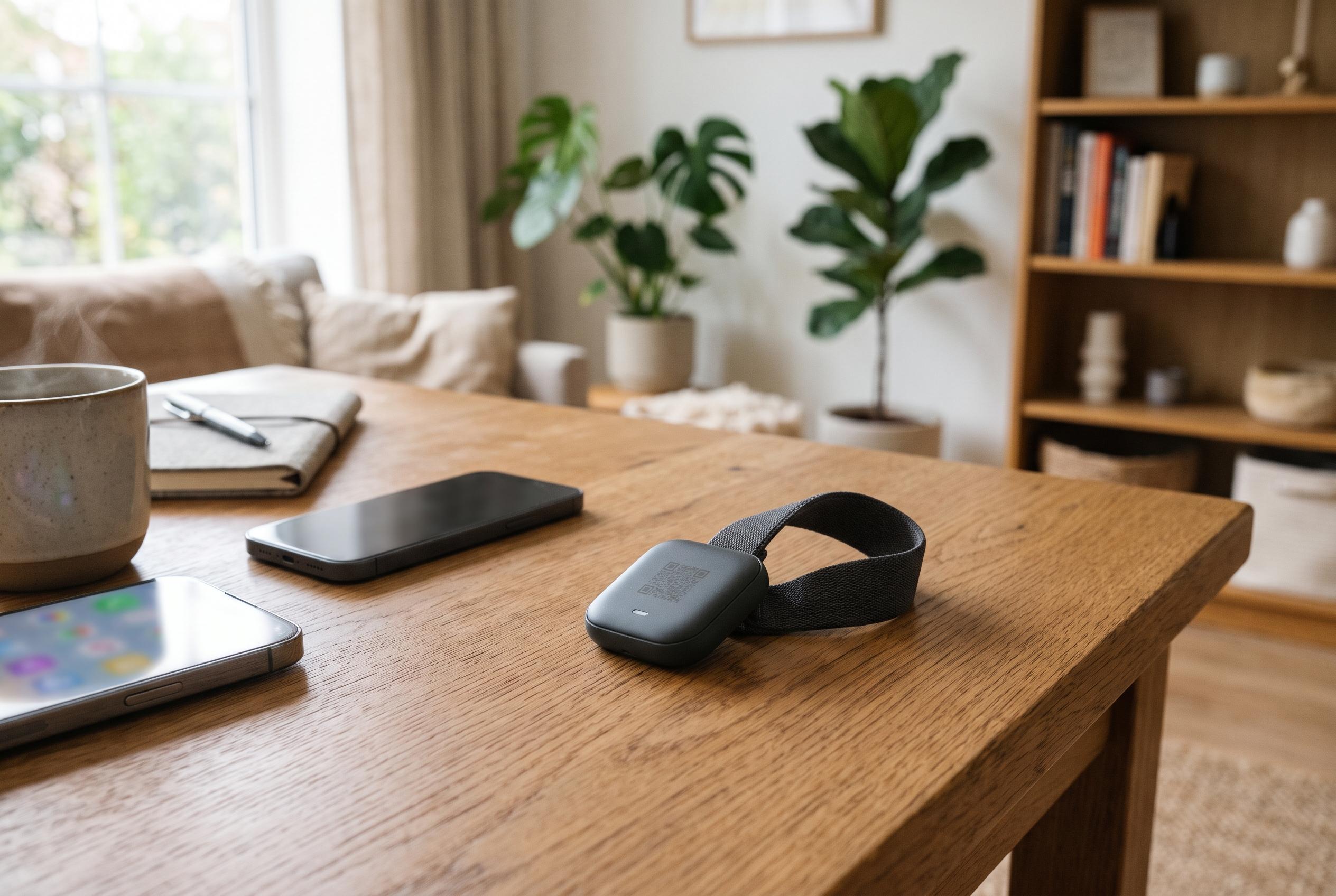

The £20 Roam Smart Tracker works with Apple and Google networks, includes a built-in strap and uses a more visible QR code to help reunite owners with lost items.
Roam’s smart tracker makes a persuasive case for itself as a cheaper, more flexible alternative to Apple’s AirTag, particularly for people who use both iPhone and Android devices. In a hands-on review published by MakeUseOf, the writer said the £20 class device offers several advantages over Apple’s coin-sized tag, even after Apple’s latest AirTag refresh added a louder speaker and a longer finding range. The central appeal is simple: one tracker can work in mixed-device households without forcing users into a single ecosystem.
That cross-platform support is one of Roam’s most practical strengths. According to the review, the tracker pairs with Apple Find My or Google Find Hub without requiring a separate app or subscription, although each unit can only sit on one network at a time. Switching between Apple and Google is possible, but it means re-pairing the device. For households that juggle different phones, that still removes a common point of friction. DealSeek’s review makes the same point, noting that Roam is designed to serve both Apple and Android users rather than locking them into one platform.
Roam also avoids one of the AirTag’s most obvious extra costs: the accessory problem. The tracker includes a built-in elastic strap, so it can loop round keys, zips, bag handles or bike rails without an additional holder. By contrast, Apple’s tag is a bare disc that often needs a separate case or key ring before it can be attached to anything useful. That built-in fastening makes Roam slightly bulkier, but the reviewer said the difference becomes less important once an AirTag is placed inside an accessory anyway.
Another notable difference is how the device helps a stranger return it. Roam adds a visible QR code that anyone can scan with a phone camera, which then sends an e-mail with the device’s what3words location and any message the owner has chosen to display. That is more approachable than Apple’s Lost Mode approach, which depends on NFC and assumes the finder knows to tap the tag with their phone. The MakeUseOf review argues that the QR code is more obvious and easier for ordinary people to use, especially those who are not familiar with Apple’s own item recovery flow.
Price and day-to-day usability also favour Roam, at least on the reviewer’s numbers. The product starts at $29.99 as a single unit, but bundle pricing lowers the cost significantly, with four- and eight-pack offers bringing the per-unit price down and undercutting the equivalent AirTag packs. The review also says Roam comes in several colours, unlike Apple’s single white-and-silver finish, and that the body uses recycled plastic. On performance, the writer found Roam’s audible alert noticeably louder than an original AirTag, and both products rely on CR2032 batteries with roughly yearly life spans. A separate review by iTechGuides similarly described Roam as a Bluetooth tracker that depends on nearby devices rather than GPS, which matters because it means the device is intended for lost-item recovery, not real-time location tracking. AirTag works the same way in that respect, as SafeWise and Solid GPS both note that it is a Bluetooth tag, not a GPS tracker.
Disclaimer: This content is intended for informational purposes only. Readers are advised to exercise their own judgement, conduct due diligence, or consult a qualified expert before acting on any information provided.