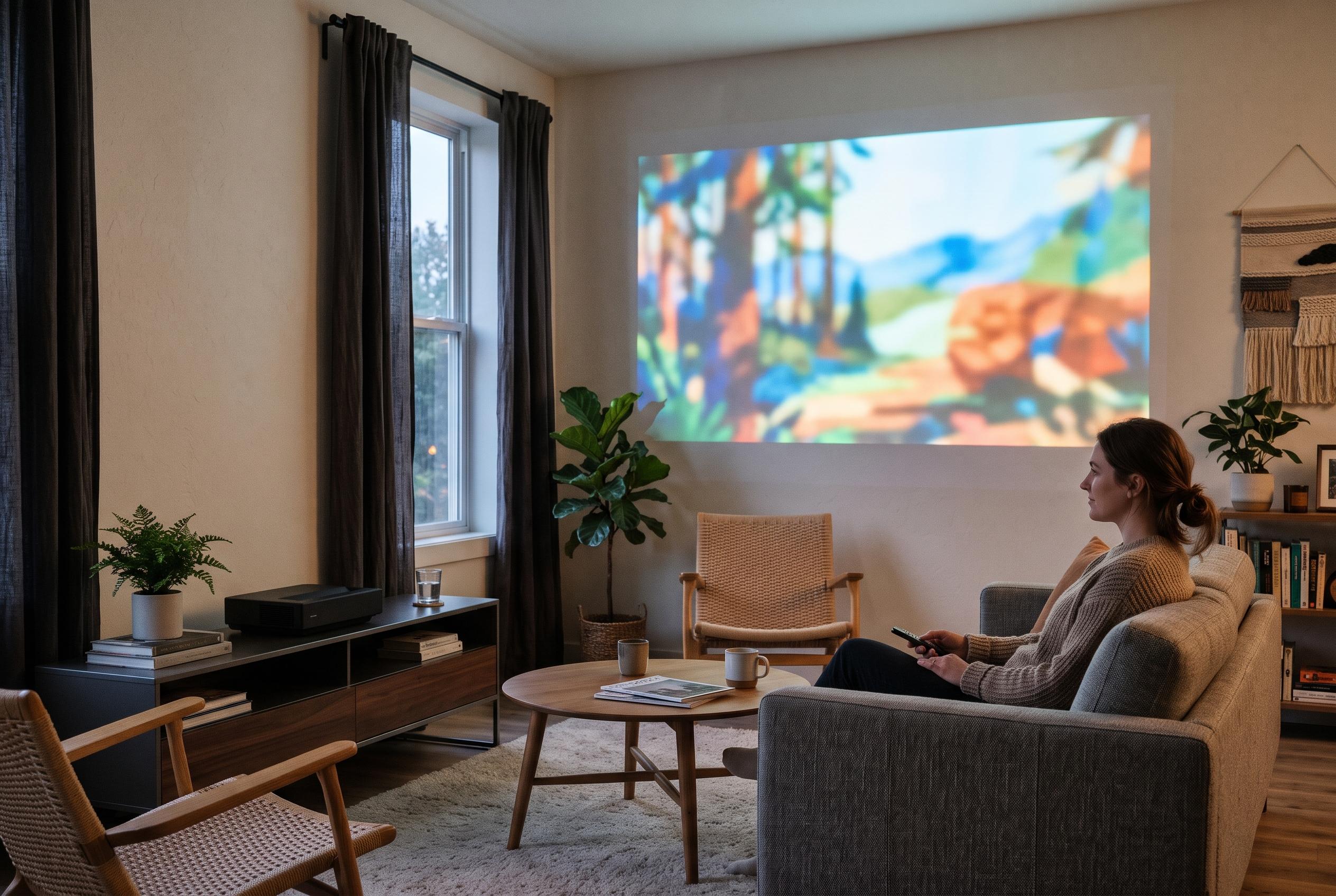

From triple-laser flagships to portable models, the latest projectors are making big-screen viewing easier to install, stream and enjoy in more rooms.
Laser projectors have moved from specialist kit to a mainstream home-cinema option, and the appeal is straightforward: they combine long service life, compact design and increasingly sophisticated image processing. For movie viewers, the best models now aim to deliver more than brightness alone. They balance colour accuracy, HDR handling, streaming support, installation flexibility and, in some cases, gaming performance.
The strongest premium choices in this field are built around triple-laser light engines and 4K resolution. That combination can produce richer colour volume and sharper detail on larger screens, which matters most in dedicated viewing rooms and higher-end living spaces. Models such as the Valerion StreamMaster Plus2 and the JMGO N1S Ultimate are presented as flagships because they add Dolby Vision, IMAX Enhanced support, automatic set-up tools and smart TV platforms to the core picture hardware. In practical terms, that makes them easier to live with than older projector designs, especially for buyers who want a single unit to cover film nights, streaming and occasional gaming.
Brightness is the next major dividing line. A projector that looks excellent in a dark room may struggle as soon as ambient light enters the picture, so the right choice depends heavily on where it will be used. The ViewSonic LS740HD is aimed at bright spaces and large fixed installations, with very high lumen output and a long-life laser-phosphor light source. By contrast, portable models such as the NEBULA Capsule 3 Laser and YGSKK’s compact projector trade raw output for mobility, built-in apps and battery or travel-friendly design. Those are more suitable for bedrooms, gardens and casual outdoor use after sunset than for sunlit rooms.
Set-up and connectivity now matter almost as much as the optics. Automatic focus, keystone correction, obstacle avoidance and screen-fitting tools reduce the friction of installation, particularly for buyers who do not want to spend time manually aligning the image. Built-in platforms such as Google TV or VIDAA can remove the need for an external streaming stick, although app availability remains an important check before purchase. Sound is another area where expectations should be managed carefully: integrated speakers are convenient, but the more cinema-oriented projectors in this group are still best paired with a separate soundbar or AV system if the goal is a fuller home-theatre experience.
The result is a market with clearly different use cases rather than a single best projector for everyone. Premium triple-laser units make the most sense for buyers who want a large, vivid image and a proper home-cinema feel. Bright 1080p models suit multipurpose rooms and permanent screens. Portable laser projectors are better for viewers who value convenience, travel and occasional outdoor screenings. For most buyers, the right decision will come down to room light, screen size and how often the projector will be moved rather than headline resolution alone.
Disclaimer: This content is intended for informational purposes only. Readers are advised to exercise their own judgement, conduct due diligence, or consult a qualified expert before acting on any information provided.