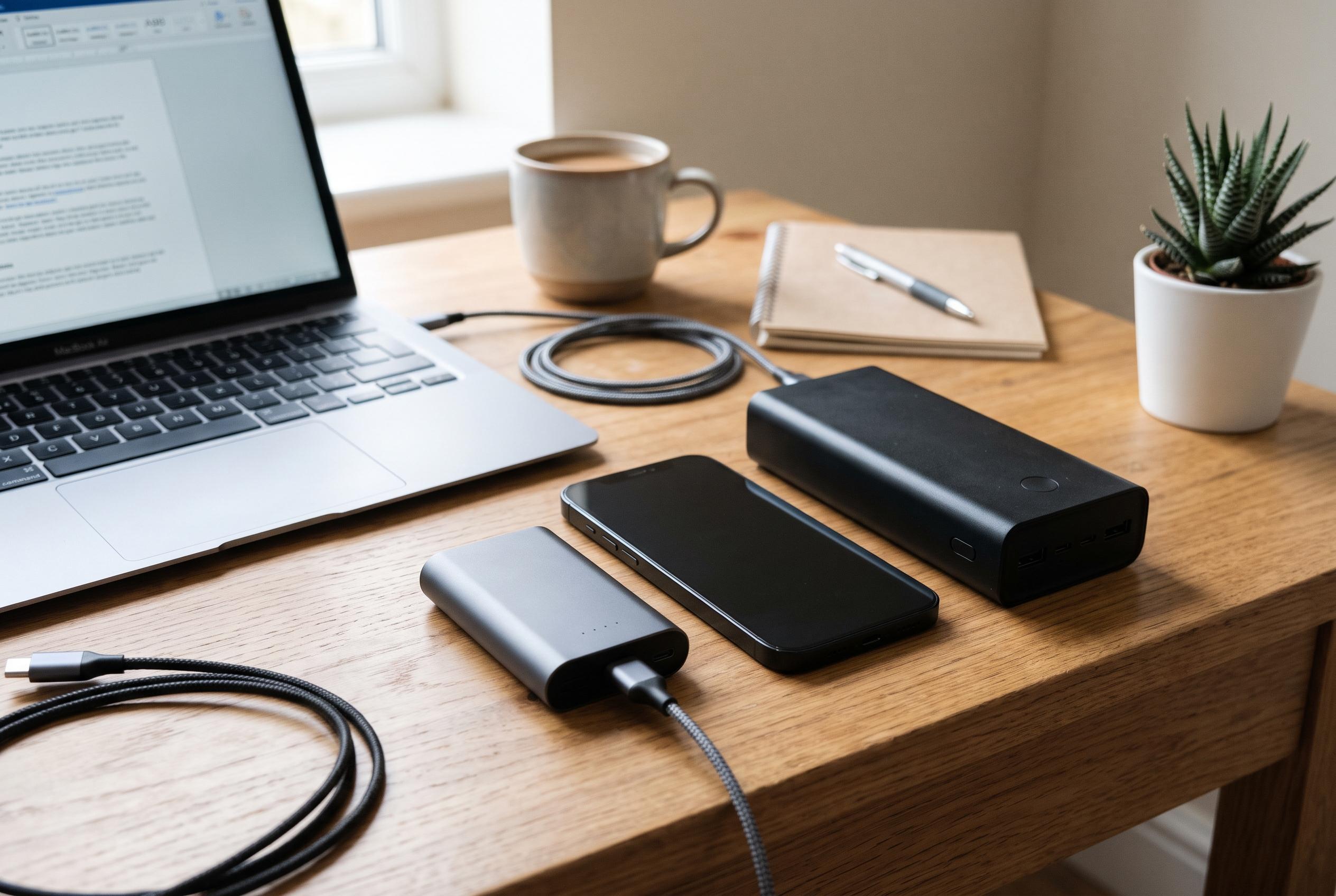

Anker’s 10,000mAh Zolo leads for everyday phone charging, while larger 20,000mAh models offer extra capacity and laptop-ready power at the cost of portability.
For most phone owners, the most sensible portable power bank is not the one with the highest capacity on the box, but the one that fits daily use without becoming a burden. That is the logic behind this roundup’s top picks, which place the Anker Zolo 10,000mAh 30W Power Bank with Built-In Cable at the front for ordinary phone charging, while also recognising that some buyers will need more reserve, more output, or a less pocketable but more capable design. The central trade-offs remain the same: size against runtime, fixed cable convenience against flexibility, and charging speed against the practical limits of the phone itself.
TechRadar’s review of the Anker Zolo 20,000mAh 30W Power Bank reinforces that balance. It describes the model as a substantial charger at a competitive price, with a hardwired USB-C cable that can deliver 30W, making it suitable for larger devices as well as phones. The same review also notes two compromises that matter in real use: the bank is relatively thick, and its port count is limited. That makes it a more realistic choice for users who value capacity and convenience over a slim profile or broad connectivity.
The stronger Anker 20,000mAh 87W Power Bank sits at the other end of the phone-accessory market. According to TechRadar, it delivers 87W across its ports, with up to 65W from a single port, and includes a built-in USB-C cable, a USB-C port and a USB-A port. That makes it suitable not only for phones, but also for tablets and many laptops. The review is clear, however, that this level of capability comes with a penalty in size and weight, which may make it excessive for anyone who only wants a simple phone top-up.
That tension between usefulness and portability is the main theme running through the broader buying advice. A 10,000mAh bank is usually the better everyday companion, because it is easier to carry and more likely to be on hand when needed. Higher-capacity models make more sense for travel, shared use or long days away from mains power, but they demand more room in a bag and more patience when recharging themselves. For most readers, the best choice is therefore not the largest model available, but the one whose output, cable arrangement and physical size match the device they actually carry.
In practice, that means starting with the phone you own, not the number printed on the packaging. If your handset cannot use the highest charging rate on offer, then extra wattage adds little. If you regularly forget cables, a built-in lead is valuable. If you carry more than one device, a more powerful bank can save time and reduce clutter. The most useful portable charger is the one that solves a recurring problem without creating a new one.
Disclaimer: This content is intended for informational purposes only. Readers are advised to exercise their own judgement, conduct due diligence, or consult a qualified expert before acting on any information provided.