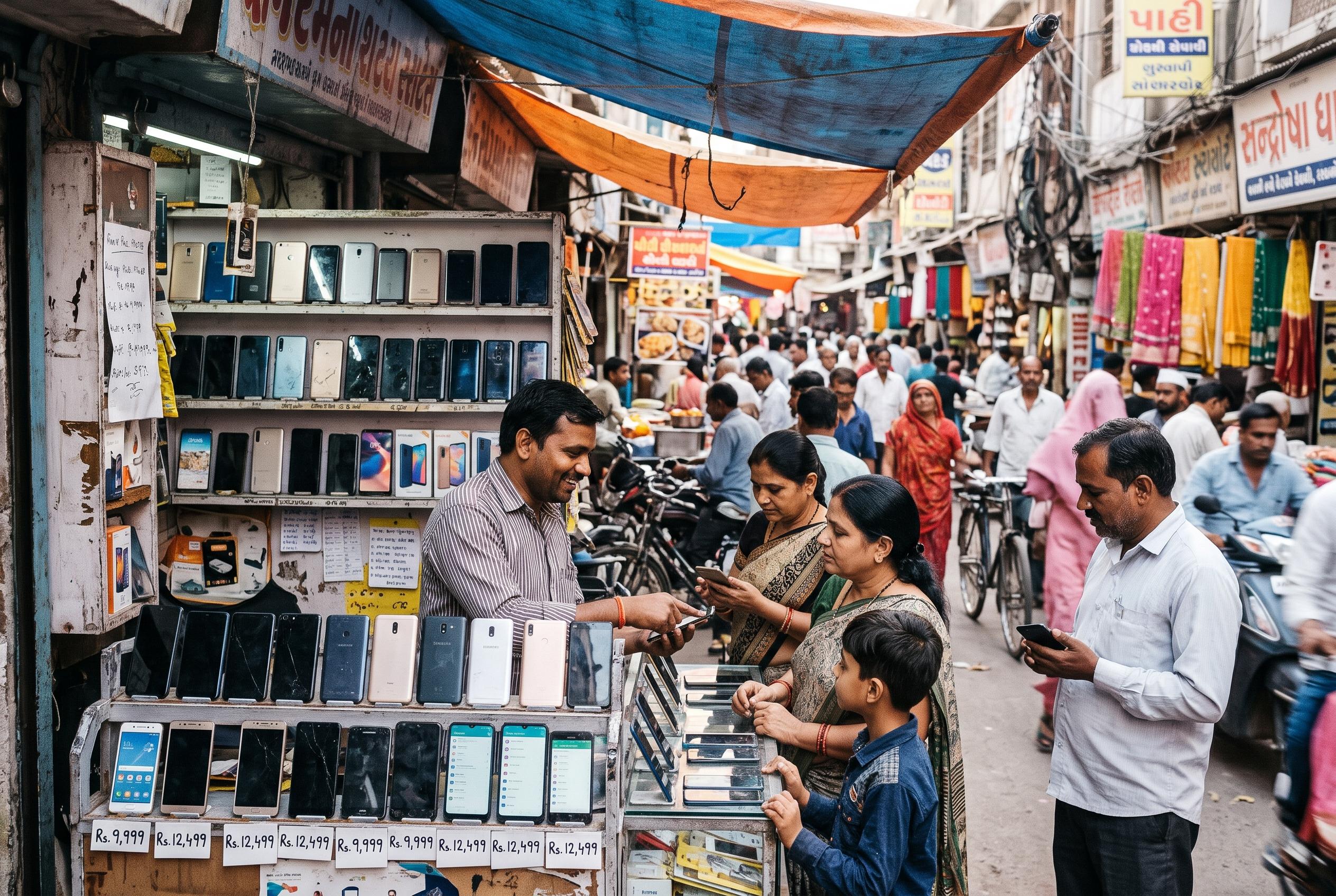

Samsung reclaimed the top spot in India with a 17% share in the third quarter, even as shipments plunged to their lowest Q3 level in a decade and sales of phones below ₹20,000 fell 47%.
Samsung has regained the number one position in India’s smartphone market, according to Counterpoint Research, after a quarter in which the sector weakened sharply under the pressure of higher device prices and softer consumer demand. The South Korean maker took a 17% share in the third quarter of 2026, becoming the only brand among the top five to post year-on-year growth, even as the market contracted to its weakest level in a decade.
The wider market told a more difficult story. Counterpoint said overall shipments fell by 20% in the quarter, while other industry trackers put the decline even steeper at 26%, to 35.8 million units, the lowest Q3 total since 2016. Higher handset prices, cautious spending and delayed festive buying all weighed on replacement demand, while manufacturers trimmed inventories rather than pushing volume at any cost.
The sharpest reversal came in the sub-₹20,000 segment, which fell 47% year on year as rising memory costs pushed many models into higher price brackets. That price inflation hit the mass market hardest, particularly phones below ₹15,000, where buyers are most sensitive to small changes in sticker price. Counterpoint said the result was a slower upgrade cycle, with consumers holding on to their devices for longer.
Samsung’s gain appears to have come from a combination of product mix and channel strategy. Counterpoint credited strong sales of its Galaxy A series, a balanced online-offline presence and relatively restrained price increases despite rising component costs. The company’s latest foldables also drew interest, while rival brands faced a more uneven quarter: vivo slipped to second place, OPPO held third and Xiaomi remained strong in the ₹10,001 to ₹20,000 band. Apple, meanwhile, continued to command a premium share of the market.
The pressure on the entry-level market is forcing a broader reset. Counterpoint’s research team said brands are now leaning more heavily on 4G handsets, lower-spec models and tighter stock control to preserve familiar price points, especially ahead of the festive season. Research director Tarun Pathak expects India’s smartphone market to shrink by about 13% in 2026 if memory prices remain elevated and demand does not recover after the holidays. In that environment, manufacturers face a difficult trade-off: protect margins or chase the volume that once came almost automatically from the sub-₹20,000 tier.
Disclaimer: This content is intended for informational purposes only. Readers are advised to exercise their own judgement, conduct due diligence, or consult a qualified expert before acting on any information provided.