

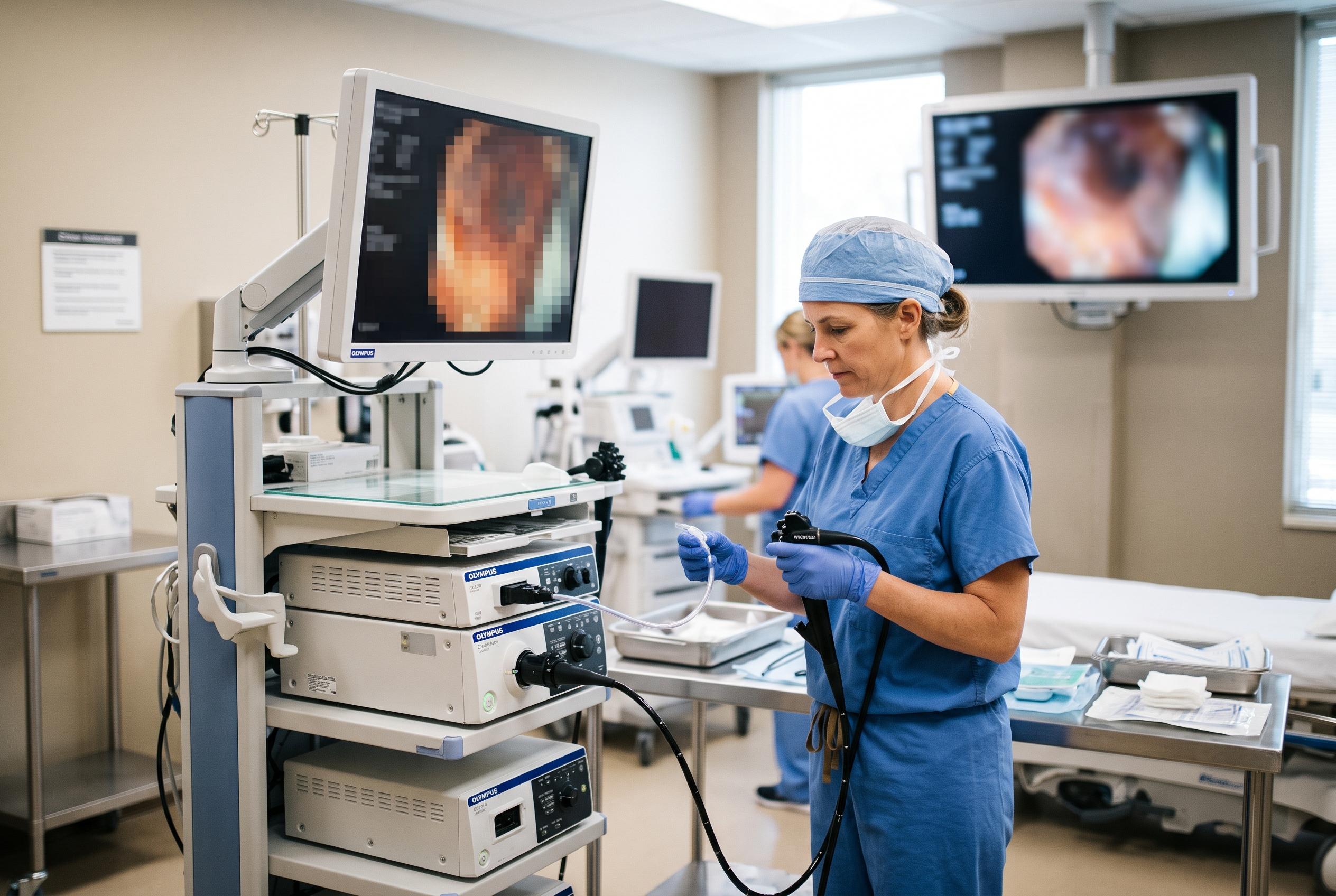

A study of experienced endoscopists has found that regular reliance on AI was followed by a significant drop in polyp detection when doctors worked unaided, renewing concerns about automation eroding professional skills.
AI-assisted medicine is no longer just a theoretical concern about the future of work. A study published in The Lancet Gastroenterology & Hepatology found that experienced endoscopists who regularly used artificial intelligence to help detect polyps later performed worse when they had to work without it. The result matters because no one in the study lost a role or a salary; what changed was the quality of the unaided skill behind the job.
The research tracked 19 experienced doctors across four Polish centres, all of whom had carried out more than 2,000 colonoscopies. Before AI was introduced into their workflow, their adenoma detection rate in standard procedures stood at 28.4%. After several months of routine AI-assisted work, that figure fell to 22.4% when they returned to non-AI procedures, a relative decline of about 20%. The authors treated the findings cautiously, noting the study was observational and could not prove that AI alone caused the fall.
Even with those limitations, the pattern fits a longer-running warning from aviation. The Federal Aviation Administration has repeatedly said that regular dependence on automation can erode manual flying ability, leaving pilots less prepared to recover from unusual situations. In one safety briefing, the agency warned that continuous use of automated systems can degrade manual skills and increase the risk of complacency. In another report, its Pilot Automation Resource Management working group recommended building manual flying back into training and routine operations so those skills remain current.
That approach reflects a simple principle: if a task is always handed to the machine, the human stops performing the repetitions that sustain expertise. The FAA has taken that view seriously enough to argue for regular hand-flying practice, not because automation is undesirable, but because safety depends on maintaining proficiency in both modes. Its later guidance on certification reform and smart cockpit technology carries the same message: automation is useful, but only if operators remain capable of working without it when necessary.
The same dynamic is now appearing in knowledge work. In software development, recent research by METR found that experienced open-source developers using AI tools took longer on real tasks than they expected, even though they believed the tools were making them faster. That mismatch between perceived and actual performance is important, because skill loss often hides behind a sense of convenience. If the output arrives quickly, people may assume they are still improving when, in fact, the hard part of the task is no longer being exercised.
Learning science helps explain why that happens. Durable expertise depends on deliberate practice: effortful repetition, feedback and correction. Psychologists have also shown that retrieval practice strengthens memory more effectively than repeated passive review. In other words, the difficulty itself is part of the training effect. When AI removes the need to retrieve, diagnose or produce a first draft, it can also remove the friction that makes the underlying skill stick.
That risk is not limited to medicine or engineering. It reaches any field where competence is built through repeated judgement, not just through final output. A reviewer who has stopped producing the work themselves may still recognise obvious errors, but subtle failures become harder to spot once the base skill has weakened. That is one reason the deskilling problem can remain invisible for so long: the work still gets done, but fewer people are still capable of doing it from first principles.
For organisations, the implication is practical rather than apocalyptic. AI should not be abandoned, but its use should be designed so it does not consume every repetition that creates expertise. Routine manual practice, periodic unaided assessments and deliberate opportunities to work without automation are all ways to preserve skill. In aviation, regulators recognised this years ago. In medicine and software, the same lesson is now becoming harder to ignore.
The deeper lesson is that automation changes not just productivity, but the terms on which human mastery survives. If a profession values judgment, diagnosis or precision, then it also has to value the repetitions that maintain those abilities. The machines can take on more of the work. The hard question is how much of the practice humans can afford to give away.
Disclaimer: This content is intended for informational purposes only. Readers are advised to exercise their own judgement, conduct due diligence, or consult a qualified expert before acting on any information provided.


