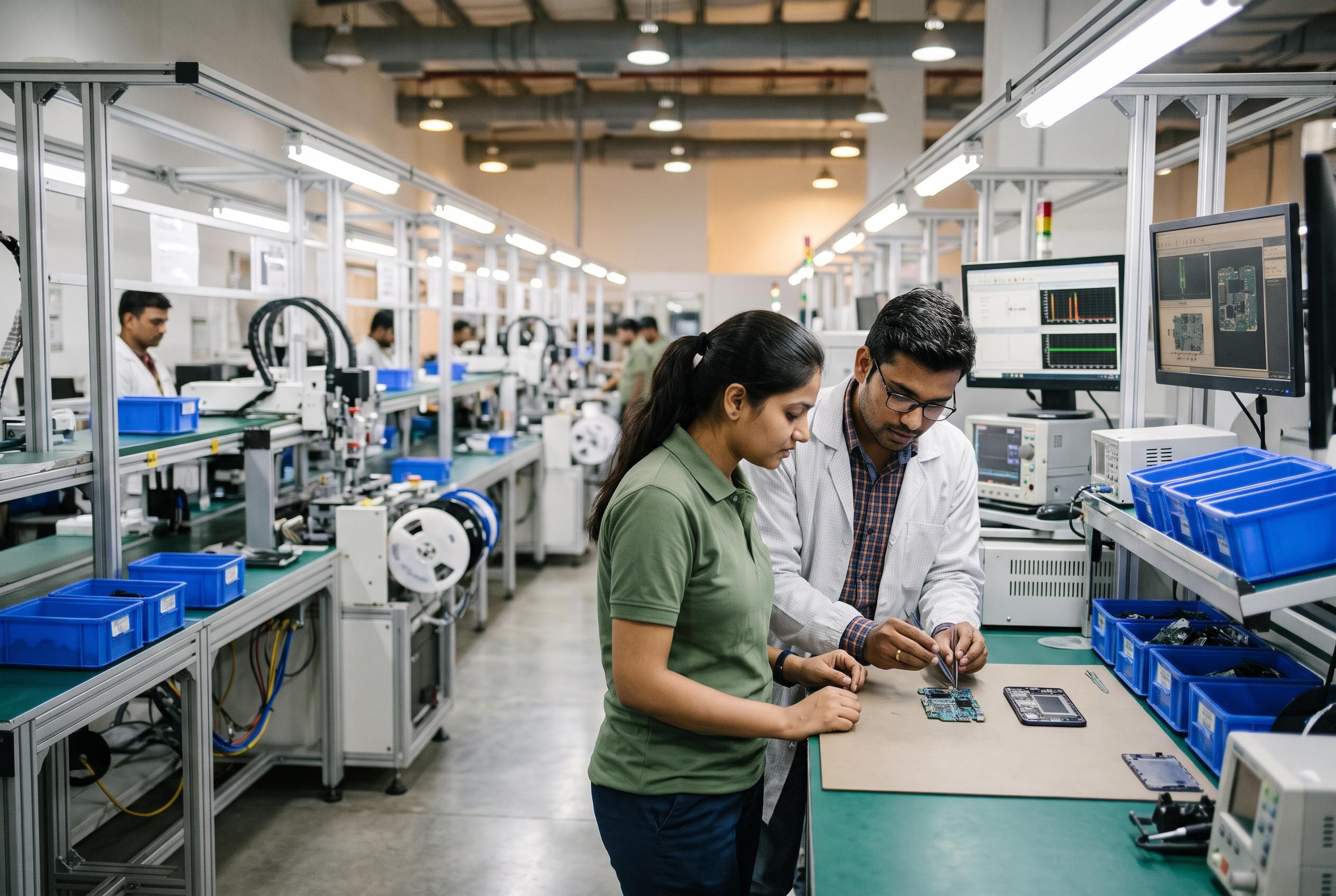

Muted demand, rising memory costs and tougher turnover thresholds are prompting Indian smartphone brands to delay decisions on joining the government’s new manufacturing incentive scheme.
Muted demand, rising component costs and a weak global handset market are slowing interest among Indian smartphone brands in the new Mobile Phone Manufacturing Scheme, even as the government seeks to deepen domestic production and localisation. Sources familiar with the matter told BusinessLine that several brands are still weighing whether they can satisfy the scheme’s turnover thresholds and other conditions while trying to protect margins in a difficult sales environment.
The application window for the scheme opened on October 15 and is designed to reward Indian mobile phone brands with a minimum turnover of ₹1,000 crore in FY 2025-26. Under the broader policy framework, the government is also using the scheme to support manufacturing scale, domestic value addition and local sourcing. The Economic Times has reported that the policy is split into separate segments for handset makers and Indian brands, with distinct eligibility requirements and incentives.
Some companies are still studying the fine print before deciding whether to apply. Arnav Kishore, founder and chief executive of boltt, told BusinessLine that participation would depend on eligibility, investment needs and whether the scheme fits the company’s manufacturing plans. Another Indian original equipment manufacturer said it was still reviewing the rules for domestic brands and wanted more clarity before committing. That caution reflects the practical difficulty of lifting volumes at a time when the component supply chain remains tight and handset demand is under pressure.
Counterpoint Research has said Indian brands increased their share of shipments from 2 per cent in the third quarter of 2025 to 7 per cent, but that gain came against the backdrop of a 20 per cent annual decline in the overall market. The improvement was concentrated in lower-priced phones, which means domestic brands may still need to scale sharply before they can qualify for the scheme. Business Standard has separately noted that smartphone prices in India rose 21 per cent in 2026, the fastest increase among markets tracked by Counterpoint, largely because of higher DRAM and NAND costs. That kind of inflation is especially hard for India’s price-sensitive market to absorb.
Industry participants expect contract manufacturers to capture much of the immediate benefit. One source told BusinessLine that the scheme should expand manufacturing capacity, but may do less to solve the current problem of balancing production volumes. A component supplier also said smartphone output had fallen by at least 10 to 20 per cent. However, analysts say the policy could still matter because it offers a 5 per cent incentive for Indian brands, an additional 3 per cent for Indian design and research and development, and further support for domestic sourcing of key parts.
Faisal Kawoosa, chief analyst and founder of Techarc, told BusinessLine that if global volumes soften, the industry may eventually push for a revision of the eligibility criteria, as it did with earlier incentive schemes. Shubham Singh, research analyst at Counterpoint Research, said the MPMS could still help firms absorb margin pressure, encourage local sourcing and support value growth even if unit shipments remain subdued. The scheme also offers an additional incentive of up to 1.5 per cent for domestic sourcing of components such as display modules, camera modules, enclosures, batteries and USB cables, provided localisation reaches the required scale. In that sense, the policy may be most valuable not as a quick demand stimulus, but as a longer-term industrial incentive for companies able to expand through the downturn.
Disclaimer: This content is intended for informational purposes only. Readers are advised to exercise their own judgement, conduct due diligence, or consult a qualified expert before acting on any information provided.