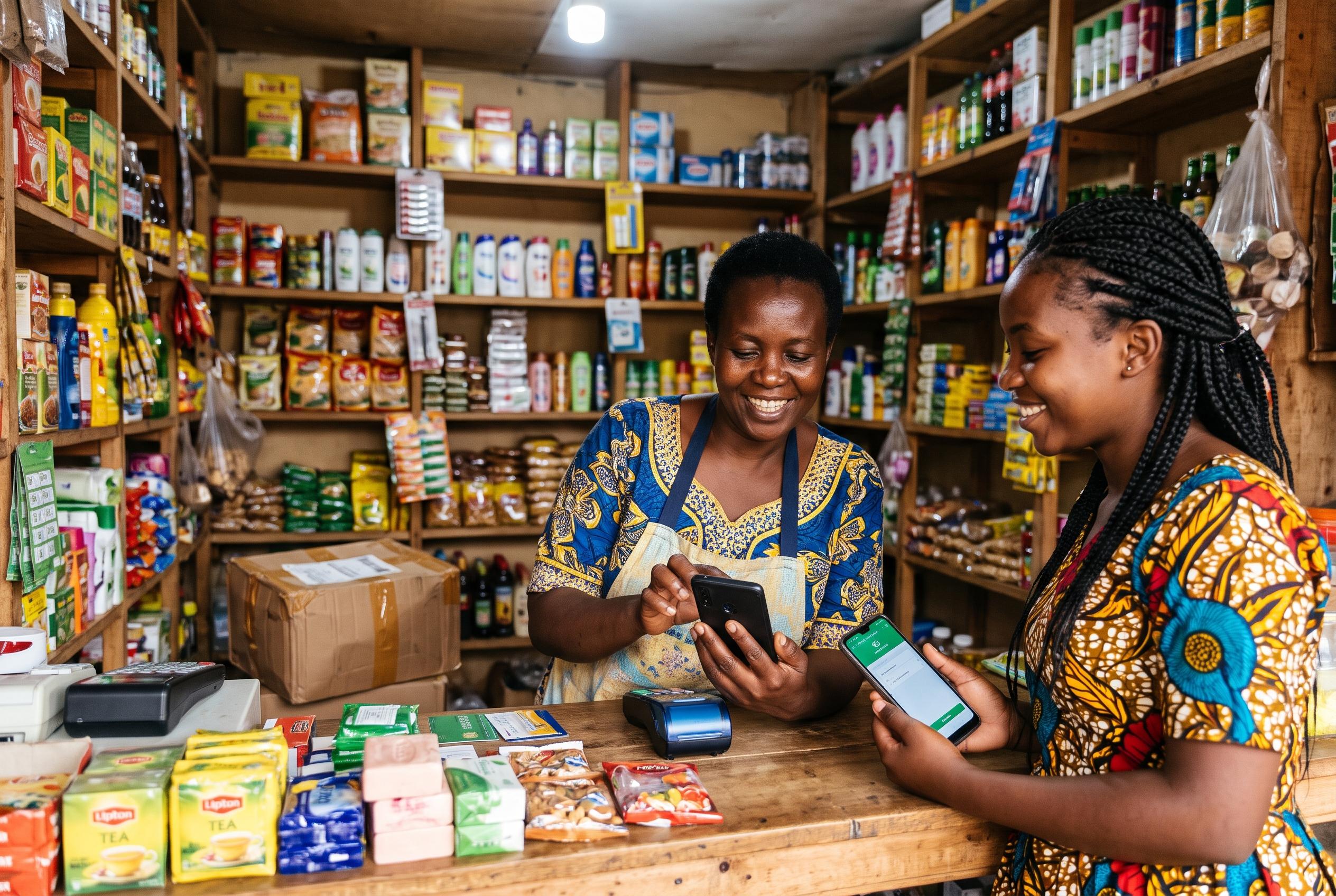

Mobile phones are combining payments, customer service, delivery and record-keeping for African retailers, while investment shifts towards the wider digital infrastructure of commerce.
A small retailer in Africa can now reach customers, collect payments, arrange delivery and keep records from a single handset. That shift is more than a convenience. It is changing how commerce is organised, because the phone now functions as the point of sale, the customer service desk and, in many cases, the merchant’s back office. The GSMA said mobile technologies and services contributed $240 billion to Africa’s economy in 2025, equal to 7.8% of GDP, while supporting about 13 million jobs and generating $45 billion in public revenue.
The most visible change has been in payments. Mobile money has moved beyond simple person-to-person transfers and become part of the basic machinery of trade. Merchants can receive money digitally, confirm orders before dispatch and pay staff or drivers without relying on cash. As payment systems become more interoperable, with QR codes, application programming interfaces and instant transfers reducing the need for separate integrations, smaller firms can accept more forms of payment without building the sort of costly infrastructure once reserved for larger businesses.
Investment patterns suggest that the market is also broadening. According to GSMA-linked figures and market data cited in the lead article, fintech still attracts the largest share of African technology capital, but commerce tools and enterprise software are drawing more attention. Partech recorded $1.49 billion of fintech funding in 2025, while its commerce category received $312 million, up 74% from the previous year. Enterprise technology raised $274 million and healthtech $224 million, signalling that investors are backing business infrastructure as well as consumer finance.
This matters because the same digital rails now support a wider range of services, from e-commerce to entertainment. A betting or gaming platform, for example, depends on mobile connectivity, account verification, payment processing, transaction logs and customer support in much the same way as a retail platform does. The product may differ, but the underlying requirements are similar: stable systems, reliable payments and the ability to keep users connected across devices and network conditions.
The bigger constraint is no longer simply whether a network exists. GSMA said 63% of Africans live within mobile broadband coverage but still do not use mobile internet, a gap driven by handset costs, digital skills and social barriers rather than signal alone. The association expects operators to invest more than $76 billion in network infrastructure between 2024 and 2030, and it projects that mobile technologies could contribute $290 billion to Africa’s economy by 2030. That underlines the central point: access to coverage is only the beginning. For many businesses, real scale will depend on whether customers can afford the phone, data and payment tools needed to take part.
Disclaimer: This content is intended for informational purposes only. Readers are advised to exercise their own judgement, conduct due diligence, or consult a qualified expert before acting on any information provided.