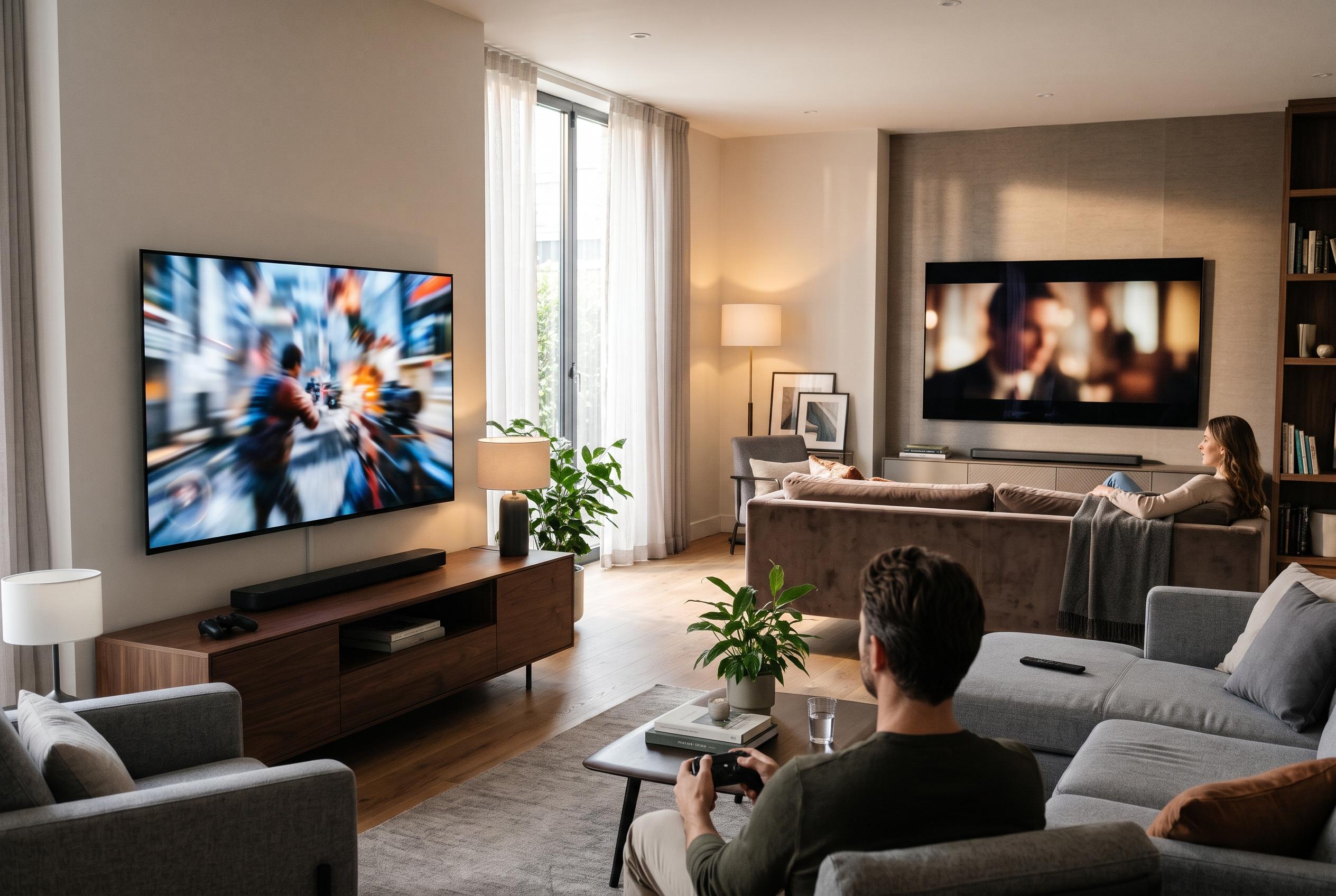

Discounted Samsung and Sony OLED TVs offer different priorities: the S90H brings stronger high-frame-rate gaming and reflection control, while the larger BRAVIA 6 delivers a more immersive picture for films and sofa viewing.
Samsung’s 55-inch S90H OLED and Sony’s 65-inch BRAVIA 6 OLED are both on discount, but they are not direct substitutes so much as different answers to the same question: do you want the most capable gaming display, or the larger screen? According to Tom’s Guide, Samsung’s S90H is the stronger option for high-frame-rate PC gaming, with support for up to 165Hz VRR on compatible systems, four HDMI 2.1 ports, G-SYNC, FreeSync Premium Pro and a glare-reducing finish that helps it hold up better in bright rooms. Sony’s BRAVIA 6, by contrast, is the more expansive set, and the extra 10 inches of diagonal screen size translates into a much larger viewing area for films, sport and sofa gaming.
Samsung’s appeal is mostly technical. The company’s 2026 S90H range, as described by SamMobile, sits below the flagship S95H and spans multiple sizes, with the 55-inch model among the most relevant for gamers seeking a compact but premium OLED. It uses Samsung’s NQ4 AI Gen3 processor and supports HDR10, HDR10+, HDR10+ Advanced and HLG, while also adding gaming features such as ALLM, FreeSync Premium Pro and NVIDIA G-SYNC. Tom’s Guide says the TV’s gloss-free coating is one of its most practical advantages, because it cuts reflections enough to make the screen easier to live with in well-lit rooms. The omission of Dolby Vision remains a drawback, but Samsung’s broader gaming specification and stronger HDR handling make it the more versatile choice for PC users.
Sony’s BRAVIA 6 takes a different route. Sony says the set uses a self-emissive OLED panel, runs Google TV, and supports HDR10, Dolby Vision and HLG, with four HDMI 2.1 ports for 4K at 120fps, VRR and ALLM. RTINGS notes that the television delivers excellent gaming performance with low input lag, perfect blacks and a wide viewing angle, although bright-room performance is only middling and small highlight details are not especially bright. That makes it a better fit for darker viewing spaces and viewers who value cinematic presentation over outright peak brightness. TechRadar also reports that the BRAVIA 6 is positioned as a mid-range OLED in Sony’s 2026 line-up, where its strengths are expected to lie in image processing, motion handling and upscaling rather than panel brightness.
On balance, the Samsung is the sharper recommendation for buyers who care most about gaming performance, reflection control and flexibility in mixed lighting. The Sony makes more sense if screen size is the priority and the television will be used mainly in a darker room for films, streaming and console play. The practical difference is not just specification-sheet detail: it is about how each screen will behave in a real living room. The Samsung is the safer all-rounder for performance-minded buyers, while the Sony is the more immersive option for viewers who would rather trade some brightness headroom for a significantly larger picture.
Disclaimer: This content is intended for informational purposes only. Readers are advised to exercise their own judgement, conduct due diligence, or consult a qualified expert before acting on any information provided.