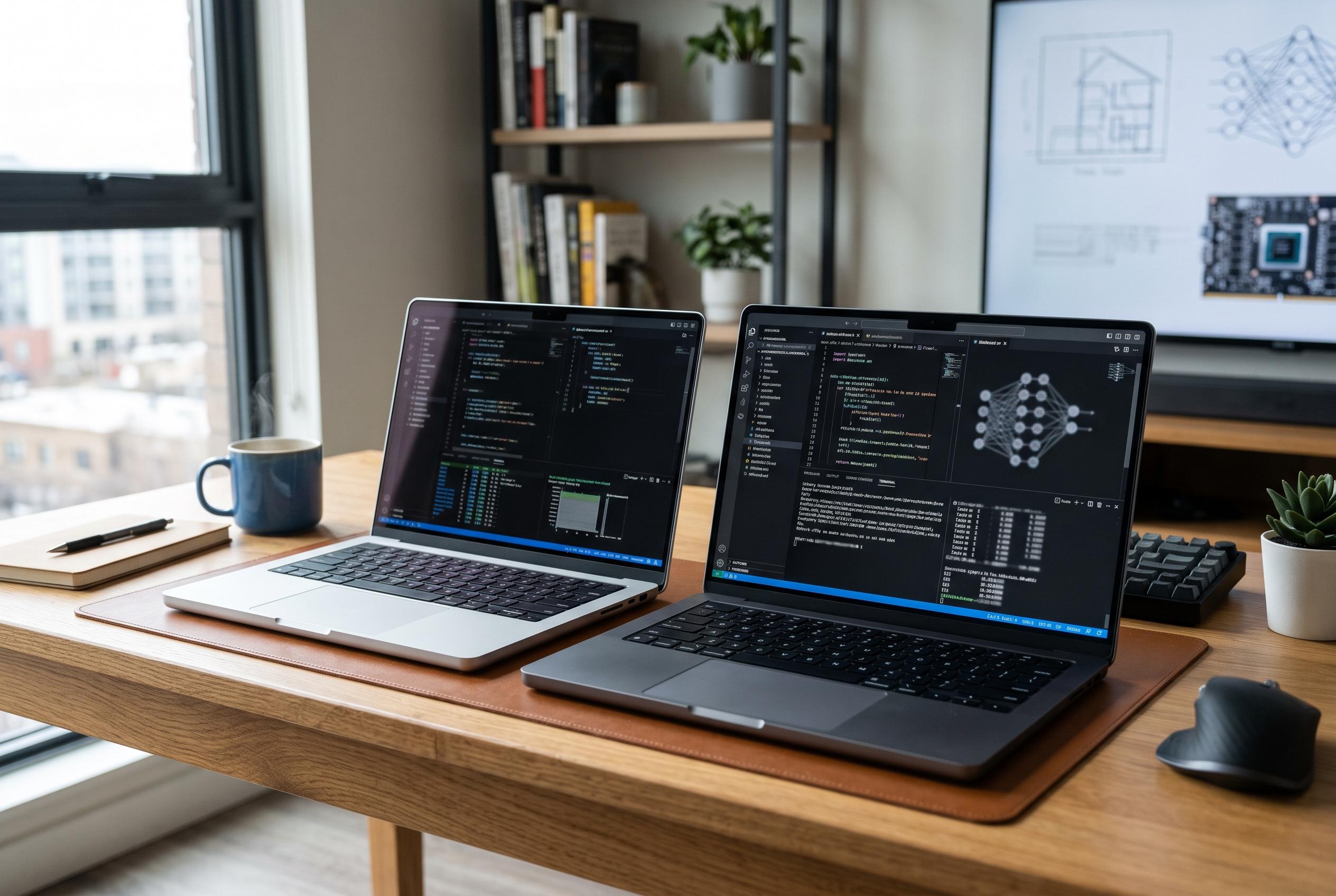

A head-to-head test suggests memory capacity and model compatibility matter more than headline AI performance, with a cheaper Snapdragon X2 laptop running workloads the RTX Spark system could not load.
NVIDIA has pitched the RTX Spark as a machine for running local AI agents, but a recent head-to-head test suggests that raw positioning matters less than usable memory. In the comparison, a $3,200 HP OmniBook Ultra 16 fitted with a 32GB RTX Spark configuration struggled to load the models the reviewer wanted, while a $2,200 Asus Zenbook A16 with 48GB of memory and Qualcomm’s Snapdragon X2 Elite Extreme managed to run several of them. The result was not a clean win on speed, but a clearer win on practical capability.
That finding sits against a broader shift in Windows on Arm. Qualcomm’s second-generation Snapdragon X2 Elite platform is part of an increasingly aggressive effort to improve performance, efficiency and on-device AI support in Arm-based laptops, while NVIDIA’s own entry has brought another powerful option into the same market. As industry comparisons have noted, the two chips are now competing not just on benchmark numbers, but on how well they handle AI workloads in real use.
The reviewer’s first test used the Hermes app, which is designed around local model access. On the RTX Spark machine, even after reducing the dedicated memory allocation as far as the system allowed, none of the available models were considered compatible. By contrast, the Zenbook immediately offered one-click installation for multiple models, including Qwen 3.8 27B, Nemotron 3.5 Bolt and Qwen 3.6 35-A3B. In practice, that meant the cheaper laptop was ready to work without the sort of manual adjustment that often turns local AI into a technical exercise.
Performance, however, was uneven on both systems. The HP machine was described as fast when it could actually run a prompt, and the reviewer said its main limitation was memory headroom rather than compute. The Asus laptop, meanwhile, could answer prompts but often needed several minutes to do so. The reviewer also noted that the Zenbook was running the model on the CPU after encountering Adreno GPU driver problems, which suggests the result could have been different with more stable graphics support.
A coding task exposed the gap even more sharply. On the HP system, Hermes would not complete the prompt at all because the model repeatedly crashed. The Asus machine did manage to generate the Python script and work through the requested test-and-fix loop, although it had not finished after about an hour. Even so, the fact that it could start and sustain the workload was enough for the reviewer to judge it more useful for this use case.
That conclusion is consistent with the wider hardware picture now emerging around both chips. Reporting on NVIDIA’s RTX Spark has shown that different configurations are already surfacing, including 18-core and 20-core variants, while comparisons with Qualcomm’s X2 Elite family have emphasised that the platform brings major gains over the original X Elite in performance, efficiency and AI features. Yet for local AI, those headline specifications still matter less than whether a laptop can hold a model in memory and keep it running.
The practical lesson is straightforward: for users who want local AI agents rather than cloud-backed chat, the best machine is not necessarily the one marketed most aggressively for the task. In this test, the RTX Spark system was faster when it had enough room to breathe, but the Snapdragon X2 Elite Extreme laptop was the one that actually loaded the models and completed real work. For now, the cheaper machine was the more reliable tool.
Disclaimer: This content is intended for informational purposes only. Readers are advised to exercise their own judgement, conduct due diligence, or consult a qualified expert before acting on any information provided.