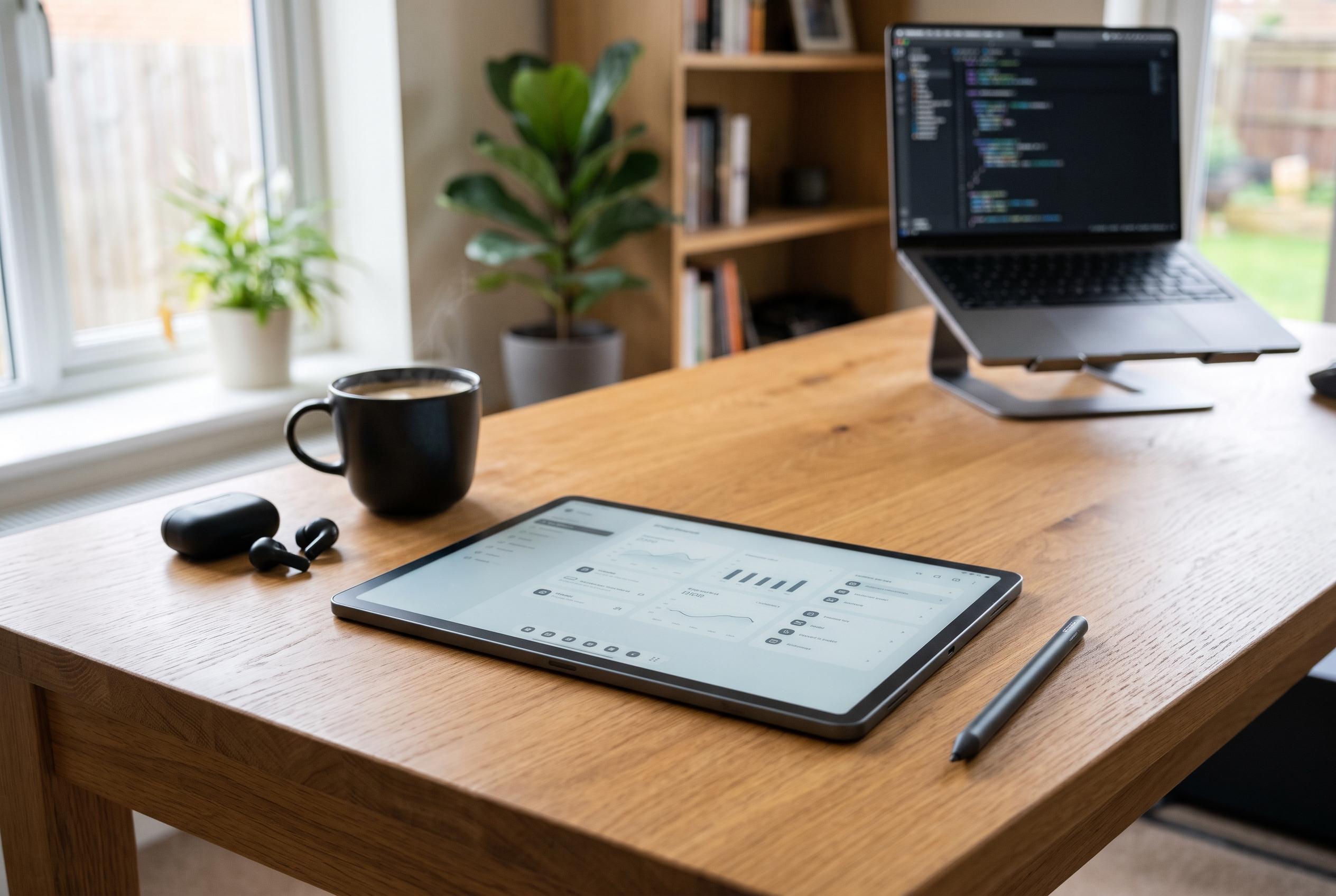

Huawei’s lightweight MatePad Air 2026 stands out with a bright 144Hz PaperMatte OLED display and strong battery life, but weaker graphics performance and limited software support temper its laptop alternative ambitions.
Huawei’s MatePad Air 2026 is being positioned as a lightweight tablet for work, study and media consumption, and the hardware combination appears to support that claim. Review coverage from Notebookcheck, PhoneArena, Gizmochina and Xataka converges on the same core strengths: a 12-inch 2.8K OLED PaperMatte screen, a 144Hz refresh rate, and a design that keeps glare low while remaining easy to carry. With support for the M-Pencil Pro and an optional keyboard case, the tablet is clearly aimed at users who want a laptop-like setup without moving to a full notebook.
The display is the defining feature. According to the launch details reported by Gizmochina, Huawei says the panel reaches up to 1,200 nits of peak brightness, supports 1.07 billion colours, covers the P3 gamut and targets Delta E below 1 for colour accuracy. Xataka said the PaperMatte finish is one of the strongest arguments in the product’s favour, while Notebookcheck described the screen as a major reason the device stands out both for productivity and entertainment. In practical terms, the anti-reflective coating should make it easier to use in bright rooms, lecture halls and offices, where reflections often reduce readability on glossy tablets.
Performance looks adequate for day-to-day use, but not class-leading. The MatePad Air 2026 is powered by Huawei’s Kirin T93C chip and is available with 8GB or 12GB of RAM and 256GB of storage. Notebookcheck said the processor delivers solid results in normal use, but the same review noted that graphics performance trails the competition by a noticeable margin. That points to a tablet that should handle note-taking, browsing, streaming and office work comfortably, while being less convincing for demanding games or heavy creative workloads.
Battery life is another reported strength. PhoneArena highlighted the 10,100mAh battery as a key factor behind the tablet’s endurance, and the same review praised its finish and overall feel in the hand. Huawei has also added software tools aimed at making the tablet more useful for everyday productivity, including handwriting improvements, voice-to-text conversion and multitasking features, according to Xataka. Even so, reviewers have flagged the same recurring weaknesses: limited access to Google services, no secure biometric unlock option such as a fingerprint reader or 3D face recognition, and no desktop-style mode comparable to Samsung DeX. For users already comfortable with Huawei’s software environment, the MatePad Air 2026 looks like a thoughtfully designed alternative to an iPad Air. For power users who rely on Google apps, advanced desktop workflows or broader ecosystem support, the compromises remain difficult to ignore.
Disclaimer: This content is intended for informational purposes only. Readers are advised to exercise their own judgement, conduct due diligence, or consult a qualified expert before acting on any information provided.