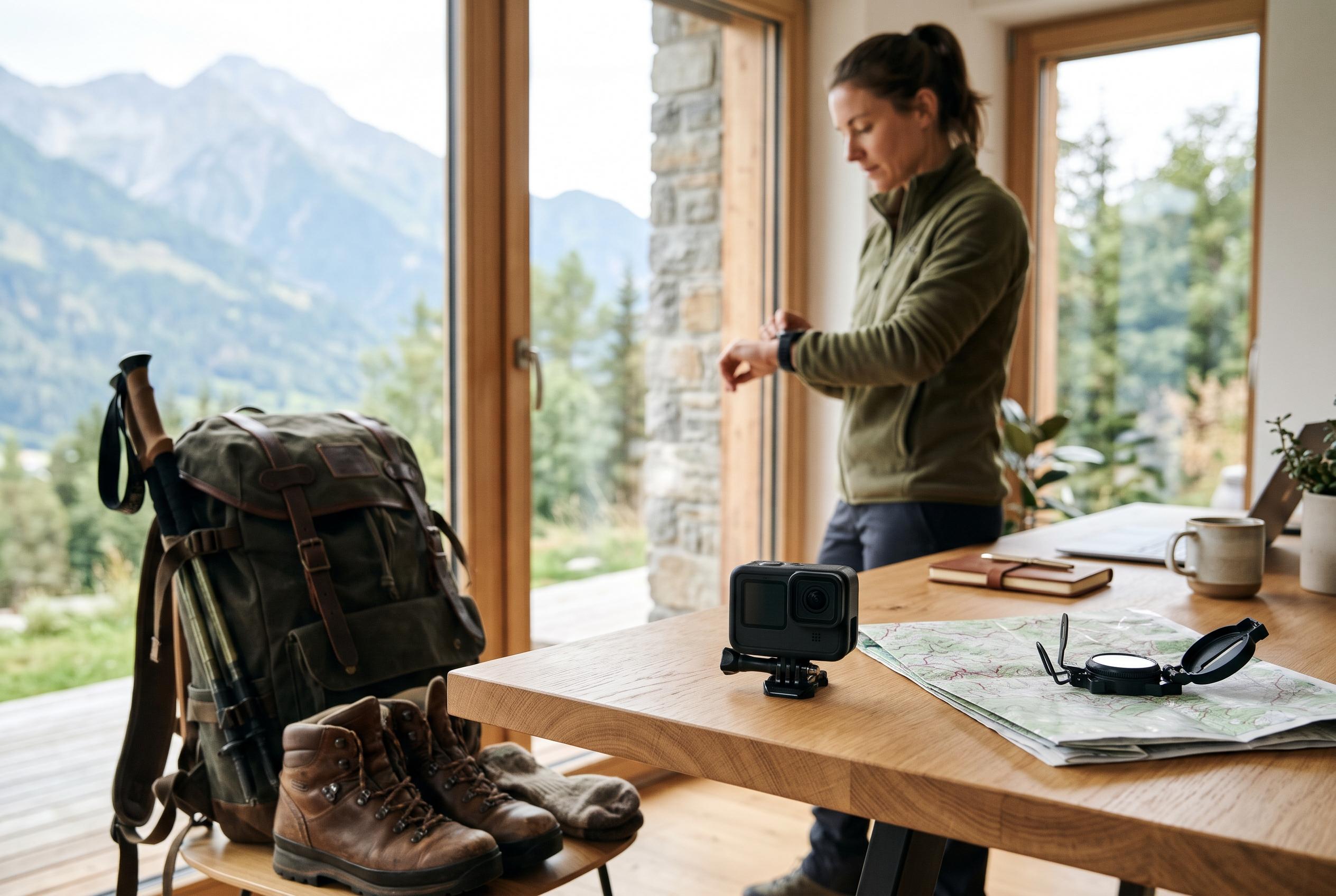

DJI’s Osmo Action 5 Pro offers the strongest all-purpose package, while the AKASO Brave 4 makes a better case for budget buyers and 360 cameras suit those willing to trade simplicity for reframing flexibility.
The DJI Osmo Action 5 Pro has emerged as the strongest all-round choice in this group for buyers who want a conventional action camera rather than a more specialised device. According to DJI, the Essential Combo pairs a 1/1.3-inch sensor with 4K recording at up to 120 frames per second, dual OLED touchscreens and subject tracking, while Tom’s Guide says the camera also delivers strong colour handling, internal audio and improved waterproofing. In practical terms, that makes it a better fit than many lower-cost rivals for users who want a compact camera that can handle cycling, travel and self-recording without needing a more complicated rig.
That said, the broader market still has a place for simpler and cheaper models. BestAdvisers.co.uk and RTINGS both note that the AKASO Brave 4 offers a front display, electronic image stabilisation and waterproofing with the supplied case, making it easier to use for vlogging and basic outdoor shooting than the older EK7000. The EK7000 remains relevant for shoppers who want a straightforward, compact camera with 4K recording and remote control support, but the Brave 4 appears to be the more usable of the two when screen visibility and accessory value matter. A comparison published by Cryovex also underlines that bundle contents can be important, with some Brave 4 packages including a 64GB memory card and a fuller accessory set.
The key decision, however, is not just between premium and budget models. A conventional action camera and a 360-degree camera solve different problems. The former is designed for a directed, forward-facing shot, which is usually what most buyers expect from a 4K action camera. A 360 camera records in every direction and allows reframing later, which can be useful when the angle is hard to predict, but it also adds editing work and a different shooting workflow. That makes the 360 route more suitable for creators who value flexibility over simplicity.
Mini body cameras sit in a separate category again. Their appeal is portability and discreet, hands-free recording, not the wide mounting flexibility of a standard action camera. They can be useful for point-of-view clips or situations where a small profile matters more than control over framing, yet they are usually a poorer match for buyers who want to swap mounts, adjust angles easily or use the same device across multiple activities. In other words, their value comes from format, not resolution alone.
For most buyers, the safest buying rule is to match the camera to the actual use case before comparing the headline specification. Waterproofing should be checked carefully, because on many models it depends on the supplied case rather than the camera body alone. Battery life, storage capacity and included accessories also matter more than they first appear, particularly on longer outings where a cheap bundle can become inconvenient. If the aim is a reliable all-purpose action camera, the DJI Osmo Action 5 Pro is the clearest premium option. If value is the priority, the AKASO Brave 4 is the more convincing budget pick. For users who want reframing rather than simple capture, a 360 camera makes more sense.
Disclaimer: This content is intended for informational purposes only. Readers are advised to exercise their own judgement, conduct due diligence, or consult a qualified expert before acting on any information provided.