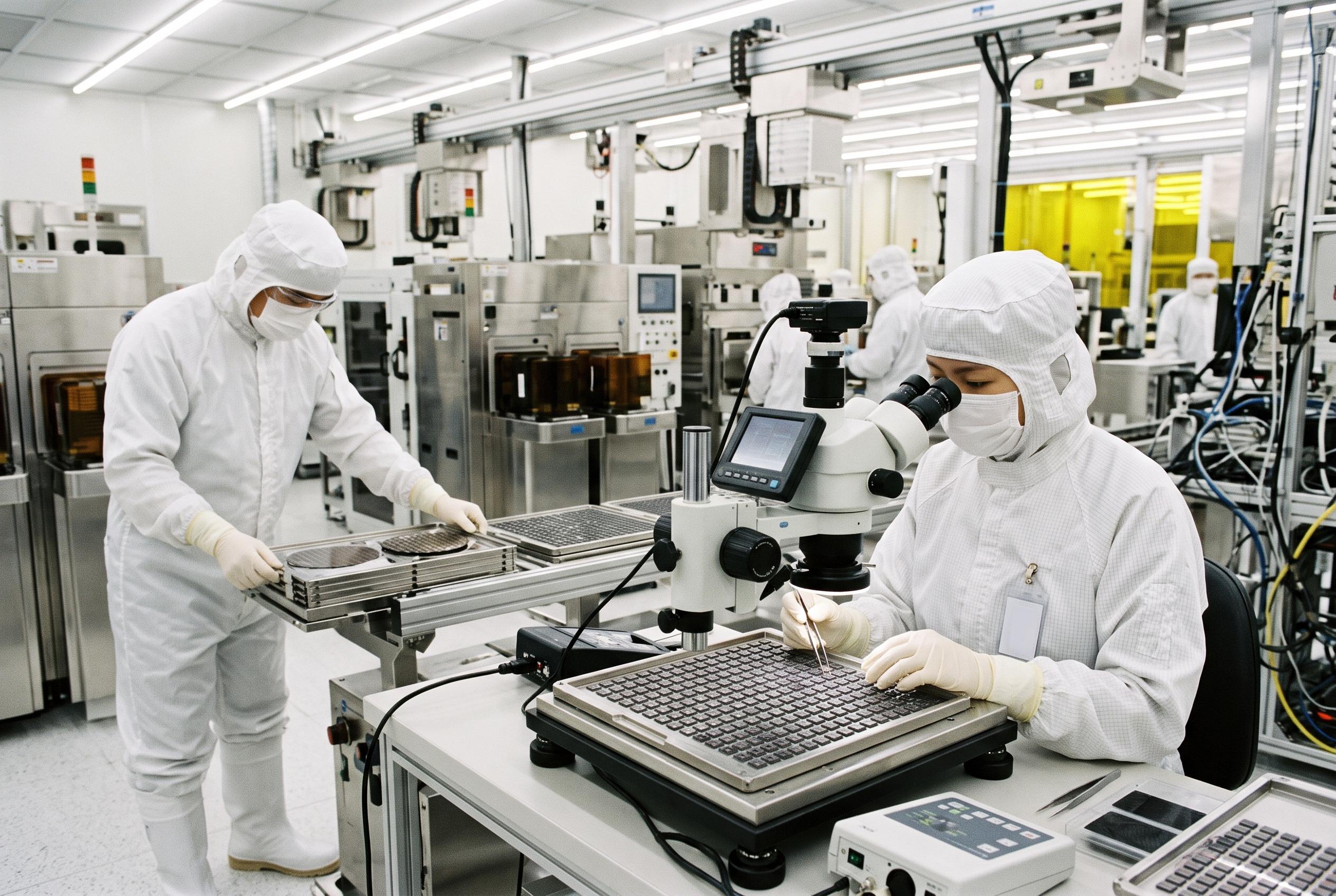

Results from SK Hynix, Samsung Electronics, Kioxia and China’s CXMT will show whether the AI infrastructure boom is still backed by durable orders or increasingly vulnerable to bubble fears and rising financing costs.
The world’s largest memory chipmakers are heading into a pivotal round of earnings that will test whether the artificial intelligence build-out is still being driven by real orders, or whether investors’ fears of a spending bubble are beginning to overtake fundamentals. From South Korea to Japan and China, the companies at the centre of the market are expected to report sharply higher revenue and profits, but they are also facing unusually intense scrutiny over whether data-centre demand can keep absorbing the vast sums flowing into new capacity.
The most closely watched results begin with SK Hynix, followed by Samsung Electronics, Kioxia Holdings and China’s CXMT. Together, they sit at the core of a market worth more than US$2 trillion and supply essential components for a sizeable share of big tech’s data-centre spending. Analysts expect the numbers themselves to remain strong, helped by a prolonged shortage of key chips, but investors are looking beyond headline growth and towards order durability, pricing power and the scale of future investment.
That caution has sharpened in recent weeks as bond and equity markets have begun to question the economics of the AI infrastructure boom. Reuters has reported that Oracle invoked a force-majeure clause to protect itself against delays at a data-centre project in New Mexico, while yields have jumped on debt linked to CoreWeave, a major AI infrastructure lender. At the same time, Nvidia-backed Firmus Grid pulled a planned flotation in Australia, and Nscale’s UK debut came under pressure after Microsoft withdrew from a data-centre project. The broader concern is not that AI demand will disappear, but that the cost of building the infrastructure may rise faster than the revenue it generates.
That backdrop makes memory chips a particularly useful indicator. Billy Leung, an investment strategist at Global X Management, told Reuters that memory is the clearest live signal of AI demand because pricing changes quickly and is hard to dress up. Yet the market has already priced in a degree of scepticism. Shares in Samsung and SK Hynix have fallen sharply from their June peaks, and some investors now argue that the “easy money” in the AI theme has already been made. Others, however, still see room for further gains if supply remains tight and companies continue to reward shareholders through buybacks and dividends.
The long-term debate is also shifting towards capacity discipline. According to KB Securities, Samsung and SK Hynix together control roughly 60 per cent of global DRAM revenue and more than 80 per cent of high-bandwidth memory revenue, giving them exceptional pricing power in the most advanced segment used by AI accelerators. But the same firms are also expanding aggressively. SK Hynix reported a 557 per cent rise in second-quarter operating profit in 2026, according to industry reports, and lifted capital spending guidance to the high 40 trillion won range to meet demand for AI servers. Separately, Tom’s Hardware reported that Samsung is upgrading its Xi’an plant in China for 286-layer V9 NAND production by the end of 2026, while SK Hynix is also improving its Chinese operations.
Competition is not only coming from the traditional leaders. CXMT is pushing into conventional DRAM, where it has built a growing share of the market, although it remains well behind in the advanced memory that AI accelerators require. That limits its access to the most profitable part of the boom, but it could still pressure commodity DRAM pricing if its output rises faster than demand. Meanwhile, for Kioxia, the issue is different: investors are watching whether the company will lift prices enough to capture the benefit of strong demand for enterprise solid-state drives, or whether it will continue to prioritise long-term customer relationships over near-term margins.
The sector’s latest investments also show how fragile the boom could become if financing costs stay high or if customers slow their own spending. Tom’s Hardware reported that SK Hynix has dropped plans for an initial public offering of its Solidigm subsidiary, blaming weak market conditions and softer semiconductor share prices, even as it continues to prioritise a new US manufacturing site for enterprise SSDs. The week’s earnings will not settle the argument over an AI bubble, but they should reveal whether the current shortage is still anchored in contracted demand, or whether the industry is beginning to build for a future that has yet to fully arrive.
Disclaimer: This content is intended for informational purposes only. Readers are advised to exercise their own judgement, conduct due diligence, or consult a qualified expert before acting on any information provided.