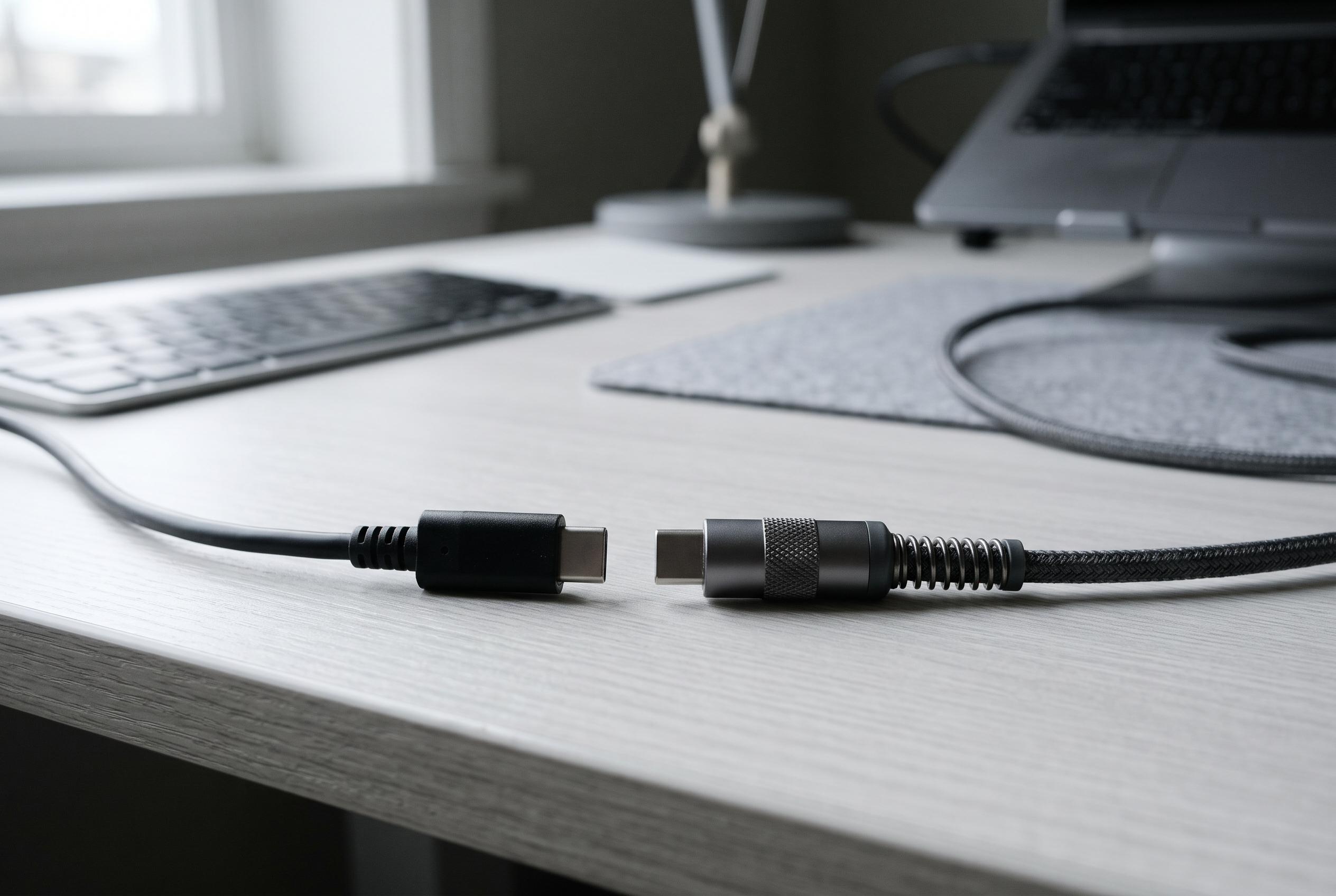

Lumafield’s CT scans reveal that near-identical USB-C cables can contain anything from four active contacts to sophisticated shielding, circuitry and hidden hardware.
A close look inside USB-C cables has shown that identical-looking leads can hide very different engineering choices, and very different prices. The issue matters because USB-C has become the common charging port for new consumer electronics sold in the EU since December 2024, including phones, tablets, headphones and portable speakers. Apple, after years of resistance, has now adopted the standard across its devices, but its premium cables remain far from cheap. Lumafield’s X-ray work suggests that the price gap is not just about branding; it also reflects a wide spread in internal design and capability.
According to Notebookcheck and Tom’s Hardware, Lumafield used computed tomography to inspect a range of USB-C cables, from very low-cost models to high-end Thunderbolt accessories and even a deliberately modified malicious cable. The scans showed that a cable’s outer sheath reveals little about what is inside. In the case of the O.MG cable developed by hackers, the imaging exposed hidden circuitry and an antenna inside the connector, underlining how difficult it can be to spot tampering without specialist equipment.
One of the cheapest examples examined was a US$5 NiceTQ cable. Its packaging suggested charging at up to 60W and data transfer at up to 10Gb/s, but the internal construction was much simpler than the label implied. Lumafield’s scan reportedly found no shielding and no separate circuit board. Only four of the eight contacts were active, which meant the cable was effectively limited to much slower USB 2.0-class performance, around 480Mb/s. That also left little redundancy if one contact failed.
At the other extreme was Apple’s Thunderbolt 4 Pro cable, which Apple sells as a 1.8-metre premium accessory. Apple says it supports data transfer of up to 40Gb/s, USB 3.2 speeds of up to 10Gb/s, DisplayPort video output and charging of up to 100W, with compatibility across Thunderbolt 3, Thunderbolt 4 and USB 4 devices. Notebookcheck’s earlier CT scan of Apple’s Thunderbolt cable found a far more elaborate structure than budget alternatives, while Lumafield’s newer images again showed a densely built assembly with 24 contacts, a multi-layer board, coaxial shielding and a reinforced connector housing.
The practical lesson is narrower than the price tag suggests. A premium cable is justified when a user needs sustained high-speed data, multiple displays, fast external storage or other demanding peripherals. For ordinary phone charging and occasional file transfer, a well-made USB-C cable with the right specification is usually enough. Lumafield’s findings do not prove that Apple’s cable is the best value, only that the most expensive option can contain considerably more engineering than a basic charging lead. Even among cheaper brands, the internal design can vary sharply: the report noted that an ATYFUER cable costing under US$4 appeared more complex inside than the pricier NiceTQ model.
The broader point is that USB-C is a connector standard, not a guarantee of performance. Cables can differ in data rate, power delivery, shielding, durability and support for Thunderbolt or DisplayPort features, even when they look almost identical from the outside. That makes price a poor guide on its own. The right cable is the one that matches the device and the task, rather than the one with the most ambitious marketing claims.
Disclaimer: This content is intended for informational purposes only. Readers are advised to exercise their own judgement, conduct due diligence, or consult a qualified expert before acting on any information provided.