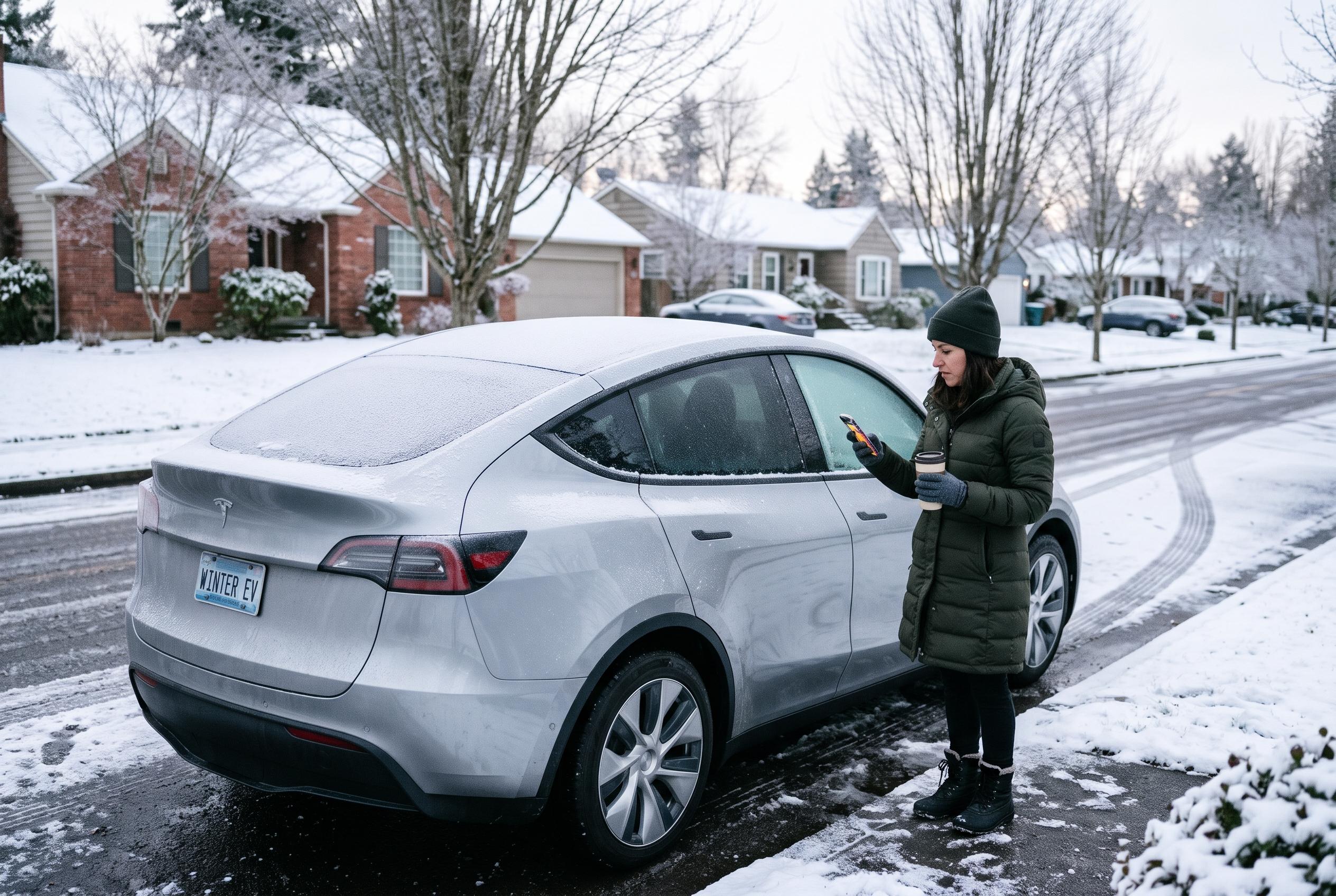

Cold temperatures, cabin heating and difficult road conditions can cut an electric car’s usable range by 20% to 30%, but preconditioning and careful planning can limit the loss.
Cold weather can cut an electric car’s usable range far more than many drivers expect. Industry guidance and consumer tests consistently point to losses of roughly 20% to 30% in typical winter conditions, with steeper drops on short journeys and in severe cold. The cause is rarely a single factor. Battery chemistry slows as temperatures fall, the cabin demands more heating energy, and road conditions themselves become less efficient for the car to traverse. Consumer Reports says the battery’s internal chemistry becomes less effective in low temperatures, while other winter factors add to the drain.
The main penalty begins inside the battery pack. Lithium-ion cells perform best at around room temperature, and as the mercury falls, the movement of ions slows and internal resistance rises. That means the car can draw less useful energy from the pack and recover energy less efficiently when charging. Several guides note that the effect is most visible once temperatures drop below freezing, with some estimates placing losses at 20% to 40% in harsh conditions. Cold tyres, wet or slushy roads, and higher aerodynamic drag at motorway speeds can all deepen the impact.
Heating is the other major burden. Unlike a combustion engine, an electric car does not generate surplus waste heat for the cabin, so warmth must be produced intentionally from the battery. That makes demisting, cabin heating, seat heaters, steering-wheel heaters and heated screens part of the range equation. Consumer Reports recommends preconditioning the car while it is still plugged in, so the battery and cabin are warmed using mains power rather than stored energy. Many manufacturers also advise using seat and steering-wheel heating where possible, because it warms occupants more efficiently than blasting the entire interior with hot air.
There are practical ways to reduce the winter penalty, though none removes it entirely. Preheating the car while connected to a charger remains one of the most effective measures. A calm driving style also helps, because heavy acceleration is more costly when the battery is cold. Planning charging stops matters too: several manufacturers and EV guides note that battery preconditioning before rapid charging can improve charging speed and reduce delay. Vehicles with a heat pump often fare better in winter because they can heat the cabin more efficiently than simpler resistive systems. As a rule of thumb, drivers should leave a meaningful buffer in winter planning, since WLTP figures are laboratory values and rarely reflect cold-weather reality.
Disclaimer: This content is intended for informational purposes only. Readers are advised to exercise their own judgement, conduct due diligence, or consult a qualified expert before acting on any information provided.