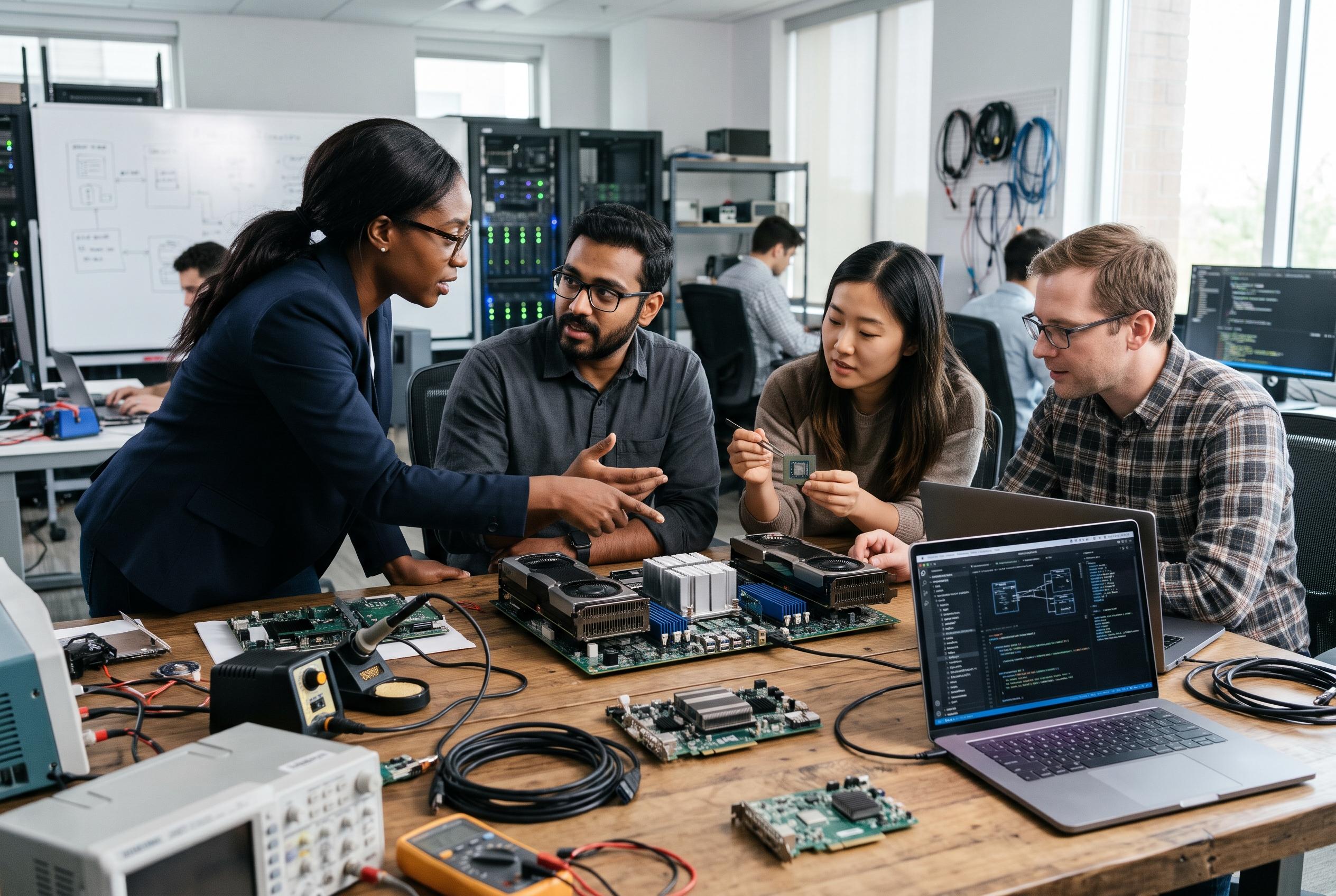

AMD and Meta are expanding their partnership beyond chip supply, jointly shaping processors, GPUs, rack-scale systems and software for Meta’s next generation of AI infrastructure.
AMD and Meta have expanded their partnership in a move aimed at supporting Meta’s artificial intelligence infrastructure at larger scale, with the two companies presenting the deal as a way to align their hardware and software road maps around current and future AI workloads. According to AMD, its Helios rack-scale systems are now operational at Meta and are expected to see broader deployment in the near future, while AMD EPYC processors are already supporting Meta’s Muse AI agent and related model work.
The collaboration covers CPUs, GPUs, networking, systems and software, underscoring how large AI infrastructure projects increasingly depend on tightly integrated stacks rather than isolated chips. AMD said the arrangement includes day-one support for Meta models such as Muse Spark Open and Muse Glimmer, and that the companies are working jointly on future generations of EPYC processors, including Verano, as well as on next-generation rack-scale systems and AMD Instinct MI500 series GPUs.
In practical terms, the deal points to a deeper co-design effort between a major chipmaker and one of the world’s largest platform operators. Meta has been pushing to scale its AI capabilities across training and inference workloads, and AMD said the partnership is intended to help power the company’s services and frontier models. The arrangement also reflects a broader trend in the AI industry, where cloud and platform operators are increasingly shaping processor road maps to suit their own software demands and data centre constraints.
The Economic Times reported that AMD also plans to invest $1bn into Meta’s equity offering, although that detail was not highlighted in AMD’s own release. What is clear from the companies’ announcements is that the partnership is no longer limited to general support for AI infrastructure; it now reaches into product planning, deployment timing and the engineering choices that will determine how Meta builds out its next wave of superintelligence systems.
Disclaimer: This content is intended for informational purposes only. Readers are advised to exercise their own judgement, conduct due diligence, or consult a qualified expert before acting on any information provided.