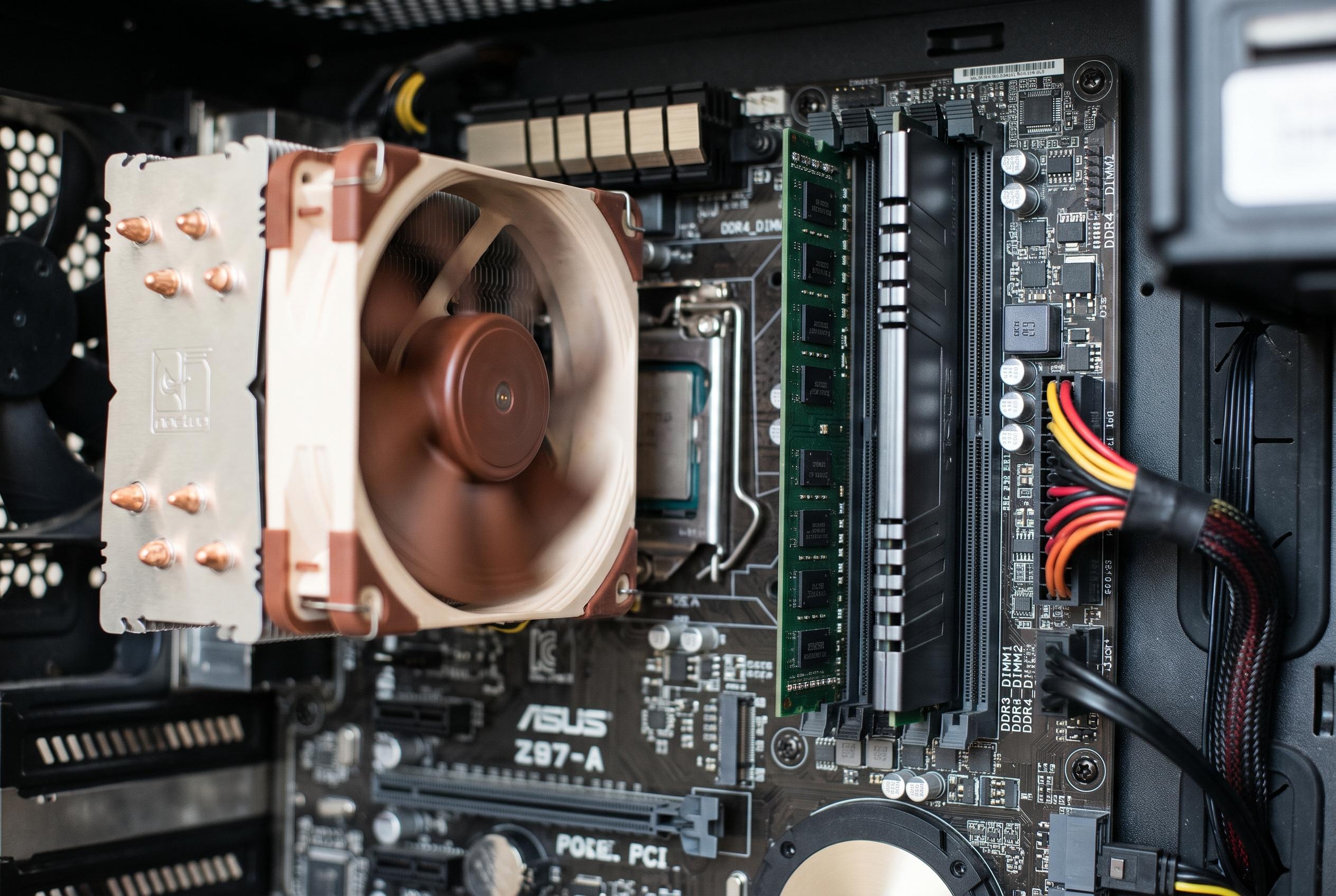

Pairing 16GB and 32GB memory modules can deliver 48GB of capacity while keeping part of the system in dual-channel mode, although matched kits remain the better choice for new builds.
When upgrading memory, the common advice is to fit two matching modules. In practice, that rule is not absolute. According to PC Games Hardware, there are cases where a mixed configuration can still make sense, particularly when users want to expand capacity without replacing perfectly usable RAM that is already installed.
The key point is that a system does not necessarily lose dual-channel operation entirely when modules of different sizes are paired. Intel’s Flex Memory Technology is designed for exactly that situation. In the example discussed by PC Games Hardware, a 16 GiB stick combined with a 32 GiB module still allows 32 GiB of the total 48 GiB to operate in dual-channel mode, while the remaining 16 GiB is handled in single-channel mode. Intel’s own documentation for its DDR4 and DDR5 memory controller organisation describes this split between a symmetric zone, which runs across both channels, and an asymmetric zone, which does not.
That arrangement works by dividing memory into separate physical address regions. In the matched portion, cache lines are interleaved between the two channels, which lets the controller access both in parallel and lifts theoretical bandwidth. In the extra capacity on the larger module, that interleaving is not available, so those addresses are served by one channel only. For the operating system, however, it is still ordinary RAM; the practical difference is in where a given application’s data happens to be placed. PC Games Hardware notes that this means the performance impact depends heavily on workload and on how much memory a game or application is actively using.
The bandwidth difference is easy enough to state in theory, but harder to translate into a fixed frame-rate penalty. PC Games Hardware calculates that a single 64-bit DDR5-5600 channel can deliver up to 44.8GB/s, while two channels can double that to 89.6GB/s. The article cautions, though, that this does not automatically reveal a specific gaming loss, because the result depends on memory pressure and on how sensitive the title is to bandwidth. Different modules can also introduce complications with clocks, timings and stability, which is one reason matched kits remain the safer choice.
The practical conclusion is straightforward. If a user already owns a 16 GiB module, adding a 32 GiB stick can be a cost-effective way to reach 48 GiB without abandoning dual-channel performance altogether. If the purchase is new, though, two identical modules are usually preferable. They provide symmetrical bandwidth across the full capacity, reduce the likelihood of compatibility issues and avoid the uneven memory access pattern that comes with mixed sizing.
Disclaimer: This content is intended for informational purposes only. Readers are advised to exercise their own judgement, conduct due diligence, or consult a qualified expert before acting on any information provided.