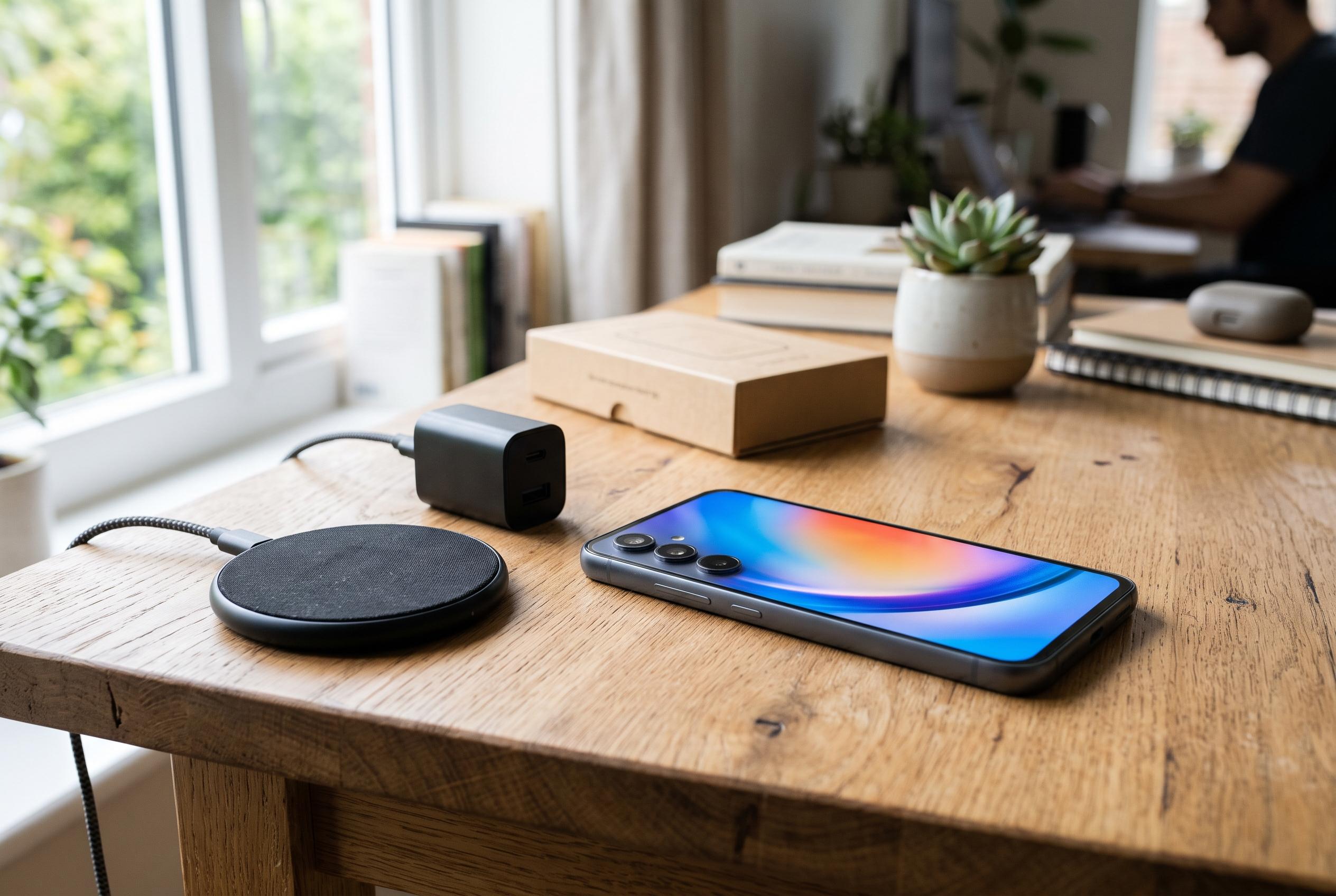

Motorola offers stronger value, a brighter 144Hz display and faster charging, while Samsung counters with a more premium build and seven years of software support.
Samsung’s Galaxy S26 FE and Motorola’s Edge 70 Fusion Plus are aimed at the same buyer: someone who wants a capable upper mid-range phone without moving into flagship pricing. Yet the two models approach that brief in very different ways. The Motorola leans on a lighter body, a more aggressive display specification and stronger battery credentials, while the Samsung tries to justify its higher cost with a more refined finish, better software support and a more versatile all-round package. Recent reviews from TechRadar, Android Central, Tom’s Guide and Digital Camera World suggest that Samsung’s handset is competent but expensive for what it offers, whereas Motorola’s rival has built a reputation for value and endurance.
In build quality, the contrast is clear. The Edge 70 Fusion Plus uses a plastic frame and a textured rear panel, but it also adds IP68 and IP69 protection, along with MIL-STD-810H durability certification and Gorilla Glass 7i on the front. That makes it the tougher-looking of the two on paper, even if it is the less premium-feeling device. The Galaxy S26 FE counters with an aluminium frame, glass back and Gorilla Glass Victus+ on both front and rear, which gives it a more expensive finish, but it settles for IP68 resistance alone. TechRadar and the other hands-on reviews note that Samsung’s design is polished, though not especially transformative.
The display story is where Motorola takes a technical lead. Its 6.8-inch P-OLED panel runs at 144Hz, supports HDR10+ and reaches an eye-catching 5,200 nits of peak brightness. By comparison, the Galaxy S26 FE uses a 6.7-inch Dynamic LTPO AMOLED 2X screen with a 120Hz refresh rate and 1,900 nits of peak brightness. Reviews of the Samsung model describe the panel as vivid and reliable, but the raw specification advantage belongs to Motorola, particularly for outdoor visibility and motion smoothness. For buyers who care most about screen fluency and brightness, that is a meaningful difference.
Performance and memory reinforce the split between the two phones. Motorola equips the Edge 70 Fusion Plus with Qualcomm’s Snapdragon 7s Gen 4, 12GB of RAM and 256GB of storage. Samsung uses the Exynos 2500, paired with 8GB of RAM and either 128GB or 256GB of storage. The Motorola chip should handle everyday use and most games comfortably, but Samsung’s processor is positioned as the stronger option for heavier workloads and demanding graphics. That said, reviewers have also noted that the S26 FE does not always feel like a major leap over its predecessor, and its value is complicated by a higher asking price and limited hardware gains.
Camera and battery choices follow the same pattern. Motorola offers a 50MP main camera, a 10MP telephoto lens with 3x optical zoom and a 50MP ultrawide camera, plus a 50MP selfie camera and 4K video at 30fps. Samsung responds with a 50MP main camera, 8MP telephoto unit, 12MP ultrawide camera and a 12MP front camera, with video capture up to 8K at 30fps. On paper, Samsung has the edge in video resolution, but recent reviews have been less enthusiastic about the consistency of its secondary cameras. Battery life is another area where Motorola looks stronger: its 5,200mAh cell supports 68W wired charging, while the S26 FE has a 4,900mAh battery, 45W charging and 15W wireless charging. For long days away from a charger, the Motorola appears the more practical choice.
Software support may ultimately matter most over time. The Edge 70 Fusion Plus launched with Hello UI based on Android 16, and Motorola promises three major Android upgrades plus five years of security patches. The Galaxy S26 FE ships with One UI 9 based on Android 17, and Samsung says it will provide seven years of system and security updates. That long support window is a major advantage for the Samsung, especially for buyers who keep a phone for many years. Prices also shape the decision. The Motorola launched at R$3,499 but is already selling for about R$2,500, while the Galaxy S26 FE arrived in Brazil from R$5,499 and now sits closer to R$3,300. Taken together, the better value appears to be the Motorola, but the Samsung remains the more complete long-term purchase for readers who prioritise software longevity, wireless charging and a more premium finish.
Disclaimer: This content is intended for informational purposes only. Readers are advised to exercise their own judgement, conduct due diligence, or consult a qualified expert before acting on any information provided.