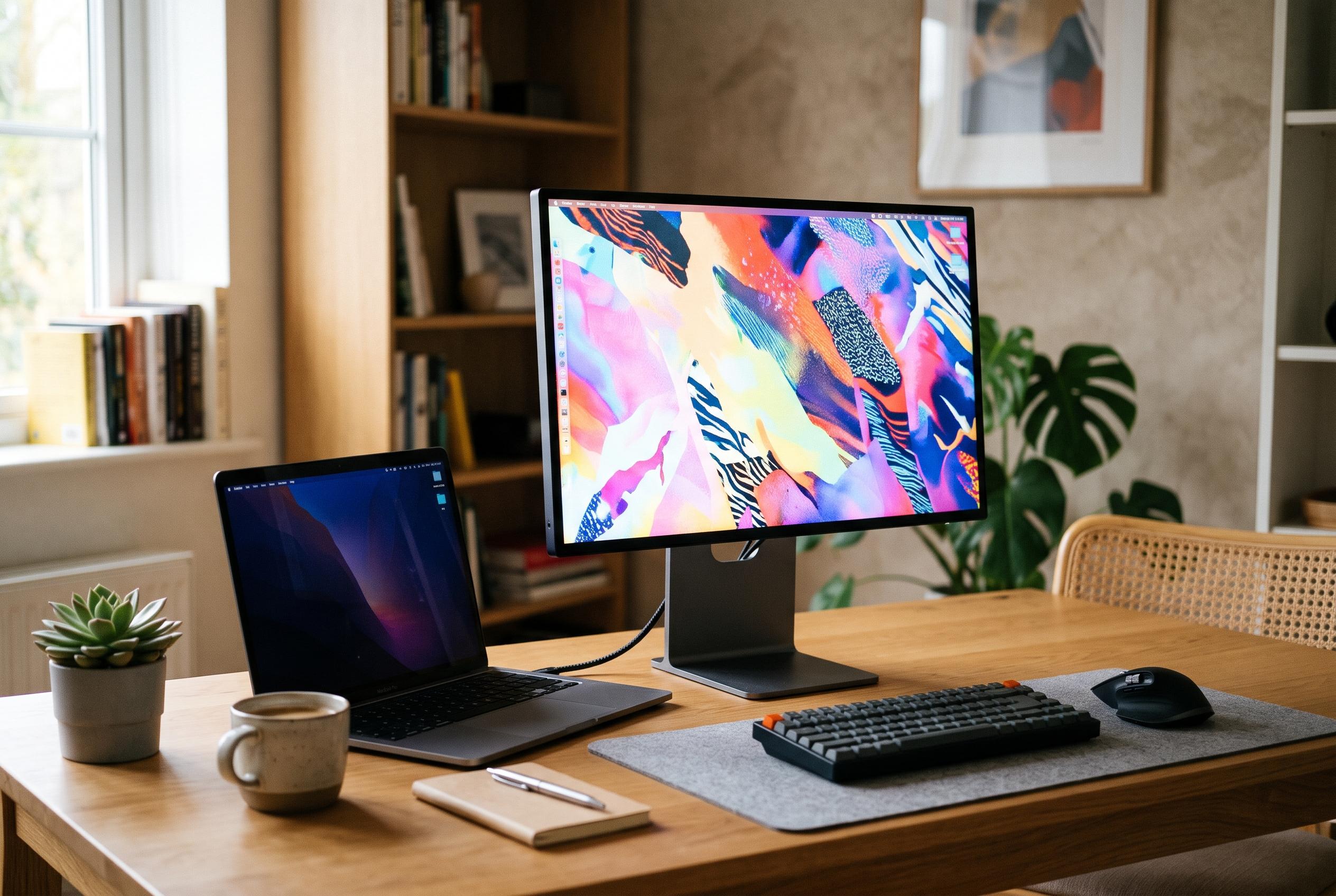

A bright 4K panel, versatile magnetic stand and one-cable setup make Espresso’s Pro 15 a compelling second screen for professionals, despite weak contrast, 60Hz motion and a high price.
Espresso’s Pro 15 portable monitor is pitched as a professional-grade second screen for people who need more workspace away from a desk, and the latest hands-on verdict suggests it comes much closer to that promise than most rivals. ZDNet’s review describes a compact display that feels closer to a premium accessory than a disposable travel gadget, with a solid metal build, a bright 4K panel and a stand designed to cope with far more than a basic laptop setup.
The strongest case for the Pro 15 is its versatility. According to ZDNet, the magnetic stand is the feature that most clearly separates it from cheaper portable monitors, allowing the screen to sit above a laptop, beside a desktop display or in a vertical orientation for editing, reading or spreadsheet work. The reviewer also found that the single-cable USB-C connection was enough to power the screen and carry the signal from a MacBook Pro, with macOS recognising the display immediately. That simplicity is an important part of the product’s appeal: it is meant to reduce friction, not add another layer of setup.
Independent testing from RTINGS and TechRadar broadly backs that view. Both outlets praise the 15-inch 4K panel for its sharp text, strong brightness and wide colour gamut, with support for 100% of Adobe RGB and a claimed 550 nits of brightness. Notebookcheck likewise highlights the monitor’s portability, metal housing and suitability for professional use, while other reviews note touchscreen support and an optional stylus as useful additions for on-the-go work. In practice, the Pro 15 appears aimed less at casual buyers than at people who need a colour-accurate portable monitor for office work, creative tasks or dual-screen productivity.
There are limits, however. RTINGS and TechRadar both note that the display’s 60Hz refresh rate and motion handling make it a poor choice for gaming, while contrast is also a weak point, with blacks tending towards grey in some conditions. TechRadar adds that reflections can be noticeable, the on-screen controls are limited and the speakers are not a major selling point. ZDNet also reported an unresolved compatibility issue when using the monitor with Linux, although the company said it was working through the problem and believed the fault may lie with the cable rather than the panel itself.
That leaves the espresso Pro 15 as a specialist product with a clear audience. It is expensive, but the consensus across reviews is that the price buys build quality, flexibility and a level of portability that many budget screens fail to match. For users who want a premium travel monitor that can also function as a dependable desk companion, it appears to be one of the more convincing options currently available.
Disclaimer: This content is intended for informational purposes only. Readers are advised to exercise their own judgement, conduct due diligence, or consult a qualified expert before acting on any information provided.