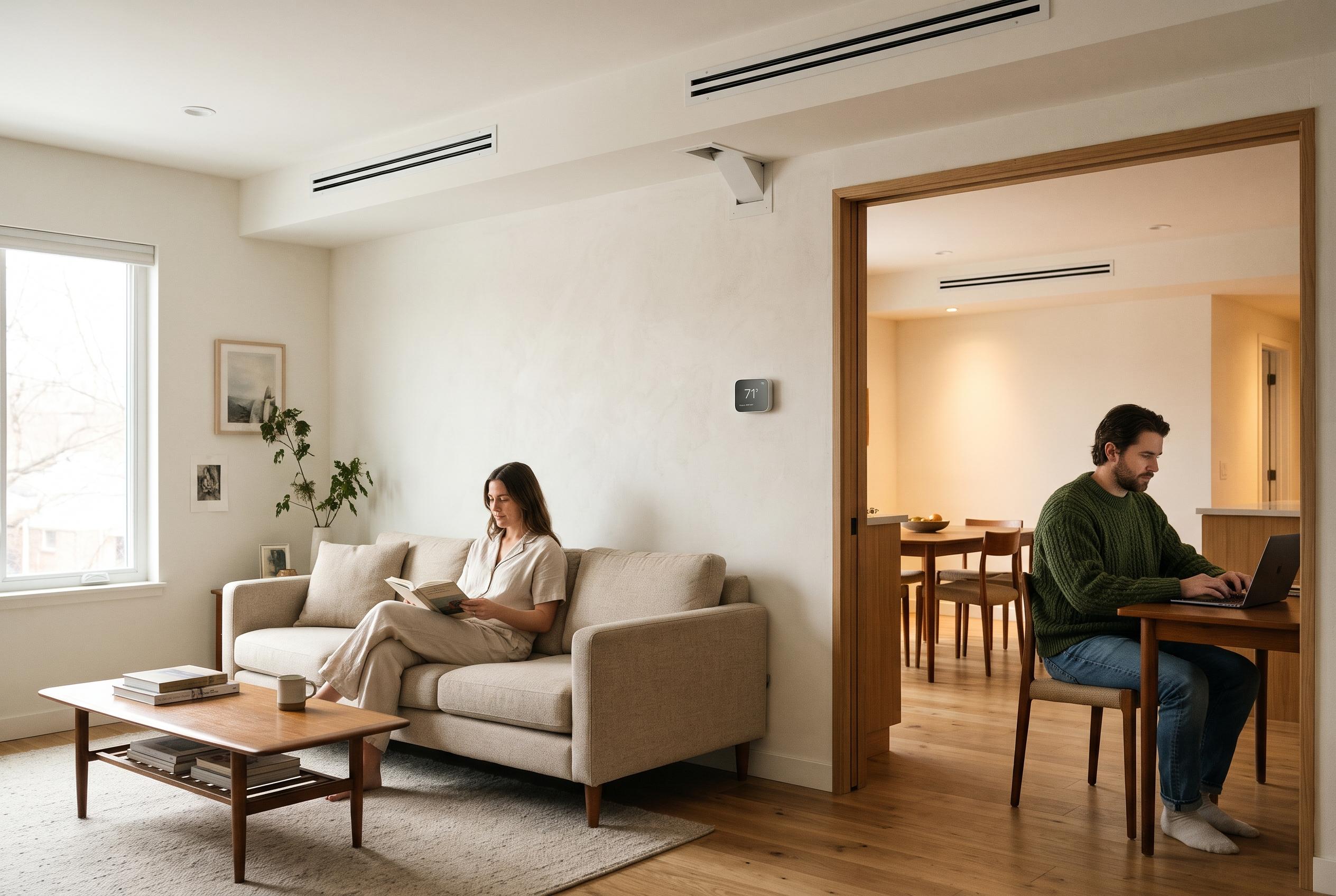

Room-sensor thermostats can rebalance temperatures without new ductwork, while dedicated zone panels offer genuine airflow control for homes with motorised dampers.
A smart thermostat with zone control is less about adding more hardware than choosing the right method for the home. In a single-thermostat property, the usual complaint is simple: one room overheats while another remains stubbornly cool. The products covered here solve that problem in two distinct ways. Four use wireless room sensors and then shift the central set point towards the room that matters most. Two are dedicated zone panels designed for homes that already have motorised dampers in the ductwork, where the goal is genuine per-zone airflow rather than a smarter reading from one room.
Among the sensor-based models, Google’s Nest Learning Thermostat 4th Gen stands out as the most complete package. Google says it includes a Nest Temperature Sensor and works with any Nest Temperature Sensor, so buyers can expand coverage room by room. The company also says the thermostat is compatible with most 24V HVAC systems, including gas, electric, oil, forced air, heat pump and radiant systems, and that a C wire is not required in most homes. It also supports Google Home and Matter-enabled apps and assistants, which broadens its appeal for households already invested in mainstream platforms.
ecobee’s Smart Thermostat Premium follows a similar approach but with a broader compatibility claim. According to ecobee, it works with 95 per cent of HVAC systems and includes a SmartSensor that also functions as a motion detector and occupancy sensor. The company says the sensor helps reduce hot and cold spots by adjusting the temperature in the rooms that matter most. ecobee also includes a Power Extender Kit for homes without a C wire, which makes installation easier in older properties where that wiring is absent. The device further adds an air quality monitor and furnace filter reminders, which may matter to buyers looking for more than temperature control alone.
Honeywell’s Home X8S takes a more explicit view of how zone-style comfort should work in practice. Honeywell says the included wireless Room Sensor allows users to prioritise living spaces during the day and bedrooms at night, which directly addresses the most common comfort imbalance in a house. The company lists an extended sensor range of up to 200 feet and states that the thermostat works with up to three heat and two cool heat pump systems with electric backup, or two heat and two cool conventional systems. Honeywell also says a C wire is required, though it includes a voucher for a free C Wire Adapter when one is not already present.
Sensi’s Touch 2 occupies a more restrained but still practical position. The company says the thermostat works with Sensi Room Sensors, sold separately, to help balance temperatures across the home. It is also the only model in this group whose listing makes a privacy promise, stating that it will not sell personal information to third parties. That may be a deciding factor for buyers who want remote room balancing without the broader data collection concerns often associated with connected home products. Sensi does require a C wire, so it is less forgiving in homes with older HVAC wiring.
For homes that already have a zoned duct system, the right answer is not a room sensor at all. SmartZone-3X is a three-zone HVAC controller kit built for powered dampers, and the listing says it can work with single-stage, multi-stage or variable-speed systems. It includes a supply-air temperature sensor for staging and equipment protection, plus LEDs on each terminal and a digital display for diagnosis and setup. Honeywell’s HZ311 TrueZONE panel serves the same purpose at a lower cost, but it is also a panel-only product: it needs thermostats and dampers already in place, and Honeywell markets it for professional installation.
The choice between these approaches depends on the system already in the house. If there is no ductwork zoned with dampers, a room-sensor thermostat is usually the practical answer because it is easier to install and cheaper to deploy. If the home already has dampers and separate zones, a controller panel gives real airflow control and better matches what the HVAC system was built to do. The C wire question also separates the options: Google and ecobee are the most forgiving for homes without one, Honeywell offers an adapter route, and Sensi requires one.
Disclaimer: This content is intended for informational purposes only. Readers are advised to exercise their own judgement, conduct due diligence, or consult a qualified expert before acting on any information provided.