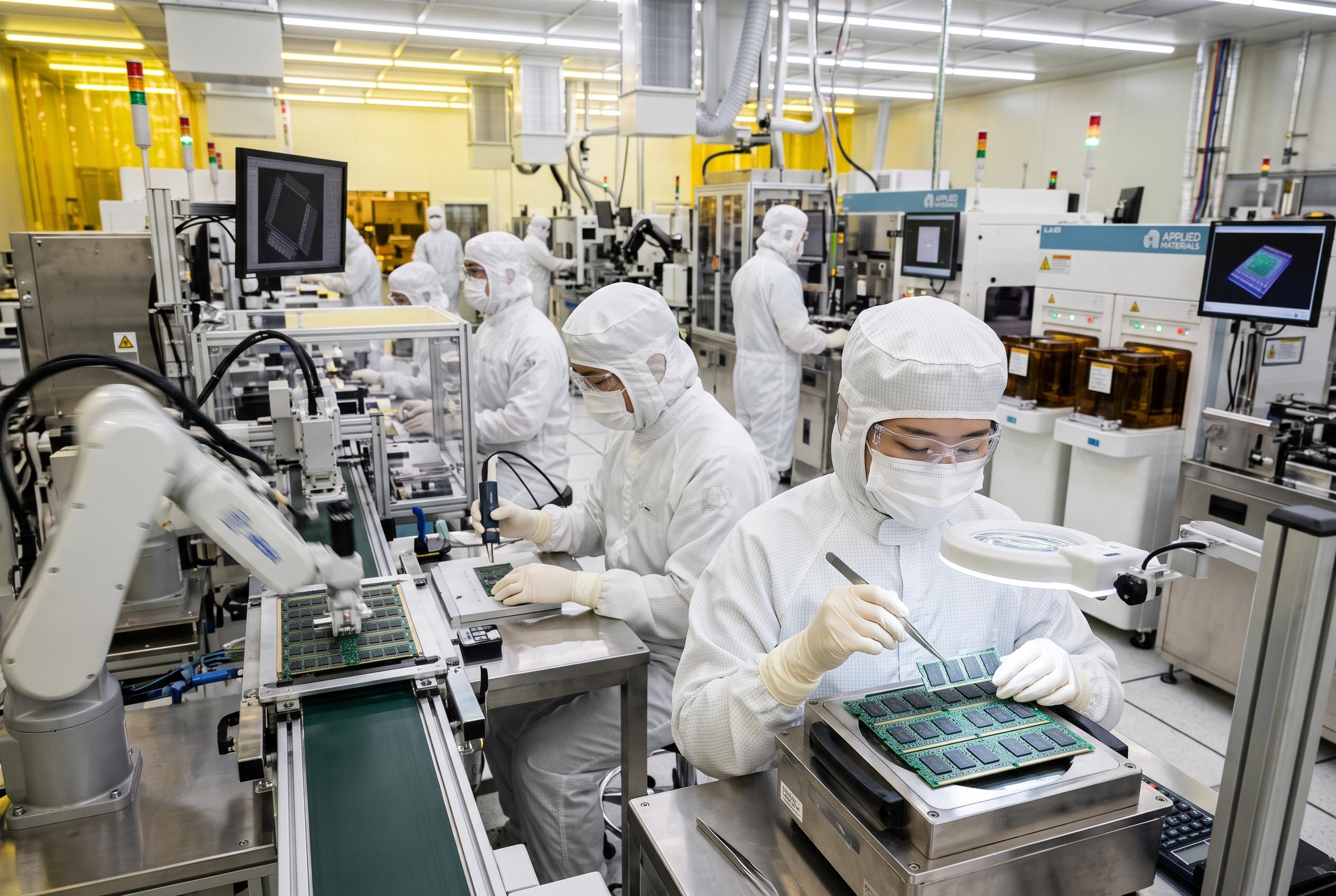

SK Hynix says demand for advanced memory will outstrip supply until the end of the decade after quarterly revenue topped 100 trillion won for the first time.
SK Hynix has posted a record third-quarter performance, with operating profit surging to 83.3 trillion won, or about $62 billion, as demand for memory chips tied to artificial intelligence continues to tighten the market. Revenue reached 104.6 trillion won, the company said in its earnings release on Wednesday, marking the first time its quarterly sales have exceeded 100 trillion won. The operating margin rose to 80%, underlining the scale of the current price cycle in advanced memory. Profit after tax was 39.8 trillion won, down from 93.9 trillion won in the previous quarter, according to the company.
The South Korean chipmaker also delivered a blunt warning about supply conditions. In its statement, SK Hynix said it expects memory demand to outstrip supply until the end of the decade, citing the technical complexity of leading-edge manufacturing and the long construction times needed for new fabs. That outlook was echoed by outside coverage from Fortune and Quartz, both of which said the company is now openly describing a shortage that could last through 2030.
The numbers were reinforced by signs of unusually strong pricing in the quarter. On the earnings call, SK Hynix said average DRAM prices rose by a high-20s percentage on the quarter, while server DDR5 shipments climbed by more than 40%, according to CNBC’s reporting. The company’s high-bandwidth memory products remain central to that momentum. HBM4 began shipping in volume during the period, and SK Hynix expects it to overtake HBM3E in both shipments and revenue in the fourth quarter.
Management is positioning the business for a prolonged period of tight supply and elevated pricing. The company said it has signed long-term agreements with 14 major customers, including large cloud providers, covering more than half of its production capacity for 2027 and 2028. Those contracts typically run for five years, with pricing linked to the market within agreed ranges. Chief executive Kwak Noh-Jung said the agreements show that customer trust built through technical competitiveness is translating into “earnings stability and mid-to-long term demand visibility”.
Investment plans are also accelerating. SK Hynix said its M15X plant will reach full capacity by year-end, while the first phase of its Yongin chip cluster is due to enter full operation next year. The company also said it plans to return about 100 trillion won to shareholders in 2026, including at least 30 trillion won in cash dividends and at least 60 trillion won through buybacks and cancellations. Separately, Kwak said the company has stopped considering an initial public offering of Solidigm, its US flash-memory unit, citing current market conditions. Shares in SK Hynix jumped sharply in Seoul after the results, while Samsung Electronics is due to release its own full numbers shortly.
Disclaimer: This content is intended for informational purposes only. Readers are advised to exercise their own judgement, conduct due diligence, or consult a qualified expert before acting on any information provided.