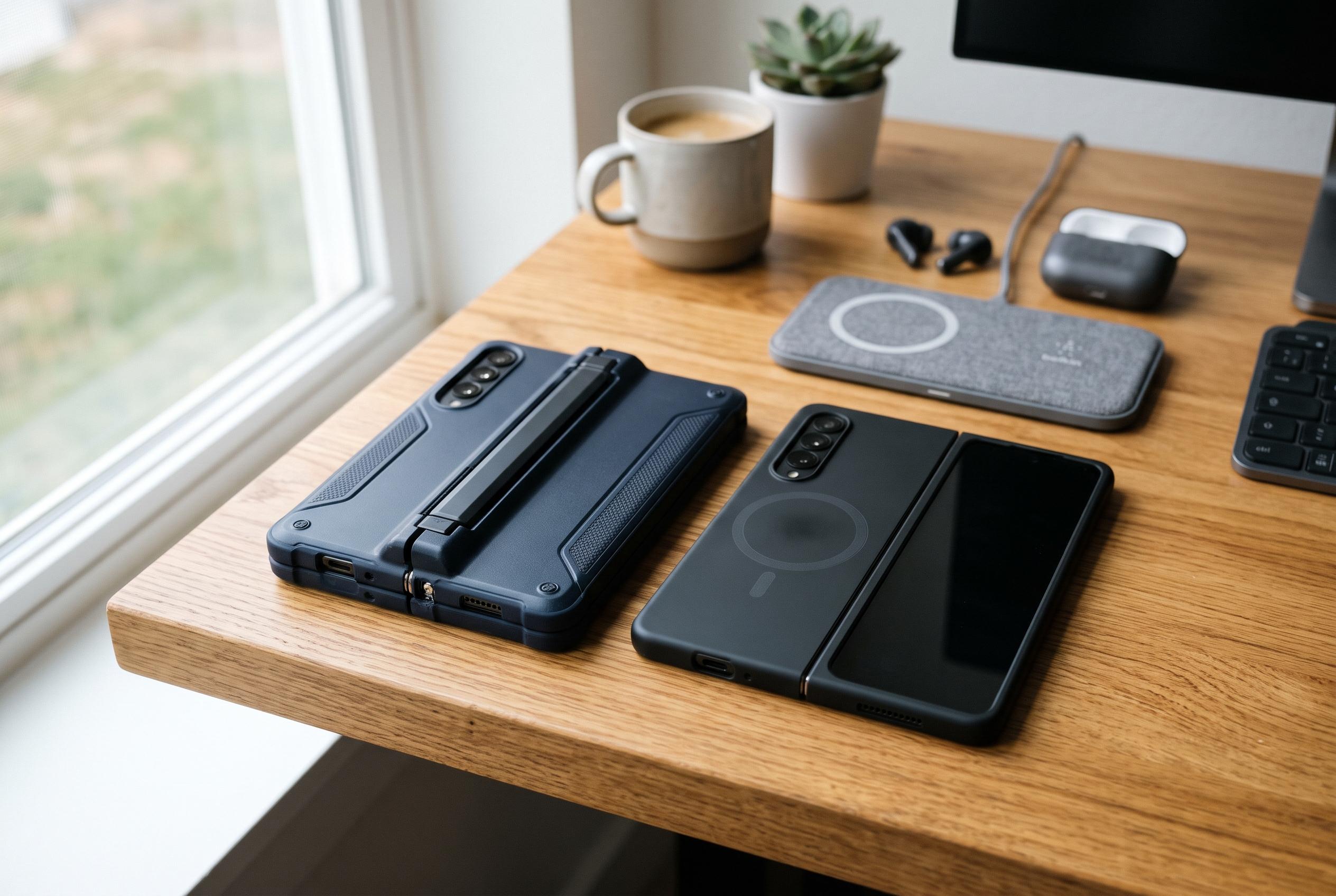

The best iPhone Duo case depends on which compromise buyers can tolerate, with hinge coverage, added weight and reliable MagSafe charging rarely available in one design.
Choosing a case for the iPhone Duo is not the same as buying protection for a conventional flagship. The foldable design introduces a moving titanium hinge, a dual-panel body and a weight penalty that is already present before any accessory is fitted. Memeburn’s comparison with the iPhone 18 Pro Max notes that the Duo is heavier and thicker straight out of the box, which means every extra gram and millimetre matters more than it would on a standard handset.
That is why the best case is not simply the toughest one, or the thinnest one, or the one with the cleanest magnetic charging. According to Memeburn’s guide, no Duo case solves all three problems at once. Apple’s standard iPhone Duo Case is the safest default for most people because it preserves MagSafe charging, while Spigen’s Slim Armor Pro S suits buyers who want the hinge enclosed, Pitaka’s Edge Case is aimed at those who care most about keeping weight down, and OtterBox’s Defender Series Pro XT is built for users who are genuinely hard on their phones. Macworld and TechRadar both frame the market in similar terms, describing Duo cases as a balancing act between slimness, protection and fold compatibility rather than a simple choice between thin and rugged.
The central compromise is the hinge. A case that covers it offers better protection against pocket wear and drops, but it also adds bulk and can complicate the folding action. Apple’s own case leaves the hinge exposed, which keeps the profile relatively restrained and avoids introducing a moving guard into the design. That approach also helps explain why Apple’s case remains the reference point in the category: it is the least disruptive option, and Apple says wireless charging continues to work through its official cases. At the same time, reviewers have noted that the hinge remains one of the few parts of the Duo that receives no meaningful external protection in this setup.
Weight is the other major issue. Memeburn’s analysis says that published third-party case weights range from roughly 19g for Pitaka’s Edge Case to about 74g for the Spigen and OtterBox hinge-guard models, with the heaviest options edging the cased phone well beyond the weight of an iPad mini. That matters because the Duo is already a substantial device on its own. TechRadar’s review also underlines the phone’s size and mass relative to other foldables, making the case decision more consequential than it would be on a lighter handset. For readers who want the simplest rule, Memeburn argues that any case above 39g pushes the Duo past the Wi-Fi iPad mini in overall weight.
MagSafe compatibility is the third trade-off, and it is the one most likely to decide the outcome for everyday users. Apple’s cases are positioned as the most reliable option for charging and accessory alignment, while third-party makers are less consistent. Memeburn notes that Spigen warns some chargers may fail or charge unreliably through its hinge-protecting model, which makes that case better suited to buyers who are prepared to use a cable when needed. In practical terms, this means the right choice depends on whether the owner values frictionless charging more than maximum physical coverage. For many buyers, that will be the deciding factor.
On that basis, the iPhone Duo case market now looks divided into distinct use cases rather than one clear winner. Apple’s standard case is the most balanced option for the majority of buyers. The Folio with Kickstand is more specialised, aimed at people who want a prop for video calls or hands-free viewing, although Memeburn notes that the Duo can already stand on its hinge in some orientations. Spigen’s Ultra Hybrid Pro MagFit appeals to buyers who want to show the phone itself while still gaining some hinge protection, while ESR’s cheaper stand case offers the most affordable route to hands-free use. For owners who want a drop-first design, OtterBox remains the safer name, and Pelican and other heavy-duty rivals serve the same audience.
The wider consensus across recent case round-ups is that the Duo should be treated as a premium device that needs deliberate protection, but not necessarily the most aggressive protection available. TechRadar and AppleInsider both emphasise that case buyers must think about how the fold affects daily use, while Macworld frames the category around slim, protective and kickstand styles. In other words, the right purchase depends less on brand loyalty than on how the phone will actually be carried, charged and opened. For most users, the most sensible answer is still the lightest case that preserves MagSafe and does not interfere with the fold.
Disclaimer: This content is intended for informational purposes only. Readers are advised to exercise their own judgement, conduct due diligence, or consult a qualified expert before acting on any information provided.