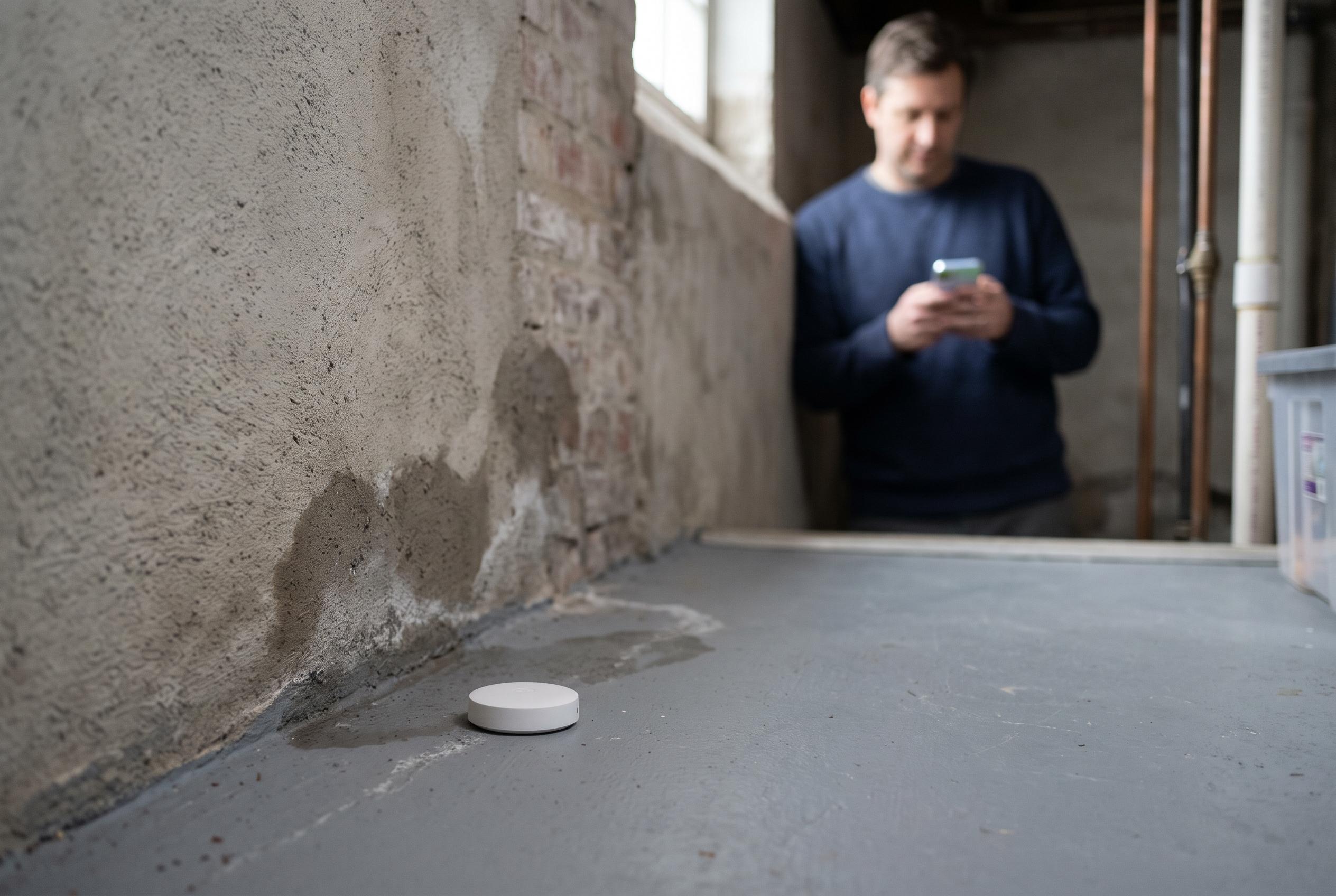

Leak sensors can protect against more than burst pipes: placed where water is likely to collect and paired with precise alerts, spare devices can help catch seepage and rain ingress before damage spreads.
Water leak sensors are easy to overlook until they are needed, and then they can save both money and disruption. The case for keeping a few spares is stronger than many smart home users assume. The US Environmental Protection Agency says household leak-detection devices can limit waste and reduce damage, and that leaks may stem from ageing pipework, worn fittings, corrosion, cold weather, pressure changes or equipment faults. That makes these sensors useful not only under sinks and beside appliances, but anywhere water may gather unexpectedly.
Placement matters as much as ownership. Manufacturers commonly advise putting leak sensors on the floor in places where water is likely to collect, including basements, laundry rooms, utility spaces, under sinks, near hot-water heaters and beside washing machines. Panasonic’s installation guidance also explains a basic limitation: the probes must both make contact with moisture before the unit will register a leak. If the sensor sits too high, or if water does not pool enough to bridge the contacts, the alert may never arrive.
That is why it is sensible to think beyond the obvious plumbing risks. The EPA’s guidance on moisture control notes that water can also enter from outside, including through basement floors or because of gutter and drainage problems. In practice, that means a leak sensor can be useful in places such as window sills, attics, garages and other spaces that may be hit by wind-driven rain or seepage even when no pipe has failed. For homes with previous ingress problems, the sensor should be treated as a first line of warning rather than an afterthought.
The real value of these devices increases when they are paired with well-planned alerts. Home Assistant’s documentation shows how a leak sensor can trigger a notification that identifies the specific source, rather than sending a vague warning that leaves the user hunting through the house. That kind of naming matters in an emergency. If a sensor reports the kitchen, utility room or garage, the response can be immediate and appropriate. If a valve is also available, the system can be configured to shut off supply automatically when the leak is plumbing-related.
There is one more practical lesson: sensors need enough moisture to detect, and not every spill is equal. SimpliSafe and Ring both place their water sensors on the floor where water is expected to accumulate, precisely because that is how the contact-based design works. A small trickle, or liquid absorbed by a surface before it reaches the probes, may not be enough to trigger an alarm. Used properly, though, these devices are among the most cost-effective pieces of smart home equipment available, particularly if a household keeps a few spares in the right places.
Disclaimer: This content is intended for informational purposes only. Readers are advised to exercise their own judgement, conduct due diligence, or consult a qualified expert before acting on any information provided.