

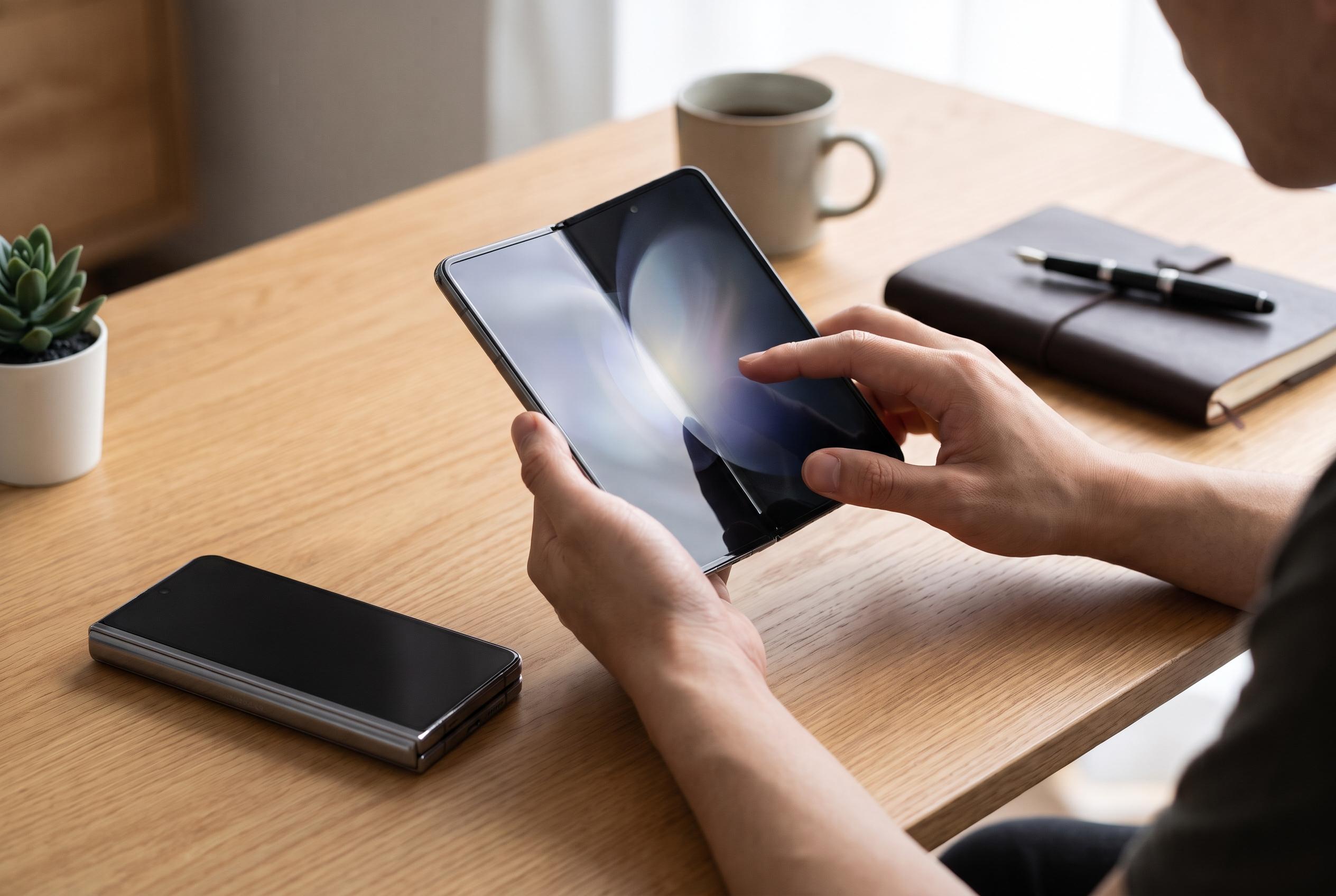

A shorter, wider design makes Samsung’s latest foldable easier to use as both a phone and a small tablet, though its camera and durability trade-offs remain.
Samsung’s latest foldable makes a stronger case for the book-style format than many of its predecessors, largely because it finally seems to accept what the category is for. According to reviews from WIRED, Tom’s Guide, Android Central and Tech Advisor, the Galaxy Z Fold8’s shorter, wider shape is easier to grip, more comfortable for typing and better suited to quick use in its closed state than the taller alternatives that have often defined the line. When unfolded, it becomes a far more tablet-like device, with the larger panel making reading, video and multitasking feel genuinely spacious rather than merely novel.
That two-in-one character is the Fold8’s main appeal. In day-to-day use, the outer screen encourages brief interactions, while the inner display invites longer sessions and a more immersive posture. The result is a device that feels more deliberate than an ordinary slab phone: closed, it is compact and portable; open, it behaves like a small tablet. Samsung’s own product material emphasises that split identity, presenting the handset as something designed to move between convenience and immersion without demanding a separate device.
The display hardware appears to be one of the phone’s clearest strengths. Independent reviews point to a bright inner panel with a crease that is less distracting than on earlier generations, along with improved anti-glare treatment that helps preserve contrast in difficult light. Tech sites also note that the wider interior aspect ratio makes the foldable more useful for split-screen work and media consumption. That said, the cover display can still feel constrained for certain tasks, especially when compared with the roomier feeling of a traditional smartphone screen.
The compromises are familiar, even if they are becoming easier to live with. Reviewers repeatedly note that the camera system is good rather than class-leading, and that the absence of a dedicated telephoto lens is a clear omission for a premium device. Tom’s Guide also reported strong battery results and faster charging, while WIRED and Tech Advisor both suggested that the Fold8 is practical enough for everyday use but still asks buyers to accept trade-offs that slab phones do not usually impose. The hardware is more refined than before, yet it remains a specialised product rather than a general-purpose default.
Long-term ownership still raises questions beyond features alone. The side-mounted fingerprint sensor remains a matter of ergonomics as much as technology, and the phone’s folding design inevitably makes it more delicate than a conventional handset. That fragility matters because this is an expensive device, and the premium is not just financial; it also comes with a more cautious relationship to durability, repair risk and pocketability. Even as the category matures, the foldable still asks users to pay more for flexibility rather than outright superiority.
That may be the most important point. Samsung has built a foldable that is easier to recommend than many of the early examples in this category, but it has not erased the central tension that defines these phones. They are impressive because they change shape and usage mode, not because they are the best answer to every smartphone need. For enthusiasts and early adopters, that may be enough. For everyone else, the Fold8 remains an intriguing glimpse of where mobile hardware might go, rather than a device that makes the case for replacing a conventional flagship.
Disclaimer: This content is intended for informational purposes only. Readers are advised to exercise their own judgement, conduct due diligence, or consult a qualified expert before acting on any information provided.



