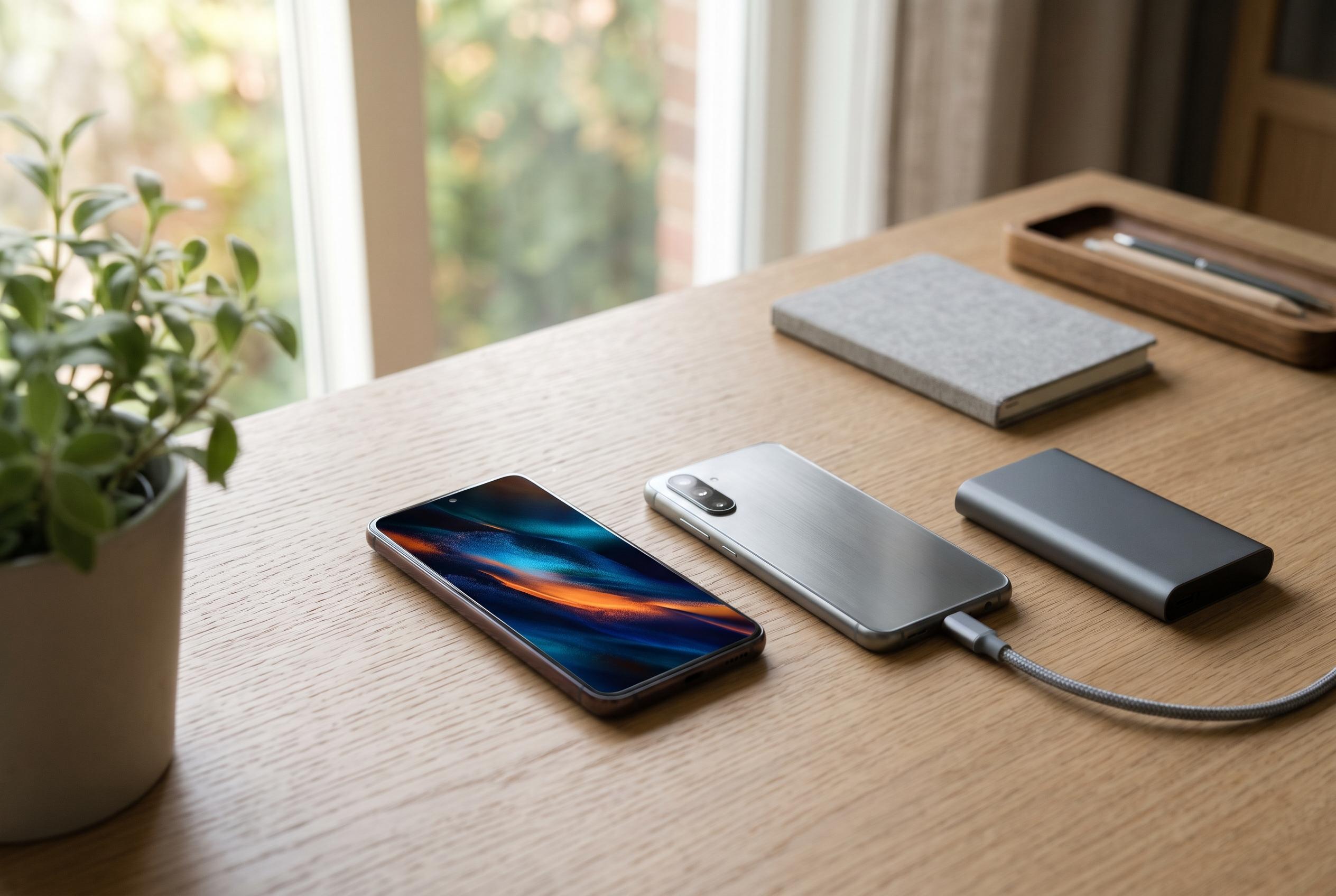

Samsung offers a sharper AMOLED screen, more versatile cameras and longer software support, while Xiaomi counters with a 7,500mAh battery and faster charging.
For budget-conscious buyers, the Samsung Galaxy A17 4G and Xiaomi Redmi 17 4G sit in a similar price bracket but pursue different priorities. The comparison published by mobile.ir frames the Samsung as the more balanced option, while positioning the Xiaomi as the better pick for users who care most about battery life and charging speed. That broad verdict is consistent with the official specifications and launch details available for both phones. Xiaomi’s Redmi 17 4G uses a 6.9-inch 720p display with up to a 120Hz refresh rate, a Helio G91-Ultra processor and a 7,500mAh battery, while Samsung’s Galaxy A17 4G pairs a 6.7-inch Full HD+ AMOLED panel with a 90Hz refresh rate, a Helio G99 chip and a 5,000mAh battery.
On design and display, Samsung appears to have the cleaner and more refined hardware. The Galaxy A17 4G is thinner and lighter than Xiaomi’s handset, and it uses a sharper AMOLED panel with stronger glass protection. Xiaomi, by contrast, leans into practical durability with IP64 dust and splash resistance, which is a slightly higher level of environmental protection than the Galaxy A17 4G’s IP54 rating. The Redmi also offers a higher refresh rate, which can make scrolling feel smoother, but the lower-resolution panel means Samsung still looks like the better screen overall on paper.
The gap widens in camera hardware. According to Samsung’s launch specification and third-party listings, the Galaxy A17 4G carries a 50-megapixel main camera with optical image stabilisation, plus 5-megapixel ultra-wide and 2-megapixel macro sensors, alongside a 13-megapixel front camera. Xiaomi’s Redmi 17 4G is much simpler, with a single 50-megapixel rear camera and no ultra-wide or macro lens, and the official materials do not indicate optical stabilisation. For buyers who want more framing options and better low-light stability, Samsung has the more versatile imaging setup. Review coverage has also described the Galaxy A17 4G as unusually well equipped for its class, although it remains limited by modest secondary cameras and the absence of 5G.
Xiaomi’s advantage is clearer in endurance and convenience features. Its 7,500mAh battery is much larger than Samsung’s 5,000mAh cell, and it supports 45W wired charging as well as 22.5W wired reverse charging. The Redmi also includes a 3.5mm headphone jack and stereo speakers, both of which have become less common in this segment. Samsung’s counterweight is long-term software support: the company says the Galaxy A17 4G will receive six generations of Android upgrades and six years of security patches, a commitment that is stronger than Xiaomi’s publicly stated position for the Redmi 17 4G. For buyers who want the most rounded budget phone, the Samsung is the safer choice; for those who prize battery capacity and faster top-ups above all else, the Redmi has the stronger case.
Disclaimer: This content is intended for informational purposes only. Readers are advised to exercise their own judgement, conduct due diligence, or consult a qualified expert before acting on any information provided.