

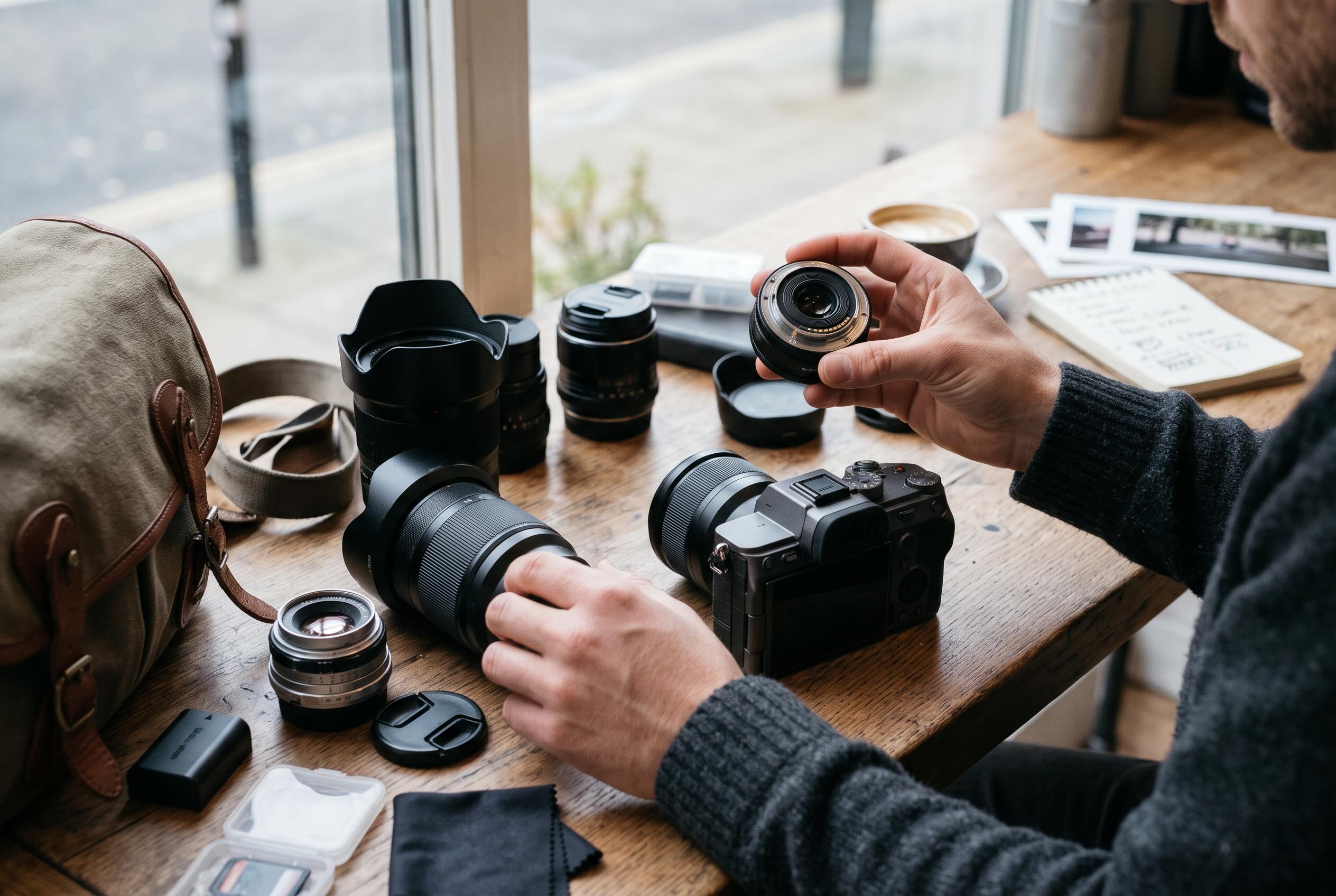

Sensor size and lens mount will shape your kit long after you replace the camera body. Here’s how to weigh image quality, portability, autofocus and cost before choosing a system.
For most buyers, the decisive question when choosing a mirrorless camera is not the logo on the body or the number of pixels on the sensor. It is the sensor format itself. That single choice affects image quality, the look of background blur, low-light performance, the size and cost of lenses, and the overall weight of the kit you will carry. In practice, the body can be replaced. The lens system and sensor format are what shape the experience for years.
Three sensor types account for most mirrorless cameras on sale: full frame, APS-C and Micro Four Thirds. Hasselblad’s sensor guide explains that full frame offers the greatest control over depth of field and generally the strongest low-light performance, while APS-C is often the middle ground between image quality, reach, system size and cost. Micro Four Thirds is smaller again and is designed around compactness, which can be especially useful for travel and wildlife photography where lighter telephoto lenses matter. The crop factor does not change a lens’s actual focal length; it changes the field of view, which is why a smaller sensor makes a lens behave as if it were longer.
For first-time buyers of interchangeable-lens cameras, APS-C is usually the safest starting point. It keeps bodies and lenses relatively manageable without sacrificing too much image quality. Full frame becomes more compelling if you often shoot in dim conditions, want the shallowest possible depth of field, or expect to build towards professional work. Micro Four Thirds makes sense when portability matters most, or when a smaller system is worth more to you than the last measure of image quality. The official Micro Four Thirds standard describes the format as an open system supported by multiple manufacturers, which helps explain why the mount remains attractive to photographers who value choice and compactness.
The next decision is the lens mount, because it is the part of the purchase that lasts longest. Mirrorless systems are built around mounts such as Sony E, Canon RF, Nikon Z, Fujifilm X, Leica L and Micro Four Thirds. A camera body may be changed in a few years, but lenses usually stay in the system much longer. That means buyers should look closely at whether the mount offers the lenses they will actually use, including fast primes for portraits, compact zooms for travel and long telephotos for sport or wildlife. It also helps to check whether third-party lens support is strong, since that can make a system much more affordable over time.
Adapters can widen the options further. Because mirrorless bodies place the sensor closer to the mount, older lenses can often be used with the right adapter. The Micro Four Thirds standard specifically supports adapted lenses, and Nikon’s Z system, for example, offers an adapter for many older F-mount lenses. That flexibility is useful, but it should not be mistaken for a complete solution. Adapted glass is often best for slower, more deliberate shooting. For moving subjects, native lenses and a well-supported mount usually deliver a better experience.
Autofocus is the area where mirrorless cameras have improved most dramatically. Modern systems combine phase-detection and contrast-detection methods, and manufacturers now place as much emphasis on subject recognition as on raw focus speed. Sony’s own guidance shows how tracking can follow a selected subject while eye, face, head or body detection helps keep the focus locked as the subject turns or moves. For buyers, the important question is not how many focus points appear on a specification sheet, but whether the camera can hold on to a person, animal or fast-moving object in real use. Independent reviews that test tracking in action are more useful than marketing claims.
Handling is the other part of the decision that should not be overlooked. Mirrorless cameras use an electronic viewfinder or rear screen rather than an optical path through a mirror, which allows exposure and white balance to be previewed before the shutter is pressed. The trade-off is that these screens draw power continuously, so battery life is often shorter than with traditional DSLRs. Most buyers should expect to carry a spare battery and, where possible, choose a body that can charge over USB. It is also worth looking for in-body image stabilisation, because it helps with every lens you mount, including adapted ones. Just as important, the camera should feel right in the hand: grip depth, button placement and menu design affect whether the camera is enjoyable enough to use regularly.
Budgeting for a mirrorless system should start with the whole kit, not the body alone. B&H Photo’s buying guides repeatedly emphasise that a camera is only useful once it has a lens, a memory card and the accessories needed to carry and power it. That is why a modest body matched with a good lens often makes more sense than spending the whole budget on a flagship model and relying on the standard kit zoom. Prices also move quickly, and used bodies can lose value fast, so the best approach is to plan around the work you want to do, then buy the most balanced system you can afford. For many photographers, that means thinking in terms of a camera package, not a camera body.
Disclaimer: This content is intended for informational purposes only. Readers are advised to exercise their own judgement, conduct due diligence, or consult a qualified expert before acting on any information provided.



