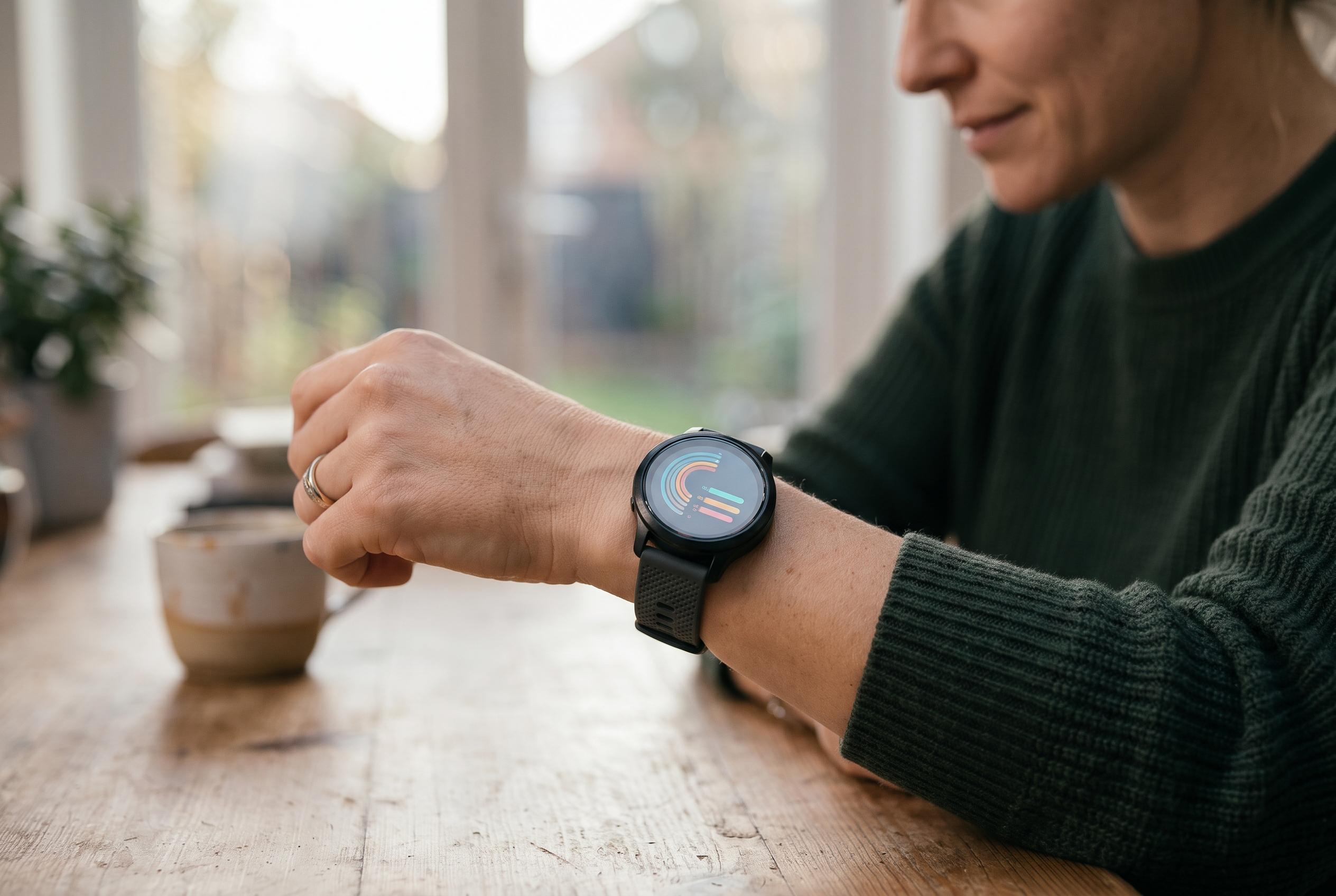

A review of 51 studies found bar-based displays were faster and more accurate to interpret than circular activity rings, raising questions about how wearable makers present goals and progress.
Research into smartwatch visual design suggests that the familiar circular activity rings used by Garmin, Apple and Samsung may be less effective than simpler bar-based displays when the aim is to read progress quickly. A review of 51 studies, as summarised by the5krunner, found that bar charts were read faster and with fewer mistakes than radial ring styles in goal-progress tasks, even though participants often judged the circular versions to be more attractive. That gap between visual appeal and reading performance appears to help explain why ring-based layouts remain the default on many watches.
The underlying evidence is not limited to one experiment. Microsoft Research describes a set of studies in which participants compared bar charts, radial bar charts and text on smartwatch faces, with both bar formats performing better than text for quick judgement tasks. An online study published in JMIR also found that highly stylised progress displays could reduce both accuracy and perceived understanding, reinforcing the point that decorative interfaces are not necessarily easier to use. In practice, that means a watch face can look refined while still making basic progress checks slower and less reliable.
The research is not only about graphics. Studies on long-term Fitbit use indicate that many people do not mine their historical data for patterns, even after years of wearing a tracker. One report cited by the5krunner found that 76% of long-term users had never used their past data to identify trends, while their own estimates of daily step counts were often wrong by around a fifth. That matters because many wearables are built around immediate daily targets, yet the evidence suggests that repeated exposure does not automatically produce accurate self-knowledge.
The emotional framing of missed goals is also important. Qualitative work involving people with rheumatoid arthritis and knee osteoarthritis found that step targets could be useful in clinical conversations, but could also produce guilt, disappointment and self-blame when progress fell short. In some cases, participants wanted to explain the context behind an unmet target to their physiotherapist rather than be judged by the number alone. A separate study of 273 fitness tracker users, meanwhile, found that AI-written summaries could prompt more reflection and engagement than standard charts, although the researchers warned that such text can also be overly simplified. Taken together, the findings suggest that watch makers need to think carefully about purpose: if the screen is meant for rapid in-session reading, bars appear to have an edge, while if the aim is reflection, the presentation of data may matter as much as the data itself.
Disclaimer: This content is intended for informational purposes only. Readers are advised to exercise their own judgement, conduct due diligence, or consult a qualified expert before acting on any information provided.